
AIS Logo

Got a research question instead? Ask AIS Insights

Browse the library 21 papers

New Email stress: Towards a new understanding of its causes and impacts
AI Processed Human Approved

How do sending and receiving emails shape employee stress and productivity?

Jean-François Stich
Email stress: Towards a new understanding of its causes and impacts
2025
Key findings
  • The paper proposes the Transactional Model of Email Stress (TMES), establishing that email stress is a dynamic process shaped by sender and receiver roles.
  • Sending emails generally triggers eustress, offering senders a sense of control, task delegation, and productivity.
  • Receiving emails primarily creates distress through incoming volume, constant interruptions, and emotional ambiguity in messages.
  • Targeted email training and explicit organizational communication norms can mitigate distress while preserving productivity benefits.
What it means for you
  • CIO / IT Executive: On Monday morning, initiate a discussion with your direct reports and heads of departments to explore piloting a specific email management training program for all employees, focusing on techniques that address both sender eustress and receiver distress, as outlined by the TMES model.
  • IT Manager: On Monday morning, review the current email client settings and identify opportunities to implement or enhance features that automatically categorize or filter incoming emails based on sender or keywords, thereby reducing receiver distress for your team.
  • Business Strategist: On Monday morning, draft a proposal for a new organizational communication norm that encourages concise and action-oriented email content from senders, aiming to maximize sender eustress by clearly delegating tasks and minimizing receiver distress caused by ambiguity.
  • Researcher: On Monday morning, begin drafting a research proposal to empirically test the TMES model by designing a study that measures sender eustress and receiver distress across different organizational contexts and email usage patterns.
  • Policymaker: On Monday morning, schedule a meeting with key stakeholders to discuss the development of an organizational policy that mandates specific email etiquette training, emphasizing balanced sender and receiver perspectives as informed by the TMES framework.

Email stress, Technostress, Overload, Hyperconnection, Eustress, Transactional model
The Impact of Gamified Cyberbullying Trends on Adolescent Mental Health on TikTok in the U.S.
AI Processed Human Approved

What forms of cyberbullying do adolescents experience in gamified TikTok trends, and how do they differ by gender?

Gordon Amidu
The Impact of Gamified Cyberbullying Trends on Adolescent Mental Health on TikTok in the U.S.
2025
Key findings
  • Non-cyberbullying comments comprised over 96% of all interactions, demonstrating the impact of automated platform moderation and bystander intervention.
  • Sexualization emerged as the predominant cyberbullying tactic, accounting for 92.46% of male-directed cyberbullying and 89.19% of female-directed cyberbullying.
  • Gendered patterns were prominent in topic modeling: male content elicited performance-based roasts, whereas female content attracted appearance-focused rating commentary.
  • Sentiment analysis showed that female adolescents received proportionally more neutral audience responses and fewer negative reactions than male peers.
What it means for you
  • CIO / IT Executive: Initiate a review of the current content moderation algorithms and their effectiveness in identifying and flagging subtle forms of gamified cyberbullying, particularly sexualization and appearance-focused commentary, as outlined in the research. Schedule a follow-up meeting with the AI/ML team by Wednesday to discuss potential enhancements based on these findings.
  • IT Manager: Begin analyzing the platform's reporting mechanisms. Identify any user-facing features that might be inadvertently hindering adolescents from reporting gamified cyberbullying by making it appear 'playful'. Prepare a brief report by end of day Monday on potential UI/UX improvements for reporting tools, focusing on clarity and ease of use.
  • Business Strategist: Develop a preliminary risk assessment framework for new gamified campaign launches on TikTok. This framework should explicitly incorporate potential negative externalities like gamified cyberbullying and its gendered manifestations, as identified in the research, and assess how these risks might impact brand reputation and user engagement.
  • Researcher: Begin designing a follow-up study protocol. Focus on how to specifically capture and analyze 'playful' or gamified cyberbullying that might evade current detection methods, using the research findings on sexualization and appearance-based commentary as key indicators. Prioritize developing an analytical framework that distinguishes between genuine 'roasts' and harmful cyberbullying.
  • Policymaker: Draft a policy brief for internal review that outlines the need for updated platform guidelines. This brief should specifically address the challenge of gamified cyberbullying on platforms like TikTok, referencing the research's findings on sexualization and gendered patterns, and proposing that platforms implement clearer definitions and more robust enforcement mechanisms for these evolving forms of online harassment.
cyberbullying, gamification-trolling, TikTok, gender, adolescent online behavior, social media
Digital Mental Health Resilience During Natural Disasters: A Scoping Review and Research Agenda
AI Processed Human Approved

How do communities use social media to support mental health recovery during natural disasters?

Mohammad Ariful Islam, Julian Marx, Libo Liu, Ofir Turel
Digital Mental Health Resilience During Natural Disasters: A Scoping Review and Research Agenda
2025
Key findings
  • Identified seven key socio-technical themes describing how social media fosters mental health resilience across natural disaster phases.
  • Revealed that communities actively curate content and self-regulate online spaces to protect users from distress, misinformation, and trauma.
  • Demonstrated the importance of vulnerability-sensitive channels and cross-sector coordination among community groups, government agencies, and mental health providers.
What it means for you
  • CIO / IT Executive: On Monday morning, schedule a brief exploratory meeting with your innovation team to assess existing social media monitoring tools and identify potential enhancements for detecting and analyzing distress signals and misinformation during simulated disaster scenarios.
  • IT Manager: On Monday morning, review the current moderation policies for any public-facing community forums or social media channels managed by your organization, and identify specific criteria related to 'vulnerability-sensitive content' that could be integrated into moderation guidelines.
  • Business Strategist: On Monday morning, initiate a conversation with your communications and marketing teams to explore how your organization's social media presence could be adapted to proactively offer mental health resources or foster supportive community interactions, especially in light of potential regional disaster risks.
  • Researcher: On Monday morning, begin drafting a concise summary of the 'vulnerability-sensitive channels' and 'cross-sector coordination' findings from this review, identifying specific examples or hypothetical scenarios where these could be applied to digital mental health resilience research.
  • Policymaker: On Monday morning, draft a short memo to your relevant department heads, flagging the research finding on 'communities actively curate content and self-regulate online spaces' and suggesting a brief discussion on how public digital platforms could be better designed or supported to facilitate this self-regulation for mental health resilience during crises.
Social media, natural disasters, digital mental health resilience, community resilience, scoping review
IS Design Principles for Empowering Domain Experts in Innovation: Findings From Three Case Studies
AI Processed Human Approved

How can collaborative software be designed so domain experts can configure it for their specific needs?

Sven-Volker Rehm, Thomas Reschenhofer, Klym Shumaiev
IS Design Principles for Empowering Domain Experts in Innovation: Findings From Three Case Studies
International Conference on Information Systems (ICIS) · 2014
Key findings
  • Identified key design principles for domain expert configurable software, including iterative modeling, content-context relation, information re-use, function re-use, and context alignment.
  • Highlighted the essential role of 'facilitators' as mediating agents who help bridge technical configuration mechanisms with business domain requirements.
  • Demonstrated that domain expert configuration provides a flexible, cost-effective method to align IT support with dynamic inter-organizational innovation processes.
What it means for you
  • CIO / IT Executive: On Monday morning, schedule a brief meeting with your innovation network leads to discuss the potential of 'domain expert configuration' for upcoming projects, specifically asking them to identify one current pain point related to rigid software that could be addressed by such a system.
  • IT Manager: On Monday morning, review your current internal documentation for any existing examples of 'facilitators' – individuals who successfully bridge technical and business needs – and plan a quick chat with one of them to understand their approach.
  • Business Strategist: On Monday morning, draft a one-page concept document outlining how a more flexible, domain expert-configurable information system could accelerate a specific strategic innovation initiative, focusing on the benefits of rapid adaptation to diverse partner needs.
  • Researcher: On Monday morning, identify three publicly available collaborative information systems (e.g., wikis, content management systems) that exhibit elements of 'content-context relation' or 'information re-use' and briefly document how they do so.
  • Policymaker: On Monday morning, review existing procurement guidelines for IT systems to identify any clauses that might hinder the adoption of flexible, configurable solutions, and consider proposing a pilot program to test the effectiveness of domain expert configuration for inter-organizational projects.
Domain expert configuration, design science, innovation networks, domain knowledge, design principles, case study
Managing Performance in Collaborative Networks: A Method for Defining Key Performance Indicators for Collaborative Business Models
AI Processed Human Approved

How can organizations define and select performance indicators for collaborative business networks?

Montijn van de Ven, Paola Lara Machado, Banu Aysolmaz, Oktay Turetken
Managing Performance in Collaborative Networks: A Method for Defining Key Performance Indicators for Collaborative Business Models
Business & Information Systems Engineering · 2026
Key findings
  • Introduced a three-step method covering KPI specification, multi-criteria KPI selection, and attribute operationalization.
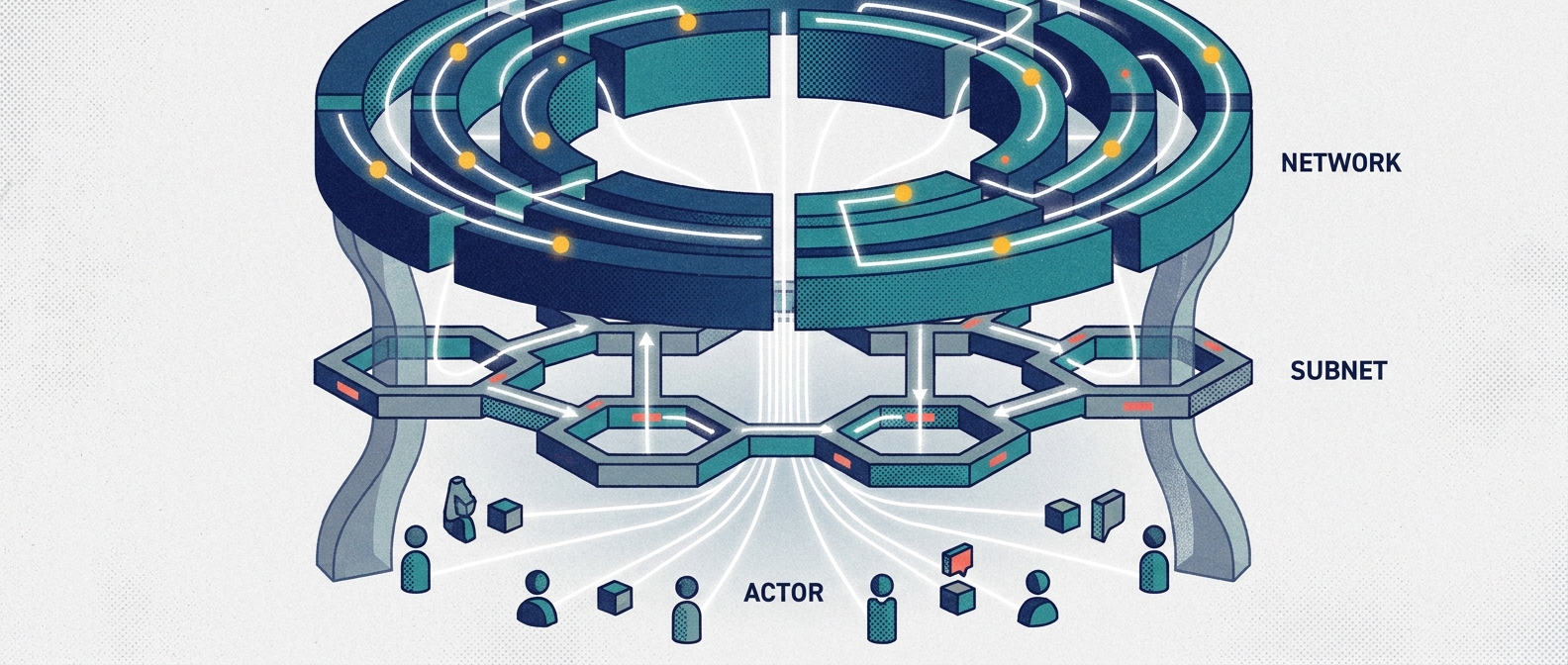
  • Differentiated KPI scopes into network, subnet, and actor levels to balance network alignment with individual flexibility.
  • Demonstrated practical utility through business scenarios including car navigation services, urban indoor farming, and sustainable households.
What it means for you
  • CIO / IT Executive: On Monday morning, initiate a pilot project to apply the three-step KPI definition method to one specific collaborative network your organization participates in, focusing on identifying and documenting initial network-level KPIs using your existing data infrastructure.
  • IT Manager: On Monday morning, schedule a working session with a key business stakeholder from a collaborative project to begin the 'KPI specification' step of the research method, focusing on articulating the desired outcomes for that specific collaboration.
  • Business Strategist: On Monday morning, review the research's findings on differentiating KPI scopes and draft a preliminary list of potential network, subnet, and actor-level KPIs for a newly forming collaborative initiative.
  • Researcher: On Monday morning, begin designing a case study to apply and further refine the proposed KPI definition method within a new collaborative business scenario, focusing on the 'multi-criteria KPI selection' and 'attribute operationalization' steps.
  • Policymaker: On Monday morning, identify a specific public-private collaborative initiative and begin exploring how the research's approach to KPI definition could be adapted to measure its network-wide alignment and individual actor contributions effectively.
Business models, Collaborative business models, Collaborative networks, Key performance indicators, Performance management, Design science research
Can Regulation Restore Authenticity? Evidence from Policies Against Online Review Suppression
AI Processed Human Approved

How do laws banning businesses from suppressing negative reviews affect online customer ratings?

Aida Sanatizadeh, Gordon Burtch, Yili Hong, Yuheng Hu
Can Regulation Restore Authenticity? Evidence from Policies Against Online Review Suppression
Information Systems Research · 2025
Key findings
  • Following the CRFA enactment, U.S. hotel reviews became systematically more negative in both star ratings and textual sentiment.
  • Reviews became significantly longer on average, indicating that consumers shared more detailed feedback once legal risks were mitigated.
  • Rating declines were most concentrated among less reputable hotels and those in highly competitive local markets, which previously suppressed negative reviews more aggressively.
  • The policy's effects were strongest among American reviewers and users with longer platform tenure.
What it means for you
  • CIO / IT Executive: On Monday morning, initiate a review of our internal policies and legal contracts to ensure no clauses inadvertently threaten or discourage customers from providing honest feedback on public review platforms.
  • IT Manager: On Monday morning, task your team with monitoring online review platforms for any patterns of review suppression tactics being used by our competitors, specifically looking for increases in negative reviews that are quickly removed or challenged.
  • Business Strategist: On Monday morning, analyze recent customer feedback data, particularly any negative reviews received in the last quarter, and assess if there are opportunities to engage with these customers to improve our offerings and address concerns openly.
  • Researcher: On Monday morning, identify and gather publicly available datasets on consumer review sentiment and volume for companies in sectors known for aggressive review suppression prior to recent regulatory changes, to replicate or extend the findings on the CRFA.
  • Policymaker: On Monday morning, schedule a meeting with your legislative staff to discuss potential avenues for expanding regulatory protections to cover other forms of consumer feedback, such as social media comments or product testimonials, building upon the success of the CRFA.
Consumer Review Fairness Act, Online Reviews, Review Suppression, Chilling Effect, Digital Platforms, Consumer Protection
Green Cloud? An Empirical Analysis of Cloud Computing and Energy Efficiency
AI Processed Human Approved

Does adopting cloud computing improve energy efficiency enough to offset the energy data centers consume?

Jiyong Park, Kunsoo Han, Byungtae Lee
Green Cloud? An Empirical Analysis of Cloud Computing and Energy Efficiency
2022
Key findings
  • Cloud-based IT services significantly improve client energy efficiency, resulting in estimated user-side cost savings of $2.8–$12.6 billion in 2017 alone.
  • Software-as-a-Service (SaaS) enhances both electric and nonelectric energy efficiency across all industries by driving operational efficiency and reducing resource waste.
  • Infrastructure-as-a-Service (IaaS) primarily improves electric energy efficiency in hardware-intensive industries by replacing inefficient internal IT equipment and infrastructure.
  • Net energy savings on the user side far outweigh the energy consumed by cloud vendor industries and are comparable to total electricity consumption by U.S. data centers.
What it means for you
  • CIO / IT Executive: On Monday morning, review your organization's current SaaS and IaaS adoption levels and identify the top 2-3 cloud services that could be further optimized or expanded to maximize user-side energy efficiency gains, based on the findings that SaaS enhances overall energy efficiency and IaaS improves electric efficiency in hardware-intensive areas.
  • IT Manager: On Monday morning, schedule a brief technical review with your team to identify specific internal IT equipment or infrastructure in hardware-intensive departments that could be replaced by IaaS solutions, focusing on those contributing most to electric energy consumption.
  • Business Strategist: On Monday morning, quantify the estimated user-side cost savings from your organization's current cloud computing usage by applying the study's estimated range of $2.8–$12.6 billion in savings per year (scaled appropriately for your organization's IT spend) and present this as a tangible benefit to senior leadership.
  • Researcher: On Monday morning, begin drafting a proposal to investigate the energy efficiency impact of specific SaaS applications within your organization, focusing on how they drive operational efficiency and reduce resource waste, mirroring the study's distinction between SaaS and IaaS.
  • Policymaker: On Monday morning, initiate a discussion with relevant stakeholders about exploring incentives or guidelines that encourage businesses to adopt cloud-based IT services, particularly SaaS, by highlighting the significant user-side energy efficiency gains and cost savings demonstrated in this research.
Cloud Computing, Software-as-a-Service, Infrastructure-as-a-Service, Energy Efficiency, Green IT, Stochastic Frontier Analysis
TOWARD CULTURAL–ETHICAL FIT IN AI GOVERNANCE: A GLOBAL TYPOLOGY OF GOVERNANCE PROFILES
AI Processed Human Approved

How can AI governance be adapted to fit local cultural and ethical values around the world?

Dimitrios Symeonidis, Johannes Schneider, Anastasija Nikiforova
TOWARD CULTURAL–ETHICAL FIT IN AI GOVERNANCE: A GLOBAL TYPOLOGY OF GOVERNANCE PROFILES
ECIS 2026 · 2026
Key findings
  • Identified eight distinct ideal-type AI governance profiles reflecting specific cultural and ethical alignments: group fairness, individual fairness, market-led growth, value-led growth, human oversight fortress, autonomous growth, individual control, and collective security.
  • Demonstrated that global AI governance is structured by two key meta-tensions: social justice versus economic competitiveness, and autonomy versus security and control.
  • Formulated three theoretical propositions outlining how cultural alignment determines governance legitimacy, shapes patterns of societal resistance, and guides regulatory evolution over time.
  • Offered a diagnostic decision framework for policymakers to adapt international AI guidelines to local socio-cultural contexts without sacrificing core safety requirements.
What it means for you
  • CIO / IT Executive: On Monday morning, schedule a 30-minute deep dive with your legal and ethics teams to identify which of the eight AI governance profiles identified in the research most closely aligns with your organization's current AI development and deployment practices, and flag any immediate misalignments.
  • IT Manager: On Monday morning, initiate a review of your team's current AI project documentation and development methodologies, specifically looking for instances where decisions about fairness, transparency, or accountability might have been implicitly influenced by a single cultural perspective (e.g., U.S.-centric) and note them for further discussion.
  • Business Strategist: On Monday morning, begin analyzing your organization's key international markets and identify the primary cultural value orientations that characterize them, then cross-reference this with the meta-tensions (social justice vs. economic competitiveness, autonomy vs. security) to anticipate potential governance friction for upcoming AI initiatives.
  • Researcher: On Monday morning, begin drafting a short literature review outline focusing on how cultural value orientations (e.g., individualism vs. collectivism) have historically shaped the adoption and regulation of other transformative technologies (e.g., the internet, biotechnology) to draw parallels with AI governance.
  • Policymaker: On Monday morning, review the 'diagnostic decision framework' mentioned in the research, and identify one specific AI guideline (e.g., data privacy regulations) that your jurisdiction currently applies universally, then brainstorm how to adapt its interpretation to better fit the dominant cultural value orientations of your primary constituent groups.
AI governance, cultural values, governance typology, ethical AI, regulatory design
THE VOICE OF COMMERCE: HOW SMART SPEAKERS RESHAPE DIGITAL CONTENT CONSUMPTION AND PREFERENCES
AI Processed Human Approved

How does adopting smart speakers change how consumers search for, buy, and consume digital content?

Yoonseock Son, Wonseok Oh, Il Im
THE VOICE OF COMMERCE: HOW SMART SPEAKERS RESHAPE DIGITAL CONTENT CONSUMPTION AND PREFERENCES
MIS Quarterly · 2023
Key findings
  • Smart speaker adoption led to a 21.5% increase in monthly VOD content expenditures, alongside a 3.0% decrease in average content completion rates.
  • The increase in purchases is driven by lowered search friction, resulting in more search incidences, higher conversion rates, and less labor-intensive evaluation of content.
  • Using smart speakers for conversational purposes beyond simple informational queries amplifies the positive impact of device adoption on sales.
What it means for you
  • CIO / IT Executive: On Monday morning, task your team with investigating integration points between existing VOD platforms and major smart speaker voice assistant APIs (e.g., Alexa, Google Assistant) to enable seamless content discovery and playback via voice commands.
  • IT Manager: On Monday morning, analyze the current VOD platform's data infrastructure to identify how to track and log voice-initiated search queries and content playback events, distinguishing them from traditional remote control interactions.
  • Business Strategist: On Monday morning, initiate a brainstorm session to explore new content promotion strategies that leverage voice-activated search, considering how to make titles more discoverable through natural language queries and conversational recommendations.
  • Researcher: On Monday morning, begin outlining a follow-up study to quantify the correlation between specific conversational voice interactions (beyond simple search) and increased VOD content consumption, perhaps through A/B testing of voice-guided discovery features.
  • Policymaker: On Monday morning, convene a working group to assess the potential implications of increased voice-activated content consumption on digital accessibility standards and to explore how to ensure equitable access to content across all user interfaces.
Voice channel, search, smart speaker, digital content, econometrics
Boundary Spanning and Practical Impact in IS Research: A Bourdieusian Analysis
AI Processed Human Approved

How can practitioner researchers overcome the divide between academia and industry to create real-world impact?

Stephen McCarthy, Hendrik Scholta, Geir Inge Hausvik, Peter André Busch
Boundary Spanning and Practical Impact in IS Research: A Bourdieusian Analysis
Information Systems Journal (ISJ) · 2025
Key findings
  • IS practitioner doctorates facilitate knowledge exchange through boundary-spanning activities including research design adaptation, multi-channel dissemination, and creating symbolic discourse.
  • Practical impact progresses through proof-of-concept, proof-of-value, and proof-of-use stages, each requiring different combinations of social, cultural, economic, and symbolic capital.
  • Environmental forces such as academic vs. practice doxa (institutional norms) and habitus (professional dispositions) create positional conflicts that require active negotiation and tailored incentives to sustain engagement.
What it means for you
  • CIO / IT Executive: On Monday morning, schedule a 30-minute meeting with your direct reports to initiate a 'practice impact review' focused on one ongoing IS project. Ask each person to identify one specific academic insight or research finding from a recent external study or internal research initiative that could be directly applied to improve that project's current proof-of-concept or proof-of-value stage, and assign them to explore this application by end of week.
  • IT Manager: On Monday morning, identify one specific, recent academic paper or conference proceeding relevant to a current team challenge. Forward this paper to your team with a concise note asking for a brief, 1-2 sentence summary of its most practical takeaway and how it *might* apply to your current proof-of-value stage objective by Tuesday afternoon.
  • Business Strategist: On Monday morning, review the key performance indicators (KPIs) of one strategic business initiative currently underway. Identify which KPIs are not meeting expectations and, using the 'proof-of-value' framework, draft a one-page hypothesis on how a novel IS application or process, potentially informed by academic research, could demonstrably improve these specific KPIs within the next quarter.
  • Researcher: On Monday morning, select one recent academic publication where you are the lead author and identify its 'proof-of-use' stage potential. Draft a single-slide executive summary that articulates the core problem addressed, the practical solution proposed, and one tangible benefit for a specific industry practitioner role (e.g., IT manager, business analyst), and share it with three relevant practitioner contacts for feedback by Wednesday.
  • Policymaker: On Monday morning, review the current grant application criteria for technology innovation funding. Identify if and how 'demonstrable practical impact' is explicitly assessed, and draft a brief proposal to incorporate a specific requirement for applicants to detail their strategy for achieving 'proof-of-value' or 'proof-of-use' within a defined timeframe, alongside theoretical contributions.
academia-practice gap, boundary spanning, design science research, engaged IS scholarship, practical impact, theory of practice
Affordance-Based Pathway Model of Social Inclusion: A Case Study of Virtual Worlds and People With Lifelong Disability
AI Processed Human Approved

How do virtual worlds help people with lifelong disabilities move from social isolation to social inclusion?

Karen Stendal, Maung K. Sein, Devinder Thapa
Affordance-Based Pathway Model of Social Inclusion: A Case Study of Virtual Worlds and People With Lifelong Disability
Journal of the Association for Information Systems · 2026
Key findings
  • Identified three functional affordances (communicability, mobility, and personalizability) and two social affordances (engageability and self-actualizability) crucial for social inclusion.
  • Established that the actualization of functional affordances enables and dynamically interacts with social affordances to foster interpersonal relationships and community participation.
  • Discovered that outcomes achieved by actualizing specific affordances serve as facilitating conditions that support the perception and realization of additional affordances.
  • Extended affordance theory by demonstrating a feedback loop where social engagement refines and enhances the perception and use of basic functional capabilities.
What it means for you
  • CIO / IT Executive: On Monday morning, task your accessibility team to conduct an initial assessment of our current platform's 'communicability' features (e.g., real-time chat, group messaging, avatar-based interaction quality) against the research's identified functional affordances to understand potential barriers and opportunities for individuals with disabilities.
  • IT Manager: On Monday morning, schedule a 30-minute working session with your frontline support staff to review existing user feedback logs for mentions of difficulty with navigation, communication, or customization within our virtual environment, specifically looking for patterns that might align with limitations in perceived 'mobility' or 'personalizability' affordances.
  • Business Strategist: On Monday morning, initiate a competitive analysis focusing on how emerging virtual platforms or digital communities are leveraging 'engageability' and 'self-actualizability' affordances to foster user connection and content creation, particularly noting any strategies that might appeal to or benefit users with disabilities.
  • Researcher: On Monday morning, begin drafting a protocol for a pilot study within our organization's virtual world that focuses on measuring the impact of enhanced 'communicability' features on user-reported feelings of 'engageability' and 'self-actualizability' among a diverse user group, potentially including participants with disabilities.
  • Policymaker: On Monday morning, convene a brief meeting with your advisory committee to discuss how current digital inclusion policies might be strengthened by explicitly incorporating the research's identified 'functional affordances' (communicability, mobility, personalizability) and 'social affordances' (engageability, self-actualizability) as measurable criteria for assessing technological accessibility and support for social participation.
Social Inclusion, Virtual Worlds, People With Lifelong Disability, Affordances, Second Life, ICT
Social mobile analytics and cloud computing: a big data analytical approach
AI Processed Human Approved

What are the main benefits, challenges, and technical solutions when combining social, mobile, analytics, and cloud technologies?

Farhad Ali, Habib Ullah Khan, Shah Nazir
Social mobile analytics and cloud computing: a big data analytical approach
2026
Key findings
  • Identified main collaborative entities within SMAC ecosystems, including smartphones, cloud platforms, crowd participants, and environmental sensors.
  • Summarized key organizational and societal benefits such as enhanced decision-making, operational cost reduction, improved productivity, and expanded social engagement.
  • Classified primary adoption challenges, focusing on data privacy, security vulnerabilities, scalability limits, energy consumption, and system interoperability.
  • Compiled existing technical solutions from literature, highlighting techniques such as attribute-based encryption, anonymization methods, and hyper-heuristic frameworks.
What it means for you
  • CIO / IT Executive: On Monday morning, initiate a cross-departmental working group focused on assessing our current SMAC infrastructure against the identified adoption challenges (privacy, security, scalability, energy, interoperability) using the research's findings as a framework, and schedule an initial meeting for next week.
  • IT Manager: On Monday morning, begin a review of our existing data anonymization protocols and encryption techniques, cross-referencing them with the 'existing technical solutions' highlighted in the research to identify immediate gaps or opportunities for enhancement within our current cloud and mobile analytics platforms.
  • Business Strategist: On Monday morning, schedule a 30-minute brainstorming session with your core team to identify one specific business process that could significantly benefit from SMAC integration, and during that session, identify the most critical adoption challenge from the research that needs to be addressed first for this specific process.
  • Researcher: On Monday morning, create a detailed spreadsheet to categorize the 75 papers reviewed in this study by the specific SMAC component (Social, Mobile, Analytics, Cloud), the primary adoption challenge addressed, and the technical solution proposed, to facilitate further meta-analysis.
  • Policymaker: On Monday morning, draft a request for a preliminary impact assessment on user privacy and cybersecurity risks associated with the widespread adoption of SMAC technologies within our jurisdiction, drawing upon the challenges identified in the research as key areas to investigate.
SMAC Framework, Big Data, Cloud Computing, Social Media Analytics, Mobile Computing, Data Security
An Empirical Investigation of Cloud Computing and Environmental Performance of Nations: Implications for Shared Responsibility in Cloud Computing
AI Processed Human Approved

How does cloud computing affect energy use and carbon emissions across host and user countries?

Jooho Kim, Jiyong Park, Jason Dedrick
An Empirical Investigation of Cloud Computing and Environmental Performance of Nations: Implications for Shared Responsibility in Cloud Computing
Journal of the Association for Information Systems · 2025
Key findings
  • Access to cloud services generally enhances environmental efficiency by reducing national energy and carbon intensities associated with IT services.
  • Countries hosting cloud data centers experience higher local energy and carbon intensities due to heavy physical infrastructure demands.
  • Neighboring countries benefit from green cloud IT services without incurring adverse environmental costs on their local IT capital.
  • A shared responsibility model based on multilayered technology architecture is proposed to divide environmental accountability between cloud providers and users.
What it means for you
  • CIO / IT Executive: On Monday morning, initiate a review of our current cloud infrastructure's geographical distribution and identify which of our cloud services are hosted in countries that are net importers of cloud services (i.e., benefiting from efficiency gains) versus countries that are net hosts of data centers. Then, begin drafting an internal memo to your team outlining the need to assess the environmental footprint of our chosen cloud providers, specifically focusing on the geographical location of their data centers.
  • IT Manager: On Monday morning, compile a list of all cloud services currently utilized by your department and identify the primary cloud provider(s) for each. Then, locate and review the public documentation of these providers regarding their data center locations and any publicly available environmental sustainability reports or initiatives.
  • Business Strategist: On Monday morning, begin by identifying which key business processes or customer-facing services are heavily reliant on cloud computing. Then, investigate if these services are currently being delivered from cloud infrastructure located in countries that are significant importers of cloud services or from countries that are major hosts of data centers, and flag this for further cost-benefit analysis that includes potential environmental externalities.
  • Researcher: On Monday morning, start by drafting an email to your colleagues or supervisor proposing a follow-up study that quantifies the specific cross-border environmental impacts for a subset of countries using the methodologies outlined in this paper. Include a brief outline of the data you would need to gather, such as national IT service import/export data and detailed data center location information for key cloud providers.
  • Policymaker: On Monday morning, draft a preliminary policy brief for your relevant committee or ministry that summarizes the key findings of this research regarding the uneven distribution of environmental burdens from cloud computing. Specifically, highlight the need for international dialogue on shared responsibility and propose an initial step to investigate incorporating environmental footprint data into public procurement policies for cloud services.
Cloud Computing, IT Capital, IT Services, Digital Responsibility, Shared Responsibility, Sustainability
STRUCTURING READINESS FOR AI INNOVATION: THE ROLE OF THE DESIGN CHALLENGE BRIEF AS A COORDINATION AND GATEKEEPING ARTEFACT
AI Processed Human Approved

How can teams evaluate whether an artificial intelligence project is ready to launch?

Jennifer Hehn, Franziska Anna Röckel, Benjamin van Giffen
STRUCTURING READINESS FOR AI INNOVATION: THE ROLE OF THE DESIGN CHALLENGE BRIEF AS A COORDINATION AND GATEKEEPING ARTEFACT
ECIS 2026 · 2026
Key findings
  • The study outlines a preliminary three-phase qualitative model for establishing AI project readiness: divergent exploration, negotiation/translation, and convergent alignment, though these findings are descriptive and lack statistical testing.
  • The Design Challenge Brief is shown to act as a gatekeeping artifact that structures readiness reviews and allows teams to selectively revisit earlier project assumptions without resetting the entire process.
  • The study is limited by its small qualitative sample of five projects and its setting within a structured, university-led innovation lab, which may restrict generalizability to less-structured corporate settings.
What it means for you
  • CIO / IT Executive: Draft and mandate a standard 'Design Challenge Brief' template that all AI project champions must complete and get approved before receiving formal project launch funding.
  • IT Manager: Gather your AI project team for a 1-hour workshop to map your current pre-project planning stage to the three phases of divergent exploration, negotiation/translation, and convergent alignment, explicitly documenting how you will handle fluid data availability.
  • Business Strategist: Audit your pipeline of proposed AI initiatives and flag any project that has not yet completed a collaborative 'Design Challenge Brief' to prevent launching projects with high uncertainty around non-deterministic outcomes.
  • Researcher: Draft a research proposal and survey instrument to test the generalizability of the three-phase AI readiness model across a quantitative sample of 100+ corporate AI projects outside of academic lab settings.
  • Policymaker: Integrate a 'Design Challenge Brief' gatekeeping requirement into your public sector AI procurement and funding frameworks to ensure public agencies evaluate data readiness and outcome uncertainties before awarding AI contracts.
AI innovation, readiness work, design challenge brief, boundary objects, gatekeeping
DESIGNING FOR IMPERFECT PROMPTS: A SIMULATION-BASED EVALUATION OF AN LLM-BASED ENTERPRISE DATA ASSISTANT USING KNOWLEDGE GRAPHS
AI Processed Human Approved

Which approach best helps AI assistants translate imperfect user prompts into accurate database queries?

Niklas Wagner, Alexander Mdche
DESIGNING FOR IMPERFECT PROMPTS: A SIMULATION-BASED EVALUATION OF AN LLM-BASED ENTERPRISE DATA ASSISTANT USING KNOWLEDGE GRAPHS
ECIS 2026 · 2026
Key findings
  • The KG-based mediation statistically outperformed the schema-based mediation across Precision, Recall, and F1-Score metrics.\n- For GPT-4.1, the KG-based approach achieved a Precision of 90.67% (compared to 69.05% for schema-based) and an F1-Score of 89.47% (compared to 71.02% for schema-based).\n- For Claude Sonnet 4, the KG-based approach achieved a Precision of 87.23% (compared to 75.17% for schema-based) and an F1-Score of 90.29% (compared to 82.17% for schema-based), while Recall remained statistically comparable (93.52% vs 92.56%).\n- The study is limited by its focus on a single-enterprise setting within a CFO unit, a finite dataset of 158 interactions from 29 users, and reliance on a simulation-based evaluation instead of live field deployments.
What it means for you
  • CIO / IT Executive: Issue a directive to transition the enterprise's LLM-based data assistant architecture away from simple schema-based semantic similarity matching and onto a Knowledge Graph-based mediation layer constructed from database schemas to capture the demonstrated 12% to 21% precision improvements.
  • IT Manager: Instruct your database and engineering teams to begin constructing a Knowledge Graph from your current database schemas to serve as a semantic mediation layer for your LLM assistant, replacing manual prompt engineering.
  • Business Strategist: Launch a pilot program within the CFO business unit to deploy the Knowledge Graph-based data assistant, leveraging its verified ability to resolve incomplete, domain-specific prompts into accurate database queries for business users.
  • Researcher: Draft a research proposal to test the Knowledge Graph-based mediation layer in a live, real-world field deployment to gather empirical performance data beyond the current study's simulation of 158 interactions across 29 users.
  • Policymaker: Draft an internal data governance policy requiring that all natural-language LLM interfaces querying corporate databases must use a schema-derived Knowledge Graph mediation layer to ensure structural query alignment and prevent inaccurate data retrieval.
Large Language Models, Enterprise Data Assistants, Text-to-SQL, Knowledge Graphs, Design Science Research
ORCHESTRATION PARADOXES IN NATIONAL QUANTUM COMPUTING INNOVATION ECOSYSTEMS
AI Processed Human Approved

What competing tensions and trade-offs do leaders face when guiding national quantum computing ecosystems?

Jori Taipale, Olli Tyrväinen, Tuure Tuunanen, Joel Mero, Teiko Heinosaari
ORCHESTRATION PARADOXES IN NATIONAL QUANTUM COMPUTING INNOVATION ECOSYSTEMS
ECIS 2026 · 2026
Key findings
  • Organizing tensions were identified as the most frequent paradox, specifically focusing on the trade-offs between collaboration vs. resource competition and guidance vs. flexibility.
  • Performance tensions emerged regarding resource allocation between software vs. hardware development and building a shared vision vs. individual firm survival.
  • Belonging tensions highlighted a 'godfather' paradox, where the ecosystem must balance the state's role as a major supportive funder and customer with the ultimate goal of corporate independence.
  • Learning tensions were characterized by the challenge of managing multi-talent knowledge development versus narrow technology specialization.
  • The study is limited by its single qualitative case context in Finland with a small sample of 15 informants, requiring caution when applying these findings to other national contexts.
What it means for you
  • CIO / IT Executive: Schedule a 9:00 AM meeting with your lead enterprise architect to audit your current quantum-readiness roadmap, establishing a formal policy that divides software development and hardware access investments 50/50 to hedge against the performance tension of committing prematurely to a single unproven hardware stack.
  • IT Manager: Create a bi-weekly 1-hour 'Quantum Cross-Training' slot in your team's calendar starting this Friday, pairing your specialized quantum physics PhDs with your generalist cloud engineers to address the learning tension between narrow technical specialization and broad-based systems integration.
  • Business Strategist: Perform a revenue dependency audit to calculate the percentage of your quantum business unit's funding derived from state grants versus commercial clients, and draft a pitch deck for two private-sector pilots to actively transition away from 'godfather' state-funding reliance.
  • Researcher: Draft a pre-competitive collaboration agreement template to send to a peer researcher at a competing institution, outlining a shared framework for baseline algorithm testing while clearly defining IP boundaries to manage the tension of collaboration versus resource competition.
  • Policymaker: Draft a revision for the upcoming national quantum funding round guidelines that introduces a 'co-investment requirement,' mandating that state-funded consortia secure at least 25% of their budget from private corporate buyers to counter the 'godfather' dependency paradox.
Ecosystem orchestration, Paradox theory, Quantum computing innovation ecosystem, Explorative case study, Interpretive qualitative research
TOWARDS DESIGN PRINCIPLES FOR TEACHING INDUSTRY 4.0 COMPETENCIES TO CS/IS STUDENTS
AI Processed

How can educators effectively teach modern industrial software skills without expensive physical equipment?

Felix Salcher
TOWARDS DESIGN PRINCIPLES FOR TEACHING INDUSTRY 4.0 COMPETENCIES TO CS/IS STUDENTS
ECIS 2026 · 2026
Key findings
  • Eight design principles were established, emphasizing virtualization, containerization, and problem-based learning cases as alternatives to expensive learning factories.\n- Preliminary course evaluation yielded positive descriptive feedback, with a mean rating of 4.43 out of 5 across satisfaction categories.\n- No formal statistical significance tests were performed due to the pilot nature of the study and the small, specific evaluation sample.\n- The pilot is limited by a very small sample size (9 respondents from a single cohort) and relies on subjective student perceptions rather than objective competency-based assessments.\n- Students noted difficulty adapting to the course's fast pace and programming requirements, highlighting a need for aligned prerequisites.
What it means for you
  • CIO / IT Executive: Direct your enterprise architecture team to draft a transition plan to replace physical IT hardware training labs with virtualized, containerized sandbox environments (e.g., Docker/Kubernetes) to reduce infrastructure costs and align onboarding with modern Industry 4.0 software architectures.
  • IT Manager: Review the programming prerequisites of your junior developers and assign them a structured, hands-on troubleshooting task using a containerized microservice mock-up on Monday morning to assess their readiness for complex Industry 4.0 integration projects.
  • Business Strategist: Reallocate a portion of next quarter's talent development budget away from high-cost physical equipment training and toward scalable, software-based virtual simulators to cost-effectively build digital twin and data architecture competencies.
  • Researcher: Draft a research proposal to conduct a multi-institution comparative study on these eight design principles, incorporating objective pre- and post-intervention technical testing rather than relying on subjective student feedback to measure competency gains.
  • Policymaker: Create a state-level educational grant initiative that incentivizes higher education institutions to update computer science curricula with virtualization-based Industry 4.0 frameworks, shifting funding priority away from physical learning factories.
Design Principles, Design Science Research, Industry 4.0, Smart Manufacturing
THE ANATOMY OF A DESIGN CHALLENGE FOR INITIATING AI INNOVATION
AI Processed Human Approved

How should teams structure initial challenges to successfully launch AI projects?

Franziska Anna Röckel, Benjamin van Giffen, Andreas Janson, Jennifer Hehn
THE ANATOMY OF A DESIGN CHALLENGE FOR INITIATING AI INNOVATION
ECIS 2026 · 2026
Key findings
  • The study empirically validated a structural anatomy for the Design Challenge consisting of four robust elements (verb, object of innovation, target group, context) and three plastic elements (internal data, technology, potential), which was supported across all 42 cases analyzed.
  • The robust elements were validated to successfully create a stable, shared identity and common direction among diverse team members, acting as a center of authority.
  • The plastic elements were shown to successfully absorb technological uncertainty, providing a flexible framework for teams to negotiate and adapt to AI's emergent capabilities over time.
  • The qualitative analysis identified three distinct nuances in shaping the 'object of innovation' (modular, abstract, and space) that guide teams toward either incremental or more radical innovation pathways.
What it means for you
  • CIO / IT Executive: Mandate that all upcoming AI project proposals use a standardized 'Design Challenge' charter template structured around the 4 robust elements (verb, object of innovation, target group, context) and 3 plastic elements (internal data, technology, potential), explicitly forbidding teams from locking in a rigid technical architecture in their initial pitch.
  • IT Manager: Gather your interdisciplinary project team for a 60-minute workshop on Monday morning to co-create a 'Design Challenge' statement, explicitly defining the stable 'robust' elements to align the business and tech members, while leaving the 'plastic' elements (like specific data sources and AI models) open as flexible targets to be negotiated as the project progresses.
  • Business Strategist: Review your company's AI project portfolio on Monday morning and intentionally rewrite the 'object of innovation' for each project: frame them as 'modular' if you need predictable, incremental improvements, or rewrite them as 'space-based' (e.g., focused on broad capabilities) if you want to push the team toward radical, disruptive business model innovation.
  • Researcher: Update your qualitative coding scheme for ongoing field studies of AI adoption to track how frequently and at what project stages teams modify the 'plastic' elements (internal data, technology, potential) versus the 'robust' elements of their project charters to measure the empirical threshold where technological uncertainty triggers project misalignment.
  • Policymaker: Revise the application guidelines for the upcoming public AI innovation grant cycle to replace rigid 'technical specifications' requirements with a mandatory 'Design Challenge' framework, scoring applicants on the clarity of their robust elements (target group, context) and the adaptive flexibility of their plastic elements (data and technology integration plans).
Design Challenge, AI Innovation, Boundary Object, Anatomy, Interdisciplinary Collaboration, Problem Formulation
Load More Showing 18 of 21