From the Association for Information Systems

Questions that matter.
Answers that hold.

Rigorous Information Systems research, turned into key questions, findings and actions for your role. Read, listen or ask, in 11 languages.

Have a research question? Try Ask AIS Insights

Illustration for: Welcome to AIS Insights

Welcome to AIS Insights

Research for the AI Transformation
The AIS Insights editors · AIS Insights · 2026
  • AIS Insights, an initiative of the Association for Information Systems, brings current Information Systems research to practice, where leaders need it most in times of AI.
  • Every insight starts from a question digital leaders face in practice, answers it with the study's findings, and says what they mean for five roles: CIO or IT executive, IT manager, business strategist, researcher and policymaker.
  • Each study comes three ways: the key question and findings to read, a short episode to listen to, and its core idea in one visual, all in eleven languages.


What it means for you:

Browse the library

79 insights from AIS journals, conferences and related outlets

Shows every insight in this language where a translation exists.

Illustration for: How can digital experimentation platforms help city leaders make better, more adaptive urban sustainability policies?

Key question

How can digital experimentation platforms help city leaders make better, more adaptive urban sustainability policies?

How to Cope with the Dynamics of Urban Sustainability: Urban Experimentation Platforms as Tools for Adaptive Policy-Making
Rehm, McLoughlin, Donnellan · ECIS · 2022
What it means for you
  • CIO / IT Executive Audit current urban data platforms to ensure they include incoming feedback channels from local experimentation trials, rather than functioning solely as one-way broadcast tools.
  • IT Manager Configure dashboard alerts to aggregate and flag real-time stakeholder feedback and usage metrics from ongoing urban sustainability pilots.
  • Business Strategist Initiate a meeting with municipal authorities and local business ecosystem partners to design a recurring framework for collaborative problem-solving using platform data.
  • Researcher Apply system dynamics modeling to map the existing stakeholder feedback loops within your city's active urban experimentation platforms.
  • Policymaker Review the latest data reports from active local sustainability trials and draft a plan to update an existing municipal policy based on the trial results.
Operations & Supply Chain
Illustration for: What causes organizational inertia during digital transformation, and how does it block successful change?

Key question

What causes organizational inertia during digital transformation, and how does it block successful change?

Understanding Inertia in Digital Transformation: A Literature Review and Multilevel Research Framework
Haskamp, Dremel, Marx, et al. · ICIS · 2021
What it means for you
  • CIO / IT Executive Audit your portfolio for socio-technical legacy IT misalignments by scheduling a joint review with department heads to identify legacy systems anchoring obsolete business routines.
  • IT Manager Map your team's current project workflows against the five inertia attributes to pinpoint where cognitive and behavioral rigidity is slowing down daily software deployment.
  • Business Strategist Review the 12 documented inertia antecedents against your current transformation roadmap to identify which cultural and structural barriers threaten your upcoming business model renewal.
  • Researcher Formulate a new empirical study focusing on the interactions between individual-level cognitive inertia and organizational-level structural inertia during enterprise cloud migrations.
  • Policymaker Draft guidelines for state-backed digital grants that require organizations to explicitly account for socio-technical and cultural inertia mitigation strategies before receiving funding.
Operations & Supply Chain
Illustration for: How do board members' differing perspectives shape cybersecurity discussions and organizational resilience?

Key question

How do board members' differing perspectives shape cybersecurity discussions and organizational resilience?

Framing Dialogues on Cyber-Resilience on Boards
Rehm, Schaffner, Goel · ICIS · 2021
What it means for you
  • CIO / IT Executive On Monday morning, prepare a concise, one-page executive summary for the board that translates the organization's current top 3 cyber threats into quantifiable business risks (e.g., potential revenue loss, reputational damage) and proposes specific, non-technical mitigation strategies with clear business outcomes. Avoid technical jargon; use analogies if necessary.
  • IT Manager On Monday morning, gather a brief (5-minute) overview of the most recent significant cybersecurity incident (internal or external to the company) and identify one specific, tangible lesson learned that can be communicated to non-technical stakeholders without overwhelming them with technical details.
  • Business Strategist On Monday morning, identify one strategic business objective for the upcoming quarter that is indirectly impacted by cybersecurity and brainstorm how a proactive cyber-resilience approach could enable or protect that objective. Frame this in terms of competitive advantage or market opportunity.
  • Researcher On Monday morning, review the 'Key Findings' section of your research and identify one specific, actionable question from each identified dysfunctional dialogue pattern (topic avoidance, political exploitation) that you can pose to a board member to gently guide them towards a more resilient discussion.
  • Policymaker On Monday morning, draft a short, one-paragraph statement for your next regulatory update that suggests a reporting framework for board-level cybersecurity oversight, focusing on the *outcomes* of cyber-resilience rather than prescriptive technical requirements.
Cybersecurity & Privacy
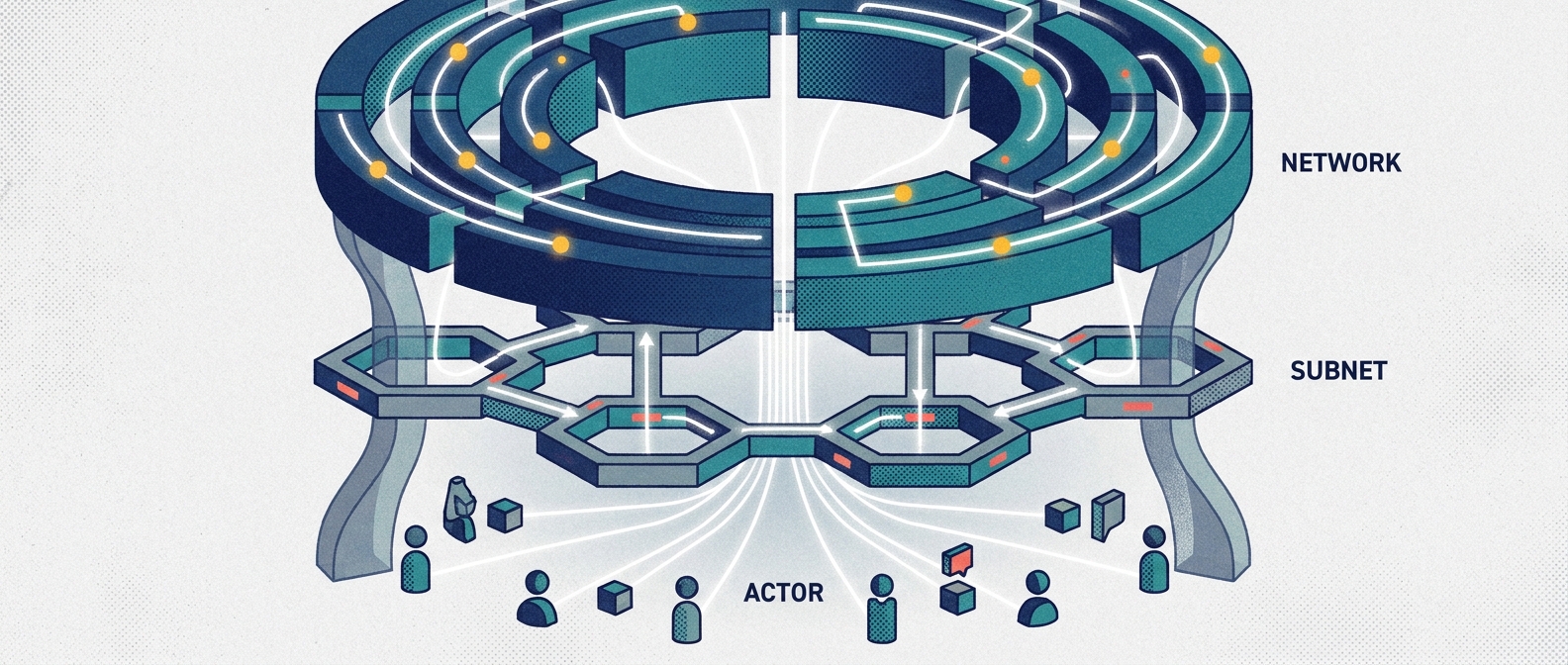
Illustration for: How can organizations define and select performance indicators for collaborative business networks?

Key question

How can organizations define and select performance indicators for collaborative business networks?

Managing Performance in Collaborative Networks: A Method for Defining Key Performance Indicators for Collaborative Business Models
van de Ven, Machado, Aysolmaz, et al. · Business & Information Systems Engineering · 2026
What it means for you
  • CIO / IT Executive On Monday morning, initiate a pilot project to apply the three-step KPI definition method to one specific collaborative network your organization participates in, focusing on identifying and documenting initial network-level KPIs using your existing data infrastructure.
  • IT Manager On Monday morning, schedule a working session with a key business stakeholder from a collaborative project to begin the 'KPI specification' step of the research method, focusing on articulating the desired outcomes for that specific collaboration.
  • Business Strategist On Monday morning, review the research's findings on differentiating KPI scopes and draft a preliminary list of potential network, subnet, and actor-level KPIs for a newly forming collaborative initiative.
  • Researcher On Monday morning, begin designing a case study to apply and further refine the proposed KPI definition method within a new collaborative business scenario, focusing on the 'multi-criteria KPI selection' and 'attribute operationalization' steps.
  • Policymaker On Monday morning, identify a specific public-private collaborative initiative and begin exploring how the research's approach to KPI definition could be adapted to measure its network-wide alignment and individual actor contributions effectively.
Operations & Supply Chain
Illustration for: How can organizations successfully implement digital identity wallets and overcome common adoption challenges?

Key question

How can organizations successfully implement digital identity wallets and overcome common adoption challenges?

Digital Identity Wallets: A Guide to the EU’s New Identity Model
Kudra, Rieger, Sedlmeir, et al. · Information Systems Journal · 2026
What it means for you
  • CIO / IT Executive Schedule a 30-minute internal briefing for your core IT leadership team to present the attached research summary and assign a point person to investigate the 'technical maturity' obstacles identified in the key findings within the context of our existing identity and access management infrastructure.
  • IT Manager On Monday morning, compile a list of all current third-party single sign-on providers used by the organization and identify which of these might be candidates for integration or replacement with a digital identity wallet solution in the future, flagging any immediate integration challenges or risks.
  • Business Strategist Dedicate one hour on Monday morning to reviewing the 'ecosystem value co-creation' challenges mentioned in the research and brainstorm at least three potential business use cases within our organization where a digital identity wallet could unlock new revenue streams or significantly improve customer experience.
  • Researcher Begin analyzing the 12 practical experience case studies mentioned in the research by focusing on the 'organizational integration' obstacles. Identify and document recurring themes and successful mitigation strategies from at least three diverse industry examples to inform our own adoption framework.
  • Policymaker Initiate a dialogue with legal and compliance teams on Monday morning to assess the implications of the 2026 EU mandate for digital wallet support, specifically identifying any current regulatory gaps or areas where policy clarification will be needed to facilitate the adoption of wallet-based identity models.
Cybersecurity & Privacy
Illustration for: How can AI governance be adapted to fit local cultural and ethical values around the world?

Key question

How can AI governance be adapted to fit local cultural and ethical values around the world?

Toward Cultural–Ethical Fit in AI Governance: A Global Typology of Governance Profiles
Symeonidis, Schneider, Nikiforova · ECIS · 2026
What it means for you
  • CIO / IT Executive On Monday morning, schedule a 30-minute deep dive with your legal and ethics teams to identify which of the eight AI governance profiles identified in the research most closely aligns with your organization's current AI development and deployment practices, and flag any immediate misalignments.
  • IT Manager On Monday morning, initiate a review of your team's current AI project documentation and development methodologies, specifically looking for instances where decisions about fairness, transparency, or accountability might have been implicitly influenced by a single cultural perspective (e.g., U.S.-centric) and note them for further discussion.
  • Business Strategist On Monday morning, begin analyzing your organization's key international markets and identify the primary cultural value orientations that characterize them, then cross-reference this with the meta-tensions (social justice vs. economic competitiveness, autonomy vs. security) to anticipate potential governance friction for upcoming AI initiatives.
  • Researcher On Monday morning, begin drafting a short literature review outline focusing on how cultural value orientations (e.g., individualism vs. collectivism) have historically shaped the adoption and regulation of other transformative technologies (e.g., the internet, biotechnology) to draw parallels with AI governance.
  • Policymaker On Monday morning, review the 'diagnostic decision framework' mentioned in the research, and identify one specific AI guideline (e.g., data privacy regulations) that your jurisdiction currently applies universally, then brainstorm how to adapt its interpretation to better fit the dominant cultural value orientations of your primary constituent groups.
Cybersecurity & Privacy
Illustration for: How does adopting smart speakers change how consumers search for, buy, and consume digital content?

Key question

How does adopting smart speakers change how consumers search for, buy, and consume digital content?

The Voice of Commerce: How Smart Speakers Reshape Digital Content Consumption and Preferences
Son, Oh, Im · MIS Quarterly · 2023
What it means for you
  • CIO / IT Executive On Monday morning, task your team with investigating integration points between existing VOD platforms and major smart speaker voice assistant APIs (e.g., Alexa, Google Assistant) to enable seamless content discovery and playback via voice commands.
  • IT Manager On Monday morning, analyze the current VOD platform's data infrastructure to identify how to track and log voice-initiated search queries and content playback events, distinguishing them from traditional remote control interactions.
  • Business Strategist On Monday morning, initiate a brainstorm session to explore new content promotion strategies that leverage voice-activated search, considering how to make titles more discoverable through natural language queries and conversational recommendations.
  • Researcher On Monday morning, begin outlining a follow-up study to quantify the correlation between specific conversational voice interactions (beyond simple search) and increased VOD content consumption, perhaps through A/B testing of voice-guided discovery features.
  • Policymaker On Monday morning, convene a working group to assess the potential implications of increased voice-activated content consumption on digital accessibility standards and to explore how to ensure equitable access to content across all user interfaces.
Operations & Supply Chain
Illustration for: How does collaborative course redesign affect student performance, teaching consistency, and instructor confidence?

Key question

How does collaborative course redesign affect student performance, teaching consistency, and instructor confidence?

Efficacy Beliefs and Outcomes: Socio-Cognitive Perspectives on a Faculty-Led coP
Muraski, Heath, Eierman, et al. · AIS SIGED Conference · 2023
What it means for you
  • CIO / IT Executive On Monday morning, schedule a 30-minute meeting with your IT academic technology support lead to explore a pilot program implementing a Communities of Practice model for a high-enrollment introductory course, using the provided research as a framework for discussion on potential student outcome improvements and faculty development.
  • IT Manager On Monday morning, gather the instructors for the introductory information systems course for a 45-minute session. Share the key findings of this research, specifically highlighting the gains in student performance and instructor self-efficacy. Then, collaboratively brainstorm one small, concrete change to the course syllabus or assessment that can be implemented next semester as a collective first step towards greater consistency.
  • Business Strategist On Monday morning, analyze the current onboarding and ongoing professional development process for new faculty teaching foundational courses. Identify any gaps in collaborative support and informal learning opportunities, and consider how principles from this research, such as vicarious learning and peer persuasion, could be integrated into existing programs to improve faculty confidence and course consistency.
  • Researcher On Monday morning, begin drafting a proposal for a follow-up study. Focus on investigating the specific mechanisms of vicarious learning and peer verbal persuasion within the identified Community of Practice, perhaps through targeted surveys or observation protocols, to quantify their impact on instructor self-efficacy and to better understand how to scale these findings.
  • Policymaker On Monday morning, initiate a discussion with the Provost's office and the Faculty Senate leadership to present the findings of this research. Propose the development of a university-wide framework or grant program that incentivizes and supports the formation of faculty Communities of Practice for foundational courses, emphasizing the potential for improved student learning outcomes and faculty development.
Cybersecurity & Privacy
Load more insights

Showing 9 of 19

AI-processed.
Human-approved.

  • Linked to the source

    Every insight is an original synthesis and links to the full paper at its original publisher.

  • Approved by the authors

    Authors review each draft and tell us what to correct; we regenerate it, and it goes live once they approve it. Nothing goes live without their approval. Each approved insight is marked as approved.

  • Run under AIS oversight

    Papers are read and summarised by open-source models on University of Münster infrastructure. Google Gemini voices the episodes, draws the illustrations, writes the recommendations for each role from our summaries, applies authors' corrections to our summaries and powers Ask AIS Insights, which reads our summaries and, for some papers, their full text.

For researchers

Make your research heard.

Reach leaders, managers and policymakers beyond academia, and open new conversations between research and practice.

Add my paper
  1. Upload your paper

    Add the PDF and a link to the published version.

  2. Review the draft

    We prepare a plain-language summary and the episode script. Nothing goes live until you approve it.

  3. Go live

    Your insight appears in the library, linked to the original paper.