New
(2024) AI Processed Human Approved
DESIGNING GDPR-COMPLIANT CREDENTIAL VERIFICATION USING BLOCKCHAIN:A DESIGN SCIENCE RESEARCH APPROACH
This study employs a Design Science Research (DSR) approach to explore and construct a GDPR-compliant, blockchain-based credential verification system. Focused on the recruitment process, the paper combines stakeholder interviews and system architecture modeling to propose actionable design principles and a prototype platform using self-sovereign identity and zero-knowledge proofs.
Problem
Traditional credential verification processes in hiring are manual, time-consuming, and susceptible to fraud. Moreover, integrating public blockchain technology with privacy laws like the GDPR creates significant challenges due to the conflict between immutable ledgers and individual privacy rights, such as the right to erasure.
Outcome
- Identified four major categories of design requirements: trust, automation, usability, and regulation.
- Formulated three core design principles for building GDPR-compliant, self-sovereign identity verification systems.
- Developed and evaluated a prototype system ('SafeRecords') leveraging Polygon ID and zero-knowledge proofs to ensure user data ownership and privacy.
- Formulated three core design principles for building GDPR-compliant, self-sovereign identity verification systems.
- Developed and evaluated a prototype system ('SafeRecords') leveraging Polygon ID and zero-knowledge proofs to ensure user data ownership and privacy.
Transcript
Host: Welcome to A.I.S. Insights — powered by Living Knowledge. I'm your host, Anna Ivy Summers. Today we're exploring how cutting-edge technology and strict privacy laws can actually work hand in hand. We are diving into a fascinating recent study titled "DESIGNING GDPR-COMPLIANT CREDENTIAL VERIFICATION USING BLOCKCHAIN: A DESIGN SCIENCE RESEARCH APPROACH". Joining me to break it all down is our technology analyst, Alex Ian Sutherland. Welcome, Alex!
Expert: Thanks, Anna. Great to be here. This study tackles a massive headache in the modern business world—verifying job credentials—and demonstrates how to automate trust using blockchain while remaining completely compliant with strict data privacy laws like the GDPR.
Host: That sounds like a game-changer. So Alex, set the stage for us. What is the big real-world problem that this study addresses?
Expert: Right now, credential verification in hiring is surprisingly outdated. It relies heavily on manual work, paper certificates, and phone calls to past employers or universities. It’s slow, expensive, and vulnerable to fraud. Now, while digital solutions exist, storing personal hiring history on traditional centralized servers creates major security risks. But when companies look toward public blockchain technology for its tamper-proof security, they run straight into a legal brick wall.
Host: Let me guess—that brick wall is the conflict between blockchain's permanent records and GDPR's "right to be forgotten"?
Expert: Spot on, Anna. GDPR mandates that individuals must have control over their personal data, including the right to rectify or completely delete it. Traditional blockchains, however, are built specifically never to forget anything. So, how do you gain the trust and transparency of an immutable ledger without violating privacy laws? That was the core problem the researchers set out to solve.
Host: How did the researchers approach finding a solution?
Expert: They adopted a Design Science Research methodology. Instead of just working in a lab, they conducted in-depth interviews with twelve industry stakeholders across various countries—ranging from recruitment agency heads and HR directors to blockchain architects. By analyzing real-world recruitment challenges, they extracted key requirements to design a practical, working system.
Host: What were the main takeaways from those stakeholder interviews?
Expert: The study organized the findings into four main categories of requirements: trust, automation, usability, and regulation. From those, the authors formulated three core design principles. First, use blockchain to establish transparent trust among multiple parties using authentic original documents. Second, leverage smart contracts to automate verification and eliminate slow manual processes. And third, ensure full GDPR compliance by adopting an architecture where the user retains complete ownership of their data.
Host: That brings us to their prototype platform, SafeRecords. How does SafeRecords actually balance permanent blockchain verification with user privacy in practice?
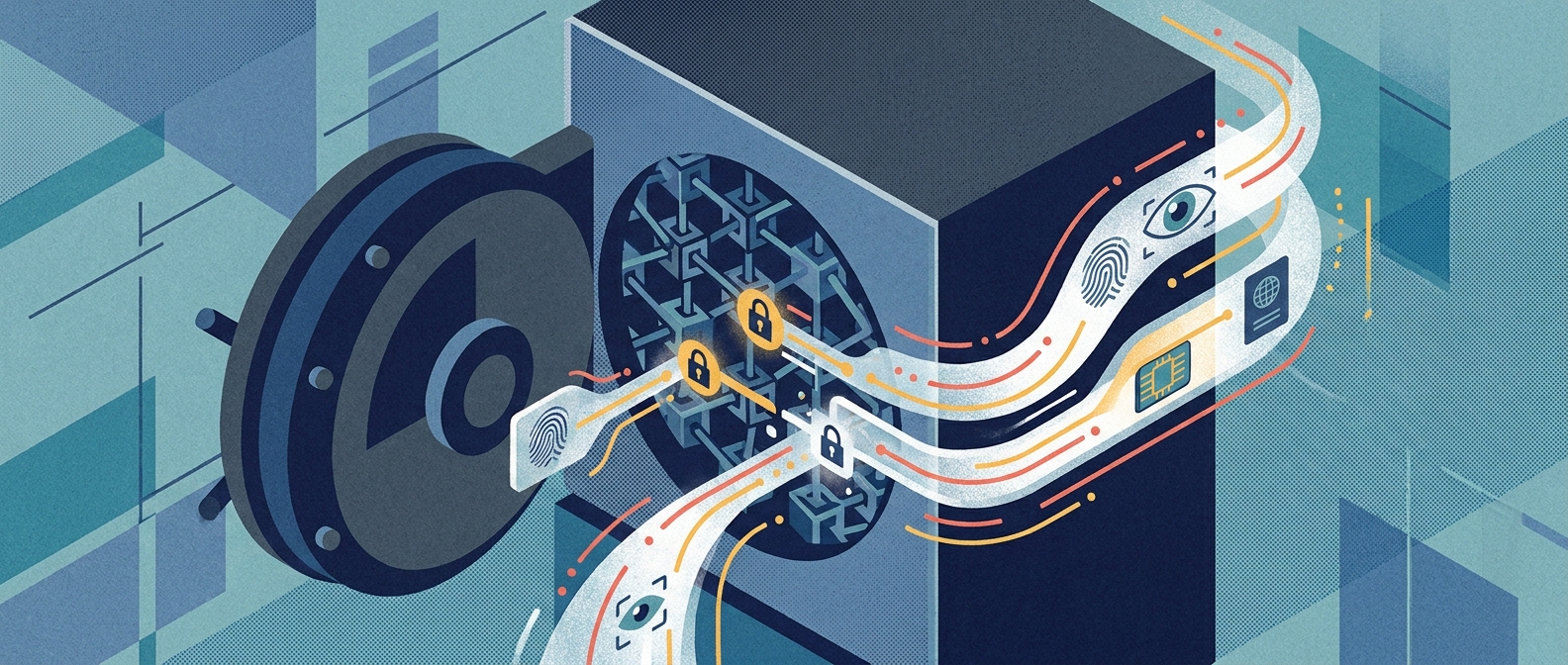
Expert: SafeRecords combines Self-Sovereign Identity principles with Zero-Knowledge Proofs, using Polygon ID technology. The key innovation here is that no personal data—like your name, birthdate, or full resume—is ever written onto the blockchain. Instead, personal documents stay stored strictly inside the candidate's personal digital wallet on their own smartphone.
Host: So if no personal details are on the blockchain, what actually gets verified?
Expert: When a previous employer issues a work certificate, a cryptographic hash—essentially a unique digital fingerprint—is recorded on the public blockchain along with the issuer's signature. When the candidate applies for a new job, the new employer uses Zero-Knowledge Proofs to verify that the certificate matches the fingerprint on the blockchain. It proves the document is genuine without revealing any extra personal details or exposing the data on the ledger. If the candidate wants to delete their document later, they simply remove it from their personal wallet. The blockchain holds only an anonymous mathematical proof.
Host: That is incredibly clever. Why does this matter so much for business leaders and hiring managers right now?
Expert: There are three huge business takeaways. First, speed and cost reduction. Verification that currently takes weeks or months can happen almost instantly through automated smart contracts. Second, legal safety. Companies can deploy decentralized verification globally without fear of massive GDPR fines, because user consent and data control stay firmly with the individual. Third, trust in a globalized talent market. An employer in Europe can instantly verify a credential from anywhere in the world without worrying about forged documents.
Host: It really bridges the gap between privacy regulations and digital transformation. It sounds like a massive leap forward for digital identity management in recruitment. Alex, thank you so much for breaking down this study for us today.
Expert: My pleasure, Anna.
Host: And thank you to our listeners for tuning in to A.I.S. Insights — powered by Living Knowledge. Until next time, stay curious and keep innovating!
Expert: Thanks, Anna. Great to be here. This study tackles a massive headache in the modern business world—verifying job credentials—and demonstrates how to automate trust using blockchain while remaining completely compliant with strict data privacy laws like the GDPR.
Host: That sounds like a game-changer. So Alex, set the stage for us. What is the big real-world problem that this study addresses?
Expert: Right now, credential verification in hiring is surprisingly outdated. It relies heavily on manual work, paper certificates, and phone calls to past employers or universities. It’s slow, expensive, and vulnerable to fraud. Now, while digital solutions exist, storing personal hiring history on traditional centralized servers creates major security risks. But when companies look toward public blockchain technology for its tamper-proof security, they run straight into a legal brick wall.
Host: Let me guess—that brick wall is the conflict between blockchain's permanent records and GDPR's "right to be forgotten"?
Expert: Spot on, Anna. GDPR mandates that individuals must have control over their personal data, including the right to rectify or completely delete it. Traditional blockchains, however, are built specifically never to forget anything. So, how do you gain the trust and transparency of an immutable ledger without violating privacy laws? That was the core problem the researchers set out to solve.
Host: How did the researchers approach finding a solution?
Expert: They adopted a Design Science Research methodology. Instead of just working in a lab, they conducted in-depth interviews with twelve industry stakeholders across various countries—ranging from recruitment agency heads and HR directors to blockchain architects. By analyzing real-world recruitment challenges, they extracted key requirements to design a practical, working system.
Host: What were the main takeaways from those stakeholder interviews?
Expert: The study organized the findings into four main categories of requirements: trust, automation, usability, and regulation. From those, the authors formulated three core design principles. First, use blockchain to establish transparent trust among multiple parties using authentic original documents. Second, leverage smart contracts to automate verification and eliminate slow manual processes. And third, ensure full GDPR compliance by adopting an architecture where the user retains complete ownership of their data.
Host: That brings us to their prototype platform, SafeRecords. How does SafeRecords actually balance permanent blockchain verification with user privacy in practice?
Expert: SafeRecords combines Self-Sovereign Identity principles with Zero-Knowledge Proofs, using Polygon ID technology. The key innovation here is that no personal data—like your name, birthdate, or full resume—is ever written onto the blockchain. Instead, personal documents stay stored strictly inside the candidate's personal digital wallet on their own smartphone.
Host: So if no personal details are on the blockchain, what actually gets verified?
Expert: When a previous employer issues a work certificate, a cryptographic hash—essentially a unique digital fingerprint—is recorded on the public blockchain along with the issuer's signature. When the candidate applies for a new job, the new employer uses Zero-Knowledge Proofs to verify that the certificate matches the fingerprint on the blockchain. It proves the document is genuine without revealing any extra personal details or exposing the data on the ledger. If the candidate wants to delete their document later, they simply remove it from their personal wallet. The blockchain holds only an anonymous mathematical proof.
Host: That is incredibly clever. Why does this matter so much for business leaders and hiring managers right now?
Expert: There are three huge business takeaways. First, speed and cost reduction. Verification that currently takes weeks or months can happen almost instantly through automated smart contracts. Second, legal safety. Companies can deploy decentralized verification globally without fear of massive GDPR fines, because user consent and data control stay firmly with the individual. Third, trust in a globalized talent market. An employer in Europe can instantly verify a credential from anywhere in the world without worrying about forged documents.
Host: It really bridges the gap between privacy regulations and digital transformation. It sounds like a massive leap forward for digital identity management in recruitment. Alex, thank you so much for breaking down this study for us today.
Expert: My pleasure, Anna.
Host: And thank you to our listeners for tuning in to A.I.S. Insights — powered by Living Knowledge. Until next time, stay curious and keep innovating!