From the Association for Information Systems

Questions that matter.
Answers that hold.

Rigorous Information Systems research, turned into key questions, findings and actions for your role. Read, listen or ask, in 11 languages.

Have a research question? Try Ask AIS Insights

Illustration for: Welcome to AIS Insights

Welcome to AIS Insights

Research for the AI Transformation
The AIS Insights editors · AIS Insights · 2026
  • AIS Insights, an initiative of the Association for Information Systems, brings current Information Systems research to practice, where leaders need it most in times of AI.
  • Every insight starts from a question digital leaders face in practice, answers it with the study's findings, and says what they mean for five roles: CIO or IT executive, IT manager, business strategist, researcher and policymaker.
  • Each study comes three ways: the key question and findings to read, a short episode to listen to, and its core idea in one visual, all in eleven languages.


What it means for you:

Browse the library

79 insights from AIS journals, conferences and related outlets

Shows every insight in this language where a translation exists.

Illustration for: How can digital experimentation platforms help city leaders make better, more adaptive urban sustainability policies?

Key question

How can digital experimentation platforms help city leaders make better, more adaptive urban sustainability policies?

How to Cope with the Dynamics of Urban Sustainability: Urban Experimentation Platforms as Tools for Adaptive Policy-Making
Rehm, McLoughlin, Donnellan · ECIS · 2022
What it means for you
  • CIO / IT Executive Audit current urban data platforms to ensure they include incoming feedback channels from local experimentation trials, rather than functioning solely as one-way broadcast tools.
  • IT Manager Configure dashboard alerts to aggregate and flag real-time stakeholder feedback and usage metrics from ongoing urban sustainability pilots.
  • Business Strategist Initiate a meeting with municipal authorities and local business ecosystem partners to design a recurring framework for collaborative problem-solving using platform data.
  • Researcher Apply system dynamics modeling to map the existing stakeholder feedback loops within your city's active urban experimentation platforms.
  • Policymaker Review the latest data reports from active local sustainability trials and draft a plan to update an existing municipal policy based on the trial results.
Operations & Supply Chain
Illustration for: What causes organizational inertia during digital transformation, and how does it block successful change?

Key question

What causes organizational inertia during digital transformation, and how does it block successful change?

Understanding Inertia in Digital Transformation: A Literature Review and Multilevel Research Framework
Haskamp, Dremel, Marx, et al. · ICIS · 2021
What it means for you
  • CIO / IT Executive Audit your portfolio for socio-technical legacy IT misalignments by scheduling a joint review with department heads to identify legacy systems anchoring obsolete business routines.
  • IT Manager Map your team's current project workflows against the five inertia attributes to pinpoint where cognitive and behavioral rigidity is slowing down daily software deployment.
  • Business Strategist Review the 12 documented inertia antecedents against your current transformation roadmap to identify which cultural and structural barriers threaten your upcoming business model renewal.
  • Researcher Formulate a new empirical study focusing on the interactions between individual-level cognitive inertia and organizational-level structural inertia during enterprise cloud migrations.
  • Policymaker Draft guidelines for state-backed digital grants that require organizations to explicitly account for socio-technical and cultural inertia mitigation strategies before receiving funding.
Operations & Supply Chain
Illustration for: How do sending and receiving emails shape employee stress and productivity?

Key question

How do sending and receiving emails shape employee stress and productivity?

Email stress: Towards a new understanding of its causes and impacts
Stich · Systèmes d'Information et Management · 2025
What it means for you
  • CIO / IT Executive On Monday morning, initiate a discussion with your direct reports and heads of departments to explore piloting a specific email management training program for all employees, focusing on techniques that address both sender eustress and receiver distress, as outlined by the TMES model.
  • IT Manager On Monday morning, review the current email client settings and identify opportunities to implement or enhance features that automatically categorize or filter incoming emails based on sender or keywords, thereby reducing receiver distress for your team.
  • Business Strategist On Monday morning, draft a proposal for a new organizational communication norm that encourages concise and action-oriented email content from senders, aiming to maximize sender eustress by clearly delegating tasks and minimizing receiver distress caused by ambiguity.
  • Researcher On Monday morning, begin drafting a research proposal to empirically test the TMES model by designing a study that measures sender eustress and receiver distress across different organizational contexts and email usage patterns.
  • Policymaker On Monday morning, schedule a meeting with key stakeholders to discuss the development of an organizational policy that mandates specific email etiquette training, emphasizing balanced sender and receiver perspectives as informed by the TMES framework.
Cloud & Infrastructure
Illustration for: How do algorithms delegate work to groups of humans on digital platforms?

Key question

How do algorithms delegate work to groups of humans on digital platforms?

When Algorithms Delegate to Humans: Exploring Human-Algorithm Interaction at Uber
Stelmaszak, Möhlmann, Sørensen · MIS Quarterly · 2024
What it means for you
  • CIO / IT Executive On Monday morning, initiate a review of our current platform architecture to identify all instances of multi-agent algorithmic systems and assess their delegation models, specifically looking for 'distributed delegation' patterns to ensure human input is integrated effectively.
  • IT Manager On Monday morning, schedule a technical deep-dive with your team focused on one specific algorithmic system that delegates to humans; analyze its current delegation logic and identify specific points where human trace data, choice data, or direct intervention are critical inputs, and document these dependencies.
  • Business Strategist On Monday morning, begin a strategic assessment of our core business processes that rely on algorithmic delegation; map out the human touchpoints and decision points that are currently integrated, or could be integrated, within a 'distributed delegation' framework to enhance system resilience and adaptability.
  • Researcher On Monday morning, draft a research proposal outlining a study to quantitatively measure the impact of 'distributed delegation' on system performance and user satisfaction in our specific domain, focusing on how varying levels of human input influence outcomes.
  • Policymaker On Monday morning, convene a working group to examine existing regulations and internal policies related to algorithmic decision-making and human oversight; identify any gaps that need addressing to better accommodate 'distributed delegation' scenarios, ensuring clarity on accountability and human agency.
Human-Computer Interaction
Illustration for: How do explanations with AI feedback affect people's learning and task performance based on their prior knowledge?

Key question

How do explanations with AI feedback affect people's learning and task performance based on their prior knowledge?

Tell me more, tell me more: the impact of explanations on learning from feedback provided by Artificial Intelligence
Förster, Broder, Fahr, et al. · European Journal of Information Systems · 2025
What it means for you
  • CIO / IT Executive On Monday morning, initiate a cross-functional working group involving IT, product development, and user experience teams to prioritize the integration of AI-driven feedback systems that include clear, context-specific explanations, focusing initially on applications with less experienced user bases.
  • IT Manager On Monday morning, review the current AI feedback mechanisms within your team's systems and identify 1-2 pilot opportunities to implement or enhance explanations, specifically targeting areas where user error or confusion is frequently observed, and gather baseline performance data.
  • Business Strategist On Monday morning, task your team with identifying key business processes or customer-facing interactions where AI feedback is being used or considered, and assess the potential impact of explanation-enhanced AI on user adoption, efficiency, and overall customer satisfaction, particularly for novice users.
  • Researcher On Monday morning, design a pilot study protocol to specifically investigate how the *type* and *level of detail* of explanations provided by AI feedback influence perceived informativeness and learning outcomes for users with varying levels of domain expertise in a controlled environment.
  • Policymaker On Monday morning, begin drafting guidelines or a framework for the ethical deployment of AI systems that mandate, where feasible, the inclusion of explanations for AI-generated feedback, prioritizing sectors with high user impact and potential for knowledge gaps, such as education and public services.
AI & Automation
Illustration for: How do on-screen interruptions affect task performance on mobile devices compared to desktop computers?

Key question

How do on-screen interruptions affect task performance on mobile devices compared to desktop computers?

Mobile use in an age of interruption: Implications of capacity and structural interference for mobile users
Fink, Baranes, Ilany-Tzur · Information & Management · 2025
What it means for you
  • CIO / IT Executive On Monday morning, initiate a review of the current mobile application development roadmap, prioritizing projects that involve complex workflows to identify opportunities for modularization into smaller, independent subtasks in the next development cycle.
  • IT Manager On Monday morning, schedule a brief meeting with your mobile development team to discuss the research findings on higher resumption costs for mobile users and explore practical strategies for simplifying user interfaces and reducing cognitive load on mobile applications they manage.
  • Business Strategist On Monday morning, analyze customer feedback and usage data for core mobile applications to identify specific complex workflows that are likely causing high resumption costs and explore opportunities to redesign these for improved user efficiency.
  • Researcher On Monday morning, begin drafting a follow-up experiment proposal that specifically quantifies the impact of pre-defined 'modularized subtask' interfaces on mobile resumption costs compared to current complex workflows, using the findings from this study as a baseline.
  • Policymaker On Monday morning, draft a memo to relevant committees and agencies proposing the inclusion of 'mobile interface design standards' that encourage modularization of complex tasks to improve digital accessibility and productivity for mobile users.
Digital Platforms
Illustration for: How is artificial intelligence reshaping academic work, and what opportunities and risks does it present?

Key question

How is artificial intelligence reshaping academic work, and what opportunities and risks does it present?

A Panel Report on the Implications of Artificial Intelligence for Academic Knowledge Work
Tursunbayeva, Renkema, Charlwood, et al. · Communications of the AIS · 2026
What it means for you
  • CIO / IT Executive On Monday morning, initiate a cross-departmental working group meeting to inventory existing AI tool usage across teaching, research, and administrative functions, identifying commonalities and immediate risks based on the 'Key Findings' regarding AI hallucinations and ethical concerns.
  • IT Manager On Monday morning, schedule a technical assessment to evaluate the security protocols and data privacy implications of the most commonly used AI tools (e.g., ChatGPT, Copilot) currently being utilized by academic staff, referencing the 'Key Findings' on ethical risks.
  • Business Strategist On Monday morning, begin drafting a preliminary AI integration roadmap for academic workflows by identifying 2-3 specific routine teaching preparation or scholarly writing tasks (as per 'Key Findings') that could be piloted for AI automation within the next quarter.
  • Researcher On Monday morning, experiment with using an AI tool like ChatGPT or Copilot to draft an initial outline for a grant application section (referencing 'Key Findings' on streamlining grant workflows) or to refine a paragraph for clarity if English is not your primary language, noting both the efficiencies gained and any potential 'hallucinations' or quality degradation.
  • Policymaker On Monday morning, schedule a review of current institutional policies related to academic integrity and technology use, specifically flagging areas that need to be updated to address the 'Key Findings' on AI hallucinations, the degradation of peer-review quality, and the erosion of critical learning skills.
AI & Automation
Illustration for: How can universities better organize themselves to adapt and deliver effective online learning?

Key question

How can universities better organize themselves to adapt and deliver effective online learning?

Improving Self-Organization Capability in e-Learning using Soft System Methodology: A Case from Indonesia
Hapsari, Sensuse, Santoso, et al. · ICIS · 2024
What it means for you
  • CIO / IT Executive On Monday morning, initiate a review of existing IT infrastructure and systems specifically identifying which ones are currently siloed and propose an initial phased approach (e.g., Phase 1: Integration of student information system with the learning management system) for breaking down these silos, with a preliminary timeline and resource estimate.
  • IT Manager On Monday morning, schedule a 30-minute check-in with a representative from the academic affairs department to discuss how existing IT systems can better support collaborative feedback mechanisms for course design, identifying one specific tool or feature that could be enhanced or implemented in the next sprint.
  • Business Strategist On Monday morning, draft a one-page outline for a multi-year e-learning strategy document, focusing on how to integrate the identified four core dimensions (strategic planning, personnel development, learning resource management, IT capability) into measurable objectives for the next academic year, and identify one key stakeholder group for initial feedback.
  • Researcher On Monday morning, begin compiling a list of existing open-dialogue platforms or communication channels within the university and identify two specific instances where they could be leveraged to facilitate cross-faculty discussions on e-learning best practices or challenges.
  • Policymaker On Monday morning, draft a memo to the academic senate proposing a pilot program for a collaborative feedback mechanism for course design, outlining the key benefits, the intended process, and requesting their endorsement to explore its feasibility further.
Data & Analytics
Illustration for: What drives digital gullibility, and how can systems be designed to help users critically evaluate online information?

Key question

What drives digital gullibility, and how can systems be designed to help users critically evaluate online information?

A Research Agenda to Understand Drivers of Digital Gullibility
Hall, Haas · ICIS · 2022
What it means for you
  • CIO / IT Executive On Monday morning, initiate a cross-departmental working group with representatives from Security, User Experience, and Training to review the research agenda's propositions, specifically focusing on how to integrate 'epistemic vigilance' enhancement into the next IT security awareness training module, prioritizing the 'information context' gap.
  • IT Manager On Monday morning, schedule a 30-minute review session with your team to discuss the concept of 'context collapse' as presented in the research and brainstorm one specific system design tweak (e.g., adding a 'source credibility' indicator to internal dashboards) that could reduce information verification costs for your users, to be piloted within the week.
  • Business Strategist On Monday morning, draft a one-page executive summary for your leadership team that translates the research's core finding on 'digital gullibility as an antecedent to maladaptive online behaviors' into a business risk, proposing a brief for exploring how to quantify the cost of digital gullibility within your organization's operations.
  • Researcher On Monday morning, begin a literature review focused on the 'individual seeking behavior' gap outlined in the research, specifically searching for empirical studies that measure user-reported 'epistemic vigilance' in different online environments to refine your next research question.
  • Policymaker On Monday morning, draft an inquiry to relevant government agencies or industry bodies requesting current data on the prevalence and economic impact of 'digital scams' and 'phishing' within your jurisdiction, framing the request around understanding 'digital gullibility' as a root cause.
Digital Platforms
Illustration for: How do communities use social media to support mental health recovery during natural disasters?

Key question

How do communities use social media to support mental health recovery during natural disasters?

Digital Mental Health Resilience During Natural Disasters: A Scoping Review and Research Agenda
Islam, Marx, Liu, et al. · ACIS · 2025
What it means for you
  • CIO / IT Executive On Monday morning, schedule a brief exploratory meeting with your innovation team to assess existing social media monitoring tools and identify potential enhancements for detecting and analyzing distress signals and misinformation during simulated disaster scenarios.
  • IT Manager On Monday morning, review the current moderation policies for any public-facing community forums or social media channels managed by your organization, and identify specific criteria related to 'vulnerability-sensitive content' that could be integrated into moderation guidelines.
  • Business Strategist On Monday morning, initiate a conversation with your communications and marketing teams to explore how your organization's social media presence could be adapted to proactively offer mental health resources or foster supportive community interactions, especially in light of potential regional disaster risks.
  • Researcher On Monday morning, begin drafting a concise summary of the 'vulnerability-sensitive channels' and 'cross-sector coordination' findings from this review, identifying specific examples or hypothetical scenarios where these could be applied to digital mental health resilience research.
  • Policymaker On Monday morning, draft a short memo to your relevant department heads, flagging the research finding on 'communities actively curate content and self-regulate online spaces' and suggesting a brief discussion on how public digital platforms could be better designed or supported to facilitate this self-regulation for mental health resilience during crises.
Cloud & Infrastructure
Illustration for: How can organizations define and select performance indicators for collaborative business networks?

Key question

How can organizations define and select performance indicators for collaborative business networks?

Managing Performance in Collaborative Networks: A Method for Defining Key Performance Indicators for Collaborative Business Models
van de Ven, Machado, Aysolmaz, et al. · Business & Information Systems Engineering · 2026
What it means for you
  • CIO / IT Executive On Monday morning, initiate a pilot project to apply the three-step KPI definition method to one specific collaborative network your organization participates in, focusing on identifying and documenting initial network-level KPIs using your existing data infrastructure.
  • IT Manager On Monday morning, schedule a working session with a key business stakeholder from a collaborative project to begin the 'KPI specification' step of the research method, focusing on articulating the desired outcomes for that specific collaboration.
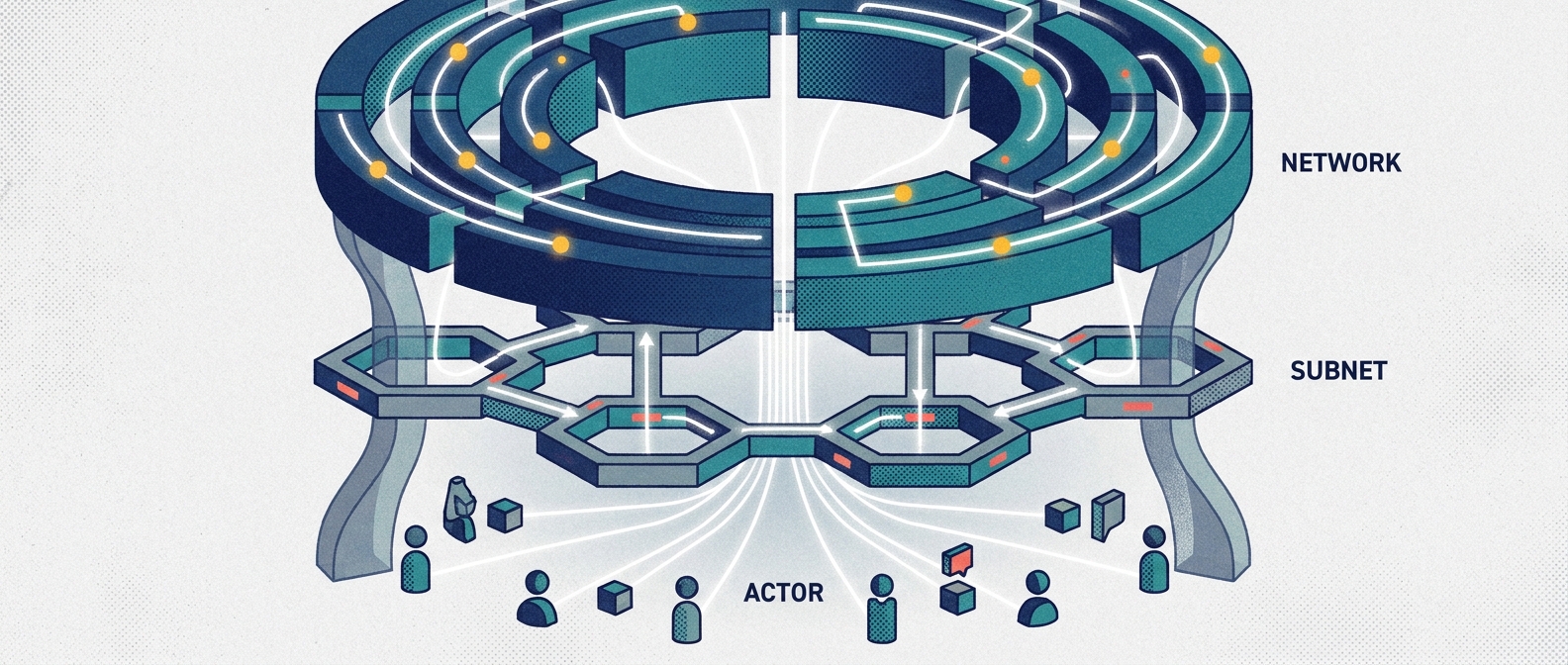
  • Business Strategist On Monday morning, review the research's findings on differentiating KPI scopes and draft a preliminary list of potential network, subnet, and actor-level KPIs for a newly forming collaborative initiative.
  • Researcher On Monday morning, begin designing a case study to apply and further refine the proposed KPI definition method within a new collaborative business scenario, focusing on the 'multi-criteria KPI selection' and 'attribute operationalization' steps.
  • Policymaker On Monday morning, identify a specific public-private collaborative initiative and begin exploring how the research's approach to KPI definition could be adapted to measure its network-wide alignment and individual actor contributions effectively.
Operations & Supply Chain
Illustration for: How do laws banning businesses from suppressing negative reviews affect online customer ratings?

Key question

How do laws banning businesses from suppressing negative reviews affect online customer ratings?

Can Regulation Restore Authenticity? Evidence from Policies Against Online Review Suppression
Sanatizadeh, Burtch, Hong, et al. · Information Systems Research · 2025
What it means for you
  • CIO / IT Executive On Monday morning, initiate a review of our internal policies and legal contracts to ensure no clauses inadvertently threaten or discourage customers from providing honest feedback on public review platforms.
  • IT Manager On Monday morning, task your team with monitoring online review platforms for any patterns of review suppression tactics being used by our competitors, specifically looking for increases in negative reviews that are quickly removed or challenged.
  • Business Strategist On Monday morning, analyze recent customer feedback data, particularly any negative reviews received in the last quarter, and assess if there are opportunities to engage with these customers to improve our offerings and address concerns openly.
  • Researcher On Monday morning, identify and gather publicly available datasets on consumer review sentiment and volume for companies in sectors known for aggressive review suppression prior to recent regulatory changes, to replicate or extend the findings on the CRFA.
  • Policymaker On Monday morning, schedule a meeting with your legislative staff to discuss potential avenues for expanding regulatory protections to cover other forms of consumer feedback, such as social media comments or product testimonials, building upon the success of the CRFA.
Cloud & Infrastructure
Illustration for: How can organizations successfully implement digital identity wallets and overcome common adoption challenges?

Key question

How can organizations successfully implement digital identity wallets and overcome common adoption challenges?

Digital Identity Wallets: A Guide to the EU’s New Identity Model
Kudra, Rieger, Sedlmeir, et al. · Information Systems Journal · 2026
What it means for you
  • CIO / IT Executive Schedule a 30-minute internal briefing for your core IT leadership team to present the attached research summary and assign a point person to investigate the 'technical maturity' obstacles identified in the key findings within the context of our existing identity and access management infrastructure.
  • IT Manager On Monday morning, compile a list of all current third-party single sign-on providers used by the organization and identify which of these might be candidates for integration or replacement with a digital identity wallet solution in the future, flagging any immediate integration challenges or risks.
  • Business Strategist Dedicate one hour on Monday morning to reviewing the 'ecosystem value co-creation' challenges mentioned in the research and brainstorm at least three potential business use cases within our organization where a digital identity wallet could unlock new revenue streams or significantly improve customer experience.
  • Researcher Begin analyzing the 12 practical experience case studies mentioned in the research by focusing on the 'organizational integration' obstacles. Identify and document recurring themes and successful mitigation strategies from at least three diverse industry examples to inform our own adoption framework.
  • Policymaker Initiate a dialogue with legal and compliance teams on Monday morning to assess the implications of the 2026 EU mandate for digital wallet support, specifically identifying any current regulatory gaps or areas where policy clarification will be needed to facilitate the adoption of wallet-based identity models.
Cybersecurity & Privacy
Illustration for: How does integrating generative AI into coursework affect student learning and practical skills?

Key question

How does integrating generative AI into coursework affect student learning and practical skills?

Generative Artificial Intelligence in Higher Education: Mediating Learning for Literacy Development
Hönigsberg, Watkowski, Drechsler · Communications of the AIS · 2025
What it means for you
  • CIO / IT Executive On Monday morning, direct your team to initiate a pilot program with ChatGPT-4 for a select group of faculty in the business school to explore its integration into curriculum design and assess infrastructure readiness for wider deployment.
  • IT Manager On Monday morning, schedule a meeting with the faculty involved in the pilot program to gather initial feedback on their experience using GAI tools and document any technical challenges encountered during their setup or usage.
  • Business Strategist On Monday morning, begin researching and analyzing how competitor business schools are currently leveraging generative AI in their curricula and draft a preliminary report on potential competitive advantages or disadvantages for our institution.
  • Researcher On Monday morning, begin drafting a research proposal to investigate the specific prompt engineering strategies employed by students in the pilot program and how these strategies correlate with improved literacy development outcomes.
  • Policymaker On Monday morning, initiate a review of existing academic integrity policies to identify areas that need to be updated or expanded to address the ethical use of generative AI by students and faculty.
AI & Automation
Illustration for: How does generative AI transform the way digital platforms create value, operate, and manage their users?

Key question

How does generative AI transform the way digital platforms create value, operate, and manage their users?

Generative AI and its Transformative Value for Digital Platforms
Wessel, Adam, Benlian, et al. · Journal of Management Information Systems · 2025
What it means for you
  • CIO / IT Executive On Monday morning, schedule a 30-minute exploratory meeting with your core architecture and data science teams to identify 1-2 pilot use cases for intelligent automation within our existing platform, focusing on areas where GenAI can autonomously process and interpret existing boundary resources like APIs or SDKs to generate context-aware outputs.
  • IT Manager On Monday morning, initiate a review of the platform's current developer documentation and onboarding process. Identify specific sections or tasks that could be simplified or made more accessible to non-experts by integrating GenAI-powered tools for code generation, API explanation, or prompt engineering guidance.
  • Business Strategist On Monday morning, begin drafting a one-page concept document outlining how GenAI could be leveraged for hyper-personalization on our platform. Focus on identifying 2-3 specific user segments and detailing how GenAI could generate unique, context-aware content or recommendations for each, differentiating from current rule-based personalization.
  • Researcher On Monday morning, select one of the four key GenAI mechanisms (intelligent automation, democratization, hyper-personalization, or collaborative innovation) and spend two hours outlining a specific research question and potential methodology to investigate its impact on a particular aspect of platform stakeholder dynamics, such as complementor participation or user engagement.
  • Policymaker On Monday morning, convene a brief working session with legal and compliance advisors to discuss potential novel governance mechanisms needed to ensure the quality and authenticity of GenAI-generated outputs on digital platforms, specifically addressing the challenges highlighted by amplified network effects from lowered entry barriers.
AI & Automation
Illustration for: How can AI governance be adapted to fit local cultural and ethical values around the world?

Key question

How can AI governance be adapted to fit local cultural and ethical values around the world?

Toward Cultural–Ethical Fit in AI Governance: A Global Typology of Governance Profiles
Symeonidis, Schneider, Nikiforova · ECIS · 2026
What it means for you
  • CIO / IT Executive On Monday morning, schedule a 30-minute deep dive with your legal and ethics teams to identify which of the eight AI governance profiles identified in the research most closely aligns with your organization's current AI development and deployment practices, and flag any immediate misalignments.
  • IT Manager On Monday morning, initiate a review of your team's current AI project documentation and development methodologies, specifically looking for instances where decisions about fairness, transparency, or accountability might have been implicitly influenced by a single cultural perspective (e.g., U.S.-centric) and note them for further discussion.
  • Business Strategist On Monday morning, begin analyzing your organization's key international markets and identify the primary cultural value orientations that characterize them, then cross-reference this with the meta-tensions (social justice vs. economic competitiveness, autonomy vs. security) to anticipate potential governance friction for upcoming AI initiatives.
  • Researcher On Monday morning, begin drafting a short literature review outline focusing on how cultural value orientations (e.g., individualism vs. collectivism) have historically shaped the adoption and regulation of other transformative technologies (e.g., the internet, biotechnology) to draw parallels with AI governance.
  • Policymaker On Monday morning, review the 'diagnostic decision framework' mentioned in the research, and identify one specific AI guideline (e.g., data privacy regulations) that your jurisdiction currently applies universally, then brainstorm how to adapt its interpretation to better fit the dominant cultural value orientations of your primary constituent groups.
Cybersecurity & Privacy
Illustration for: What roles can generative AI play in data quality management, and how should leaders govern them?

Key question

What roles can generative AI play in data quality management, and how should leaders govern them?

A Typology For Responsible Delegation Of Data Quality Management To Generative AI
Roht, Nikiforova, Lefebvre · ECIS · 2026
What it means for you
  • CIO / IT Executive On Monday morning, initiate a review of your organization's current DQM tool landscape to identify which, if any, are actively experimenting with or have integrated GenAI capabilities, and schedule a follow-up meeting with the IT Manager to discuss initial findings and potential pilot opportunities based on the 'Translator' role.
  • IT Manager On Monday morning, dedicate an hour to review the existing data quality rulebooks and documentation within your team's purview, noting down specific areas where natural language descriptions of data quality issues or desired rules are prevalent, to prepare for a discussion with the CIO/IT Executive about the potential application of the 'Translator' GenAI role.
  • Business Strategist On Monday morning, identify one critical business process that is currently hampered by data quality issues and then, using the 'Explainer' GenAI role as a conceptual framework, draft three potential narrative-style questions you would ask an AI about the root causes and impact of these data quality problems to present to stakeholders.
  • Researcher On Monday morning, begin by outlining a research proposal to investigate the effectiveness and potential biases of GenAI 'Resolver' roles in correcting common data anomalies within a specific industry domain, drawing upon the governance guidelines related to mandatory human validation for high-impact actions.
  • Policymaker On Monday morning, begin drafting a preliminary policy document that outlines the principle of 'retained human accountability' for any data quality decisions made or influenced by GenAI within the organization, focusing on the need for clear audit trails and oversight for 'Resolver' and 'Integrator' roles.
Data & Analytics
Illustration for: How does adopting smart speakers change how consumers search for, buy, and consume digital content?

Key question

How does adopting smart speakers change how consumers search for, buy, and consume digital content?

The Voice of Commerce: How Smart Speakers Reshape Digital Content Consumption and Preferences
Son, Oh, Im · MIS Quarterly · 2023
What it means for you
  • CIO / IT Executive On Monday morning, task your team with investigating integration points between existing VOD platforms and major smart speaker voice assistant APIs (e.g., Alexa, Google Assistant) to enable seamless content discovery and playback via voice commands.
  • IT Manager On Monday morning, analyze the current VOD platform's data infrastructure to identify how to track and log voice-initiated search queries and content playback events, distinguishing them from traditional remote control interactions.
  • Business Strategist On Monday morning, initiate a brainstorm session to explore new content promotion strategies that leverage voice-activated search, considering how to make titles more discoverable through natural language queries and conversational recommendations.
  • Researcher On Monday morning, begin outlining a follow-up study to quantify the correlation between specific conversational voice interactions (beyond simple search) and increased VOD content consumption, perhaps through A/B testing of voice-guided discovery features.
  • Policymaker On Monday morning, convene a working group to assess the potential implications of increased voice-activated content consumption on digital accessibility standards and to explore how to ensure equitable access to content across all user interfaces.
Operations & Supply Chain
Illustration for: How can organizations effectively design and implement artificial intelligence to support business decision-making?

Key question

How can organizations effectively design and implement artificial intelligence to support business decision-making?

Design principles for artificial intelligence-augmented decision making: An action design research study
Pathirannehelage, Shrestha, von Krogh · European Journal of Information Systems · 2024
What it means for you
  • CIO / IT Executive On Monday morning, schedule a 30-minute kickoff meeting with your heads of data science, infrastructure, and business intelligence to review the company's current AIADM initiatives and identify one high-priority business model requirement for AIADM to address within the next quarter.
  • IT Manager On Monday morning, initiate a preliminary audit of existing data pipelines and AI model repositories, specifically noting any inconsistencies or gaps in documentation that hinder synergy between input data, AI models, and visual outputs.
  • Business Strategist On Monday morning, draft a concise one-page document outlining at least two specific AIADM use cases that directly align with the company's current strategic objectives, identifying the key data inputs and desired decision outcomes for each.
  • Researcher On Monday morning, review the internal documentation for the AIADM system currently in use, and identify one specific instance where human domain expertise could have significantly improved the AI's output or decision recommendation.
  • Policymaker On Monday morning, begin drafting a preliminary checklist of essential components for an ethical AI governance framework, focusing on elements relevant to data privacy, bias detection, and clear lines of decision accountability for AI-augmented decisions.
AI & Automation
Illustration for: How can organizations turn responsible artificial intelligence principles into practical governance practices?

Key question

How can organizations turn responsible artificial intelligence principles into practical governance practices?

Responsible artificial intelligence governance: A review and research framework
Papagiannidis, Mikalef, Conboy · Journal of Strategic Information Systems · 2025
What it means for you
  • CIO / IT Executive On Monday morning, initiate a review of your organization's current AI project lifecycle documentation to identify where the seven core responsible AI principles (accountability, diversity & fairness, human agency & oversight, privacy & data governance, technical robustness & safety, transparency, and social & environmental well-being) are explicitly addressed and where gaps exist, preparing to assign ownership for these areas.
  • IT Manager On Monday morning, schedule a 30-minute meeting with your team responsible for AI development or deployment to collaboratively identify one specific AI project that could benefit from enhanced procedural practices (e.g., implementing a new risk assessment checklist based on transparency principles) and assign a team member to draft this enhancement by Friday.
  • Business Strategist On Monday morning, dedicate an hour to researching how responsible AI governance (structural, procedural, and relational practices) could directly contribute to your organization's stated business objectives and competitive advantage, identifying at least one concrete opportunity to explore further.
  • Researcher On Monday morning, select one of the seven core responsible AI principles that you find most underdeveloped in current practice and spend two hours identifying three specific research questions from the provided framework that directly address operationalizing this principle, preparing to draft a short proposal for investigation.
  • Policymaker On Monday morning, dedicate an hour to identifying which of the seven core responsible AI principles your current regulatory framework or internal policies address most weakly, and then draft a one-page summary of potential areas for future policy development or amendment, focusing on bridging the gap between abstract principles and actionable practices.
AI & Automation
Illustration for: How does collaborative course redesign affect student performance, teaching consistency, and instructor confidence?

Key question

How does collaborative course redesign affect student performance, teaching consistency, and instructor confidence?

Efficacy Beliefs and Outcomes: Socio-Cognitive Perspectives on a Faculty-Led coP
Muraski, Heath, Eierman, et al. · AIS SIGED Conference · 2023
What it means for you
  • CIO / IT Executive On Monday morning, schedule a 30-minute meeting with your IT academic technology support lead to explore a pilot program implementing a Communities of Practice model for a high-enrollment introductory course, using the provided research as a framework for discussion on potential student outcome improvements and faculty development.
  • IT Manager On Monday morning, gather the instructors for the introductory information systems course for a 45-minute session. Share the key findings of this research, specifically highlighting the gains in student performance and instructor self-efficacy. Then, collaboratively brainstorm one small, concrete change to the course syllabus or assessment that can be implemented next semester as a collective first step towards greater consistency.
  • Business Strategist On Monday morning, analyze the current onboarding and ongoing professional development process for new faculty teaching foundational courses. Identify any gaps in collaborative support and informal learning opportunities, and consider how principles from this research, such as vicarious learning and peer persuasion, could be integrated into existing programs to improve faculty confidence and course consistency.
  • Researcher On Monday morning, begin drafting a proposal for a follow-up study. Focus on investigating the specific mechanisms of vicarious learning and peer verbal persuasion within the identified Community of Practice, perhaps through targeted surveys or observation protocols, to quantify their impact on instructor self-efficacy and to better understand how to scale these findings.
  • Policymaker On Monday morning, initiate a discussion with the Provost's office and the Faculty Senate leadership to present the findings of this research. Propose the development of a university-wide framework or grant program that incentivizes and supports the formation of faculty Communities of Practice for foundational courses, emphasizing the potential for improved student learning outcomes and faculty development.
Cybersecurity & Privacy
Illustration for: How can practitioner researchers overcome the divide between academia and industry to create real-world impact?

Key question

How can practitioner researchers overcome the divide between academia and industry to create real-world impact?

Boundary Spanning and Practical Impact in IS Research: A Bourdieusian Analysis
McCarthy, Scholta, Hausvik, et al. · Information Systems Journal · 2025
What it means for you
  • CIO / IT Executive On Monday morning, schedule a 30-minute meeting with your direct reports to initiate a 'practice impact review' focused on one ongoing IS project. Ask each person to identify one specific academic insight or research finding from a recent external study or internal research initiative that could be directly applied to improve that project's current proof-of-concept or proof-of-value stage, and assign them to explore this application by end of week.
  • IT Manager On Monday morning, identify one specific, recent academic paper or conference proceeding relevant to a current team challenge. Forward this paper to your team with a concise note asking for a brief, 1-2 sentence summary of its most practical takeaway and how it *might* apply to your current proof-of-value stage objective by Tuesday afternoon.
  • Business Strategist On Monday morning, review the key performance indicators (KPIs) of one strategic business initiative currently underway. Identify which KPIs are not meeting expectations and, using the 'proof-of-value' framework, draft a one-page hypothesis on how a novel IS application or process, potentially informed by academic research, could demonstrably improve these specific KPIs within the next quarter.
  • Researcher On Monday morning, select one recent academic publication where you are the lead author and identify its 'proof-of-use' stage potential. Draft a single-slide executive summary that articulates the core problem addressed, the practical solution proposed, and one tangible benefit for a specific industry practitioner role (e.g., IT manager, business analyst), and share it with three relevant practitioner contacts for feedback by Wednesday.
  • Policymaker On Monday morning, review the current grant application criteria for technology innovation funding. Identify if and how 'demonstrable practical impact' is explicitly assessed, and draft a brief proposal to incorporate a specific requirement for applicants to detail their strategy for achieving 'proof-of-value' or 'proof-of-use' within a defined timeframe, alongside theoretical contributions.
Operations & Supply Chain
Illustration for: How do virtual worlds help people with lifelong disabilities move from social isolation to social inclusion?

Key question

How do virtual worlds help people with lifelong disabilities move from social isolation to social inclusion?

Affordance-Based Pathway Model of Social Inclusion: A Case Study of Virtual Worlds and People With Lifelong Disability
Stendal, Sein, Thapa · Journal of the AIS · 2026
What it means for you
  • CIO / IT Executive On Monday morning, task your accessibility team to conduct an initial assessment of our current platform's 'communicability' features (e.g., real-time chat, group messaging, avatar-based interaction quality) against the research's identified functional affordances to understand potential barriers and opportunities for individuals with disabilities.
  • IT Manager On Monday morning, schedule a 30-minute working session with your frontline support staff to review existing user feedback logs for mentions of difficulty with navigation, communication, or customization within our virtual environment, specifically looking for patterns that might align with limitations in perceived 'mobility' or 'personalizability' affordances.
  • Business Strategist On Monday morning, initiate a competitive analysis focusing on how emerging virtual platforms or digital communities are leveraging 'engageability' and 'self-actualizability' affordances to foster user connection and content creation, particularly noting any strategies that might appeal to or benefit users with disabilities.
  • Researcher On Monday morning, begin drafting a protocol for a pilot study within our organization's virtual world that focuses on measuring the impact of enhanced 'communicability' features on user-reported feelings of 'engageability' and 'self-actualizability' among a diverse user group, potentially including participants with disabilities.
  • Policymaker On Monday morning, convene a brief meeting with your advisory committee to discuss how current digital inclusion policies might be strengthened by explicitly incorporating the research's identified 'functional affordances' (communicability, mobility, personalizability) and 'social affordances' (engageability, self-actualizability) as measurable criteria for assessing technological accessibility and support for social participation.
Cloud & Infrastructure
Illustration for: How can artificial intelligence simplify complex privacy policies while maintaining their essential legal accuracy?

Key question

How can artificial intelligence simplify complex privacy policies while maintaining their essential legal accuracy?

Automated Privacy Policy Simplification through a GPT-Powered Chrome Extension
Al Jabor, Astaneh, Mohanty, et al. · ICIS · 2025
What it means for you
  • CIO / IT Executive On Monday morning, initiate a pilot program to evaluate the integration of a GPT-powered privacy policy simplification Chrome extension across a select department, focusing on user adoption and feedback regarding usability and perceived value.
  • IT Manager On Monday morning, prepare a technical feasibility assessment for deploying the developed Chrome extension across the organization's standard user workstations, outlining any necessary infrastructure changes or security considerations.
  • Business Strategist On Monday morning, analyze how the real-time privacy policy simplification and Q&A features of the Chrome extension can be leveraged to enhance user trust and potentially create a competitive differentiator for our online services.
  • Researcher On Monday morning, begin designing an experiment to test the effectiveness of the audience-adjusted rewriting prompt ('rewrite so a 10th-grade student can understand while maintaining legal accuracy') with a new set of privacy policies from a different industry sector.
  • Policymaker On Monday morning, review the research findings on improved readability and content preservation to draft talking points for discussions on enhancing consumer understanding of digital service terms and conditions.
Cybersecurity & Privacy
Illustration for: How do stakeholders' past negative experiences affect their trust and adoption of new technology?

Key question

How do stakeholders' past negative experiences affect their trust and adoption of new technology?

Yoga Sutra-Based Memory Analysis of Information Systems Implementation
Vaidya · Communications of the AIS · 2026
What it means for you
  • CIO / IT Executive On Monday morning, schedule a 30-minute discovery call with your Head of User Experience and your Chief Ethics Officer to brainstorm how to proactively identify and mitigate potential 'Samskara' (subliminal impressions) in upcoming system implementations by focusing on past negative stakeholder experiences.
  • IT Manager On Monday morning, review the last three system user feedback reports for any recurring themes related to distrust or negative past experiences, and flag the top two recurring issues to investigate further for potential 'Alambana' (external triggers) in your current system.
  • Business Strategist On Monday morning, draft a brief (one-page) internal memo to your team outlining the concept of 'Samskara' and its potential impact on technology adoption, and request them to identify one instance in recent projects where past negative impressions might have influenced user behavior.
  • Researcher On Monday morning, begin drafting the introduction to your next research paper by clearly articulating the gap in current information systems research regarding the lack of focus on individual cognitive variations and Eastern philosophical perspectives on memory, using the Yoga Sutra framework as your proposed solution.
  • Policymaker On Monday morning, initiate a discussion with your advisory board regarding the importance of embedding ethical and behavioral values into the design and implementation guidelines for all new government information systems, referencing the finding that failures often stem from a lack of adherence to these values, not culture.
Data & Analytics
Illustration for: How do technology projects affect local communities, and what determines whether they succeed or fail?

Key question

How do technology projects affect local communities, and what determines whether they succeed or fail?

Ethics-based ontology in ICT4D
Thapa · Information Technology for Development · 2025
What it means for you
  • CIO / IT Executive On Monday morning, schedule a 30-minute meeting with your ICT4D project leads to introduce the concept of an 'ethics-based ontology' and ask them to identify one project where technology is deeply integrated into user workflows and cultural practices. Assign them to bring initial thoughts on how the project's impact on lived experience and moral agency could be assessed in the next project review.
  • IT Manager On Monday morning, review the support tickets and user feedback logs from the last quarter for your current ICT4D deployment. Specifically, look for recurring issues that are not purely technical but seem to relate to user frustration, resistance to adoption, or a perception of technology not fitting their daily routines. Flag these for further investigation with your team.
  • Business Strategist On Monday morning, identify your organization's most critical ICT4D initiative. Draft a brief memo outlining how you plan to evaluate its success not just on efficiency metrics but also on its impact on the dignity, agency, and cultural integrity of the end-users. Prepare to discuss this revised evaluation framework with your team by the end of the week.
  • Researcher On Monday morning, revisit the 'implementation challenges' section of the research paper and select ONE challenge (e.g., translating abstract concepts into practical design metrics). Begin drafting a short (1-page) proposal for how you might operationalize this concept for a future ICT4D project you are involved in, focusing on a tangible measurement.
  • Policymaker On Monday morning, review existing national or organizational guidelines for technology procurement and deployment in development contexts. Identify sections that address user impact, cultural sensitivity, or long-term sustainability. Draft a short list of questions to investigate how these existing guidelines could be strengthened to incorporate considerations of lived experience and moral responsibility for technology's impact.
Cybersecurity & Privacy
Illustration for: What drives users to stay engaged with location-based games and build real-world communities?

Key question

What drives users to stay engaged with location-based games and build real-world communities?

Gamification for Community Building: Click to Shake Hands
Al Thani, Aoun, Vatanasakdakul · PACIS · 2025
What it means for you
  • CIO / IT Executive On Monday morning, allocate budget to pilot a location-based gamified application in one of our company's facilities, specifically focusing on fostering cross-departmental collaboration by integrating 'location incentives' for shared project spaces.
  • IT Manager On Monday morning, schedule a meeting with your development team to discuss how to integrate elements like 'reward value' and 'achievement' into our existing internal communication platform to encourage more active participation and knowledge sharing.
  • Business Strategist On Monday morning, initiate a brainstorming session with your marketing and product teams to identify opportunities to leverage 'network influence' and 'herd behavior' in upcoming product launches or community outreach initiatives, perhaps by creating exclusive early-access groups.
  • Researcher On Monday morning, refine the survey instrument to include questions specifically measuring 'sense of belonging' and 'social motive' as distinct constructs, and prepare to recruit participants from diverse community groups for your next study.
  • Policymaker On Monday morning, direct your staff to research successful public policy initiatives that have used location-based incentives or gamification to encourage citizen engagement with local services or community events, and identify potential applications for our jurisdiction.
Cybersecurity & Privacy
Load more insights

Showing 27 of 54

AI-processed.
Human-approved.

  • Linked to the source

    Every insight is an original synthesis and links to the full paper at its original publisher.

  • Approved by the authors

    Authors review each draft and tell us what to correct; we regenerate it, and it goes live once they approve it. Nothing goes live without their approval. Each approved insight is marked as approved.

  • Run under AIS oversight

    Papers are read and summarised by open-source models on University of Münster infrastructure. Google Gemini voices the episodes, draws the illustrations, writes the recommendations for each role from our summaries, applies authors' corrections to our summaries and powers Ask AIS Insights, which reads our summaries and, for some papers, their full text.

For researchers

Make your research heard.

Reach leaders, managers and policymakers beyond academia, and open new conversations between research and practice.

Add my paper
  1. Upload your paper

    Add the PDF and a link to the published version.

  2. Review the draft

    We prepare a plain-language summary and the episode script. Nothing goes live until you approve it.

  3. Go live

    Your insight appears in the library, linked to the original paper.