
New
MIS Quarterly (2024) AI Processed Human Approved
WHEN ALGORITHMS DELEGATE TO HUMANS:EXPLORING HUMAN-ALGORITHM INTERACTION AT UBER
This study investigates how algorithms delegate tasks to humans in complex, multi-agent settings using the ride-hailing application Uber as a case study. By analyzing 63 US Uber patents and conducting 22 semi-structured interviews with drivers and passengers, the authors explore human-algorithm interaction beyond simple two-agent configurations. The paper theorizes distributed delegation as a construct encompassing collective hybrid appraisal, distribution, and coordination.
Problem
Prior research on human-algorithm interaction primarily focuses on one-to-one or many-to-one dyads, assuming delegation is binary or that algorithms act with full autonomy. However, real-world digital platforms operate as complex multi-agent environments where multiple algorithms interact simultaneously with numerous humans. Existing frameworks lack theorization on how collectives of algorithms delegate tasks across groups of humans while remaining dependent on continuous human inputs.
Outcome
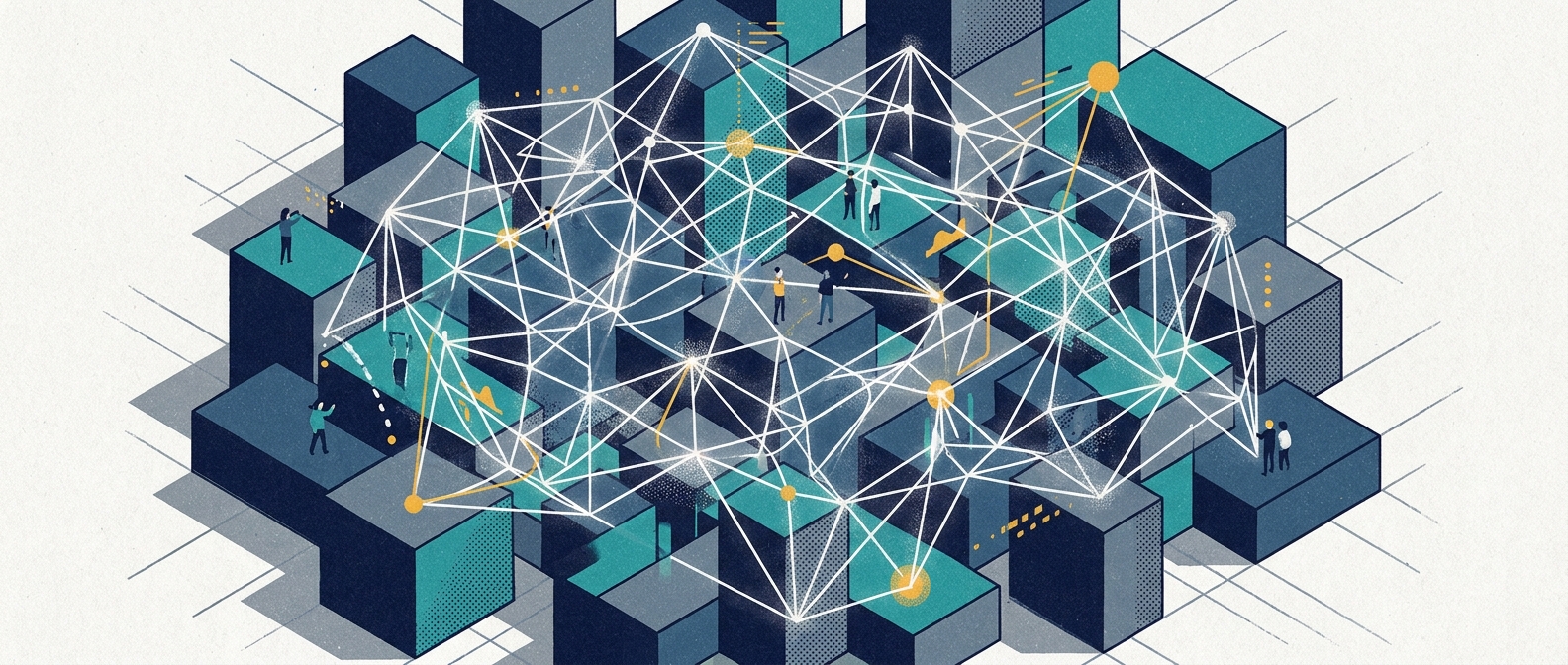
- Conceptualizes distributed delegation as a collective, hybrid, and relational process where multiple algorithms work together while drawing on human data inputs.
- Identifies three key mechanisms of algorithmic delegation in multi-agent settings: collective hybrid appraisal, collective hybrid distribution, and collective hybrid coordination.
- Reveals that delegation functions along a continuum rather than as a complete, binary transfer of rights and responsibilities between algorithms and humans.
- Demonstrates that human involvement—through trace data, choice data, and direct interventions during breakdowns—is necessary for algorithmic agency to operate.
What it means for you
- CIO / IT Executive: On Monday morning, initiate a review of our current platform architecture to identify all instances of multi-agent algorithmic systems and assess their delegation models, specifically looking for 'distributed delegation' patterns to ensure human input is integrated effectively.
- IT Manager: On Monday morning, schedule a technical deep-dive with your team focused on one specific algorithmic system that delegates to humans; analyze its current delegation logic and identify specific points where human trace data, choice data, or direct intervention are critical inputs, and document these dependencies.
- Business Strategist: On Monday morning, begin a strategic assessment of our core business processes that rely on algorithmic delegation; map out the human touchpoints and decision points that are currently integrated, or could be integrated, within a 'distributed delegation' framework to enhance system resilience and adaptability.
- Researcher: On Monday morning, draft a research proposal outlining a study to quantitatively measure the impact of 'distributed delegation' on system performance and user satisfaction in our specific domain, focusing on how varying levels of human input influence outcomes.
- Policymaker: On Monday morning, convene a working group to examine existing regulations and internal policies related to algorithmic decision-making and human oversight; identify any gaps that need addressing to better accommodate 'distributed delegation' scenarios, ensuring clarity on accountability and human agency.
Transcript
Host: Welcome to A.I.S. Insights — powered by Living Knowledge. I'm Anna Ivy Summers, and today we're exploring a fascinating look into how technology and human work intersect. We're diving into a landmark study titled "WHEN ALGORITHMS DELEGATE TO HUMANS: EXPLORING HUMAN-ALGORITHM INTERACTION AT UBER". Joining me is our technology analyst, Alex Ian Sutherland. Welcome, Alex!
Expert: Thanks, Anna. It's great to be here to unpack this study with you.
Host: So Alex, we hear a lot today about AI taking over complex tasks and operating completely on its own. But this study looks at things quite differently through the lens of Uber. What is the big problem or misconception this research addresses?
Expert: Well, Anna, much of the current discussion around AI assumes algorithms operate with total autonomy—that an algorithm simply takes over a job or delegates a task directly to a single person in a clean, one-to-one fashion. But real-world business environments are rarely that simple. They are multi-agent settings where scores of algorithms interact simultaneously with crowds of humans. The study highlights that we previously lacked a theoretical framework for how complex collectives of algorithms delegate tasks across large groups of people, and how dependent those algorithms still are on continuous human input.
Host: That makes a lot of sense. Uber is such a clear example of this. How did the researchers actually examine what happens under the hood at Uber?
Expert: The researchers took a grounded, in-depth approach using a unique combination of data sources. First, they analyzed 63 detailed United States Uber patents. These documents revealed the exact technical logic and data flows between different algorithms. Then, to capture the human perspective, they conducted 22 semi-structured interviews with both Uber drivers and riders. This allowed them to see where algorithmic design meets human reality on the ground.
Host: Analyzing patent data alongside real user interviews sounds like a clever way to see past the black box. So, what were the main findings of the study?
Expert: The core contribution is a new framework called "distributed delegation." The authors found that delegation isn't a one-off, binary handover of authority from a single machine to a human. Instead, it is a collective, hybrid, and relational continuum.
Host: Break those terms down for us, Alex. What do collective, hybrid, and relational mean in this context?
Expert: "Collective" means that no single algorithm does the work alone. In Uber, simple-reflex algorithms that track real-time locations work hand-in-hand with model-based machine learning algorithms that predict driver behavior or demand surges. "Hybrid" means these algorithmic collectives cannot function without continuous human inputs—like passive trace data from GPS, active choices like accepting a ride request, or direct human interventions when something glitches. And "relational" means that algorithmic capabilities evolve over time through ongoing streams of data collected across entire crowds of past and present users.
Host: You mentioned three specific mechanisms through which this distributed delegation happens. What are those?
Expert: Right, the study identifies collective hybrid appraisal, collective hybrid distribution, and collective hybrid coordination. First, appraisal is how algorithms evaluate risk and assess users—like identifying nearby drivers or profiling driving styles. Second, distribution is how rights and responsibilities are assigned—like sending a ride invitation to a driver or pre-dispatching cars to an airport terminal. Third, coordination is how ongoing tasks are monitored and aligned—like tracking route progress or offering rewards to keep drivers on an optimal route.
Host: And if the system encounters an error or a lost driver, how do humans fit into that loop?
Expert: That's a crucial point. When an algorithmic process encounters a glitch—for instance, if a rider's location pin is inaccurate or a PIN code system breaks—humans perform what the authors call "delegation interventions." A driver restarts their phone app, or a rider directly messages the driver to give directions. This human agency actually repairs the breakdown and allows the algorithmic system to keep functioning.
Host: That brings us to why this matters for business leaders and managers. What are the key takeaways for organizations deploying AI and algorithmic management?
Expert: First, leaders need to re-evaluate claims of total algorithmic autonomy. Even advanced AI systems in multi-agent environments heavily depend on human data and human oversight. Second, when designing human-AI workflows—whether in ride-hailing, automated recruitment tools like HireVue, or healthcare systems—businesses should recognize that delegation exists on a continuum. You aren't replacing humans entirely; you are rebalancing rights and responsibilities. Finally, this hybrid reality raises critical questions about liability and ethics. When outcomes go wrong in a complex network of multiple algorithms and humans, assigning ultimate responsibility becomes much more nuanced.
Host: It really shifts the conversation from human replacement to thoughtful human-algorithm integration. Alex, thank you so much for breaking down this insightful study for us.
Expert: My pleasure, Anna.
Host: And thank you to our listeners for tuning in to A.I.S. Insights — powered by Living Knowledge. Join us next time as we continue to decode the technologies shaping the future of business.