Browse the library

79 insights from AIS journals, conferences and related outlets. Most start with the question they answer.

Got a research question instead? Ask AIS Insights

Showing 18 of 29 insights

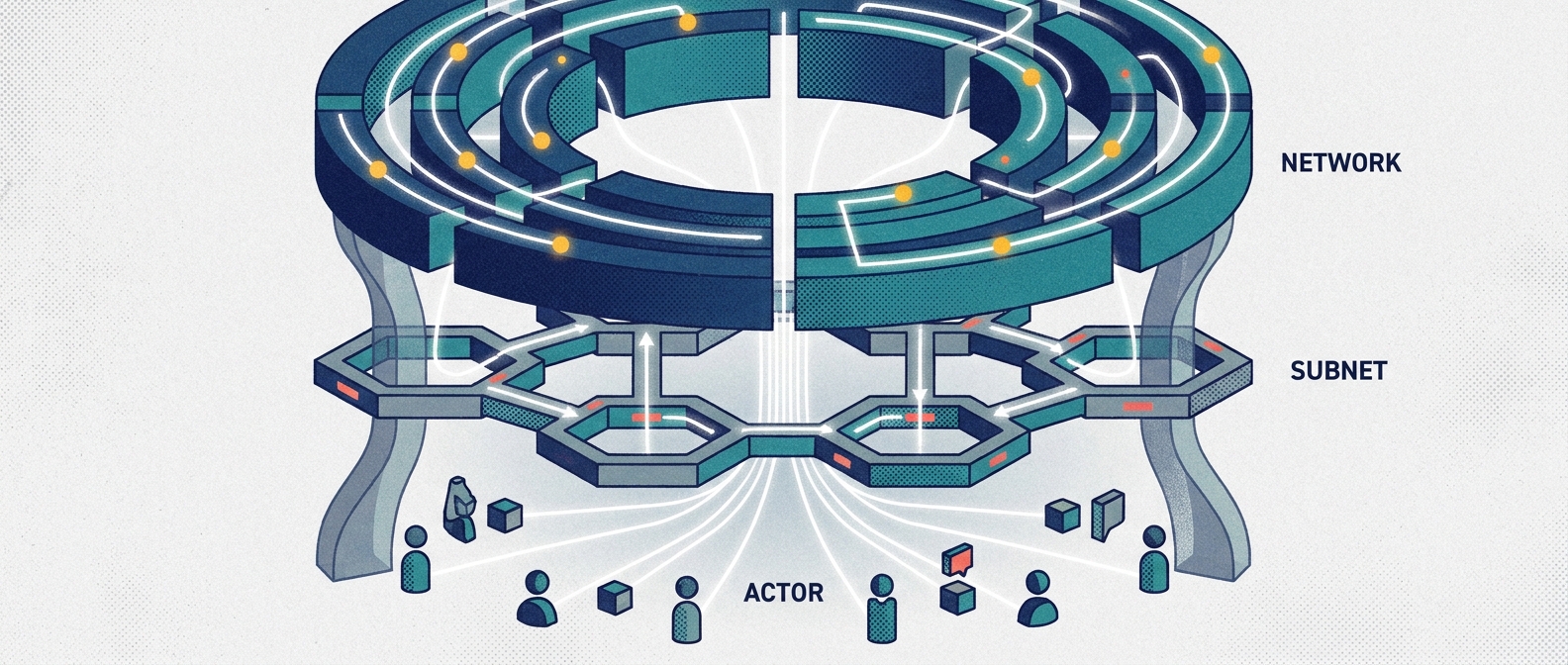
Illustration for: How can organizations define and select performance indicators for collaborative business networks?

Key question

How can organizations define and select performance indicators for collaborative business networks?

Managing Performance in Collaborative Networks: A Method for Defining Key Performance Indicators for Collaborative Business Models
van de Ven, Machado, Aysolmaz, et al. · Business & Information Systems Engineering · 2026

Operations & Supply Chain

What it means for you
  • CIO / IT Executive On Monday morning, initiate a pilot project to apply the three-step KPI definition method to one specific collaborative network your organization participates in, focusing on identifying and documenting initial network-level KPIs using your existing data infrastructure.
  • IT Manager On Monday morning, schedule a working session with a key business stakeholder from a collaborative project to begin the 'KPI specification' step of the research method, focusing on articulating the desired outcomes for that specific collaboration.
  • Business Strategist On Monday morning, review the research's findings on differentiating KPI scopes and draft a preliminary list of potential network, subnet, and actor-level KPIs for a newly forming collaborative initiative.
  • Researcher On Monday morning, begin designing a case study to apply and further refine the proposed KPI definition method within a new collaborative business scenario, focusing on the 'multi-criteria KPI selection' and 'attribute operationalization' steps.
  • Policymaker On Monday morning, identify a specific public-private collaborative initiative and begin exploring how the research's approach to KPI definition could be adapted to measure its network-wide alignment and individual actor contributions effectively.

Illustration for: How can organizations successfully implement digital identity wallets and overcome common adoption challenges?

Key question

How can organizations successfully implement digital identity wallets and overcome common adoption challenges?

Digital Identity Wallets: A Guide to the EU’s New Identity Model
Kudra, Rieger, Sedlmeir, et al. · Information Systems Journal · 2026

Cybersecurity & Privacy

What it means for you
  • CIO / IT Executive Schedule a 30-minute internal briefing for your core IT leadership team to present the attached research summary and assign a point person to investigate the 'technical maturity' obstacles identified in the key findings within the context of our existing identity and access management infrastructure.
  • IT Manager On Monday morning, compile a list of all current third-party single sign-on providers used by the organization and identify which of these might be candidates for integration or replacement with a digital identity wallet solution in the future, flagging any immediate integration challenges or risks.
  • Business Strategist Dedicate one hour on Monday morning to reviewing the 'ecosystem value co-creation' challenges mentioned in the research and brainstorm at least three potential business use cases within our organization where a digital identity wallet could unlock new revenue streams or significantly improve customer experience.
  • Researcher Begin analyzing the 12 practical experience case studies mentioned in the research by focusing on the 'organizational integration' obstacles. Identify and document recurring themes and successful mitigation strategies from at least three diverse industry examples to inform our own adoption framework.
  • Policymaker Initiate a dialogue with legal and compliance teams on Monday morning to assess the implications of the 2026 EU mandate for digital wallet support, specifically identifying any current regulatory gaps or areas where policy clarification will be needed to facilitate the adoption of wallet-based identity models.
Illustration for: How can AI governance be adapted to fit local cultural and ethical values around the world?

Key question

How can AI governance be adapted to fit local cultural and ethical values around the world?

Toward Cultural–Ethical Fit in AI Governance: A Global Typology of Governance Profiles
Symeonidis, Schneider, Nikiforova · ECIS · 2026

Cybersecurity & Privacy

What it means for you
  • CIO / IT Executive On Monday morning, schedule a 30-minute deep dive with your legal and ethics teams to identify which of the eight AI governance profiles identified in the research most closely aligns with your organization's current AI development and deployment practices, and flag any immediate misalignments.
  • IT Manager On Monday morning, initiate a review of your team's current AI project documentation and development methodologies, specifically looking for instances where decisions about fairness, transparency, or accountability might have been implicitly influenced by a single cultural perspective (e.g., U.S.-centric) and note them for further discussion.
  • Business Strategist On Monday morning, begin analyzing your organization's key international markets and identify the primary cultural value orientations that characterize them, then cross-reference this with the meta-tensions (social justice vs. economic competitiveness, autonomy vs. security) to anticipate potential governance friction for upcoming AI initiatives.
  • Researcher On Monday morning, begin drafting a short literature review outline focusing on how cultural value orientations (e.g., individualism vs. collectivism) have historically shaped the adoption and regulation of other transformative technologies (e.g., the internet, biotechnology) to draw parallels with AI governance.
  • Policymaker On Monday morning, review the 'diagnostic decision framework' mentioned in the research, and identify one specific AI guideline (e.g., data privacy regulations) that your jurisdiction currently applies universally, then brainstorm how to adapt its interpretation to better fit the dominant cultural value orientations of your primary constituent groups.
Illustration for: How do virtual worlds help people with lifelong disabilities move from social isolation to social inclusion?

Key question

How do virtual worlds help people with lifelong disabilities move from social isolation to social inclusion?

Affordance-Based Pathway Model of Social Inclusion: A Case Study of Virtual Worlds and People With Lifelong Disability
Stendal, Sein, Thapa · Journal of the AIS · 2026

Cloud & Infrastructure

What it means for you
  • CIO / IT Executive On Monday morning, task your accessibility team to conduct an initial assessment of our current platform's 'communicability' features (e.g., real-time chat, group messaging, avatar-based interaction quality) against the research's identified functional affordances to understand potential barriers and opportunities for individuals with disabilities.
  • IT Manager On Monday morning, schedule a 30-minute working session with your frontline support staff to review existing user feedback logs for mentions of difficulty with navigation, communication, or customization within our virtual environment, specifically looking for patterns that might align with limitations in perceived 'mobility' or 'personalizability' affordances.
  • Business Strategist On Monday morning, initiate a competitive analysis focusing on how emerging virtual platforms or digital communities are leveraging 'engageability' and 'self-actualizability' affordances to foster user connection and content creation, particularly noting any strategies that might appeal to or benefit users with disabilities.
  • Researcher On Monday morning, begin drafting a protocol for a pilot study within our organization's virtual world that focuses on measuring the impact of enhanced 'communicability' features on user-reported feelings of 'engageability' and 'self-actualizability' among a diverse user group, potentially including participants with disabilities.
  • Policymaker On Monday morning, convene a brief meeting with your advisory committee to discuss how current digital inclusion policies might be strengthened by explicitly incorporating the research's identified 'functional affordances' (communicability, mobility, personalizability) and 'social affordances' (engageability, self-actualizability) as measurable criteria for assessing technological accessibility and support for social participation.
Illustration for: How do stakeholders' past negative experiences affect their trust and adoption of new technology?

Key question

How do stakeholders' past negative experiences affect their trust and adoption of new technology?

Yoga Sutra-Based Memory Analysis of Information Systems Implementation
Vaidya · Communications of the AIS · 2026

Data Analytics & Big Data

What it means for you
  • CIO / IT Executive On Monday morning, schedule a 30-minute discovery call with your Head of User Experience and your Chief Ethics Officer to brainstorm how to proactively identify and mitigate potential 'Samskara' (subliminal impressions) in upcoming system implementations by focusing on past negative stakeholder experiences.
  • IT Manager On Monday morning, review the last three system user feedback reports for any recurring themes related to distrust or negative past experiences, and flag the top two recurring issues to investigate further for potential 'Alambana' (external triggers) in your current system.
  • Business Strategist On Monday morning, draft a brief (one-page) internal memo to your team outlining the concept of 'Samskara' and its potential impact on technology adoption, and request them to identify one instance in recent projects where past negative impressions might have influenced user behavior.
  • Researcher On Monday morning, begin drafting the introduction to your next research paper by clearly articulating the gap in current information systems research regarding the lack of focus on individual cognitive variations and Eastern philosophical perspectives on memory, using the Yoga Sutra framework as your proposed solution.
  • Policymaker On Monday morning, initiate a discussion with your advisory board regarding the importance of embedding ethical and behavioral values into the design and implementation guidelines for all new government information systems, referencing the finding that failures often stem from a lack of adherence to these values, not culture.
Illustration for: How does making conversational agents appear more human affect customer reactions when errors occur?

Key question

How does making conversational agents appear more human affect customer reactions when errors occur?

Artificial Normality: How Conversational Agents’ Perceived Humanness Inhibits Error Attribution and Preserves Satisfaction
Brendel, Lichtenberg, Hildebrandt, et al. · Journal of Management Information Systems · 2026

Cybersecurity & Privacy

What it means for you
  • CIO / IT Executive On Monday morning, allocate budget to pilot the integration of more human-centric design principles (e.g., nuanced language, empathetic phrasing) into our core customer-facing conversational agent, focusing on areas where process errors are most common, to preemptively reduce user error attribution and maintain satisfaction.
  • IT Manager On Monday morning, task your development team to review our current conversational agent's dialogue logs for instances of process errors and identify the top 3 most frequent error types to begin redesigning their responses with more humanlike cues (e.g., slight pauses, conversational fillers) to normalize the situation for users.
  • Business Strategist On Monday morning, initiate a cross-functional workshop with marketing and product development to explore how to strategically position our conversational agents' perceived humanness in customer communications, emphasizing its role in creating a seamless experience even when minor technical glitches occur.
  • Researcher On Monday morning, begin designing a follow-up study that experimentally manipulates specific humanlike conversational features (e.g., varying levels of politeness, acknowledgment of difficulty) within a simulated error scenario to quantify their direct impact on error attribution and situational normality, building upon the findings of Artificial Normality.
  • Policymaker On Monday morning, convene a small working group to draft guidelines for the ethical development of conversational agents, recommending that AI design standards encourage the incorporation of humanlike qualities to enhance user experience and mitigate negative reactions to inevitable system errors, rather than solely focusing on pure efficiency.
Illustration for: How do individual user behaviors and attitudes impact the business value generated from process mining?

Key question

How do individual user behaviors and attitudes impact the business value generated from process mining?

Unpacking the Role of Individuals in Process Mining: A Literature Review and Research Framework
Dyong, Franzoi, vom Brocke · ECIS · 2026

Operations & Supply Chain

What it means for you
  • CIO / IT Executive Initiate a data audit of the source pipelines feeding your enterprise process mining tools to eliminate data discrepancies, directly addressing the research finding that data inaccuracies severely undermine user trust and derail tool adoption.
  • IT Manager Add a mandatory 'Hypothesis-First' template to your team's process mining workflow on Monday morning, requiring analysts to document their specific diagnostic hypothesis before running queries to enforce structured behavior and reduce analysis duration.
  • Business Strategist Redesign the process mining ROI dashboard to measure actual business value outcomes (e.g., cost savings from process changes) rather than user log-in frequency, linking individual analytical insights directly to operational KPIs.
  • Researcher Draft a research design for a longitudinal study tracking 20 process mining analysts over six months to capture the sequential and temporal dynamics of user affect and trust, directly addressing the static limitations of current literature.
  • Policymaker Establish an internal organizational standard mandating that no department may deploy process mining software without integrating a formal training and methodological guidance program, ensuring compliant and high-quality data execution.
Illustration for: How should teams structure initial challenges to successfully launch AI projects?

Key question

How should teams structure initial challenges to successfully launch AI projects?

The Anatomy of a Design Challenge for Initiating AI Innovation
Röckel, van Giffen, Janson, et al. · ECIS · 2026

Cloud & Infrastructure

What it means for you
  • CIO / IT Executive Mandate that all upcoming AI project proposals use a standardized 'Design Challenge' charter template structured around the 4 robust elements (verb, object of innovation, target group, context) and 3 plastic elements (internal data, technology, potential), explicitly forbidding teams from locking in a rigid technical architecture in their initial pitch.
  • IT Manager Gather your interdisciplinary project team for a 60-minute workshop on Monday morning to co-create a 'Design Challenge' statement, explicitly defining the stable 'robust' elements to align the business and tech members, while leaving the 'plastic' elements (like specific data sources and AI models) open as flexible targets to be negotiated as the project progresses.
  • Business Strategist Review your company's AI project portfolio on Monday morning and intentionally rewrite the 'object of innovation' for each project: frame them as 'modular' if you need predictable, incremental improvements, or rewrite them as 'space-based' (e.g., focused on broad capabilities) if you want to push the team toward radical, disruptive business model innovation.
  • Researcher Update your qualitative coding scheme for ongoing field studies of AI adoption to track how frequently and at what project stages teams modify the 'plastic' elements (internal data, technology, potential) versus the 'robust' elements of their project charters to measure the empirical threshold where technological uncertainty triggers project misalignment.
  • Policymaker Revise the application guidelines for the upcoming public AI innovation grant cycle to replace rigid 'technical specifications' requirements with a mandatory 'Design Challenge' framework, scoring applicants on the clarity of their robust elements (target group, context) and the adaptive flexibility of their plastic elements (data and technology integration plans).
Illustration for: How can educators effectively teach modern industrial software skills without expensive physical equipment?

Key question

How can educators effectively teach modern industrial software skills without expensive physical equipment?

Towards Design Principles for Teaching Industry 4.0 Competencies to CS/IS Students
Salcher · ECIS · 2026

Operations & Supply Chain

What it means for you
  • CIO / IT Executive Direct your enterprise architecture team to draft a transition plan to replace physical IT hardware training labs with virtualized, containerized sandbox environments (e.g., Docker/Kubernetes) to reduce infrastructure costs and align onboarding with modern Industry 4.0 software architectures.
  • IT Manager Review the programming prerequisites of your junior developers and assign them a structured, hands-on troubleshooting task using a containerized microservice mock-up on Monday morning to assess their readiness for complex Industry 4.0 integration projects.
  • Business Strategist Reallocate a portion of next quarter's talent development budget away from high-cost physical equipment training and toward scalable, software-based virtual simulators to cost-effectively build digital twin and data architecture competencies.
  • Researcher Draft a research proposal to conduct a multi-institution comparative study on these eight design principles, incorporating objective pre- and post-intervention technical testing rather than relying on subjective student feedback to measure competency gains.
  • Policymaker Create a state-level educational grant initiative that incentivizes higher education institutions to update computer science curricula with virtualization-based Industry 4.0 frameworks, shifting funding priority away from physical learning factories.
Illustration for: What competing tensions and trade-offs do leaders face when guiding national quantum computing ecosystems?

Key question

What competing tensions and trade-offs do leaders face when guiding national quantum computing ecosystems?

Orchestration Paradoxes in National Quantum Computing Innovation Ecosystems
Taipale, Tyrväinen, Tuunanen, et al. · ECIS · 2026

Operations & Supply Chain

What it means for you
  • CIO / IT Executive Schedule a 9:00 AM meeting with your lead enterprise architect to audit your current quantum-readiness roadmap, establishing a formal policy that divides software development and hardware access investments 50/50 to hedge against the performance tension of committing prematurely to a single unproven hardware stack.
  • IT Manager Create a bi-weekly 1-hour 'Quantum Cross-Training' slot in your team's calendar starting this Friday, pairing your specialized quantum physics PhDs with your generalist cloud engineers to address the learning tension between narrow technical specialization and broad-based systems integration.
  • Business Strategist Perform a revenue dependency audit to calculate the percentage of your quantum business unit's funding derived from state grants versus commercial clients, and draft a pitch deck for two private-sector pilots to actively transition away from 'godfather' state-funding reliance.
  • Researcher Draft a pre-competitive collaboration agreement template to send to a peer researcher at a competing institution, outlining a shared framework for baseline algorithm testing while clearly defining IP boundaries to manage the tension of collaboration versus resource competition.
  • Policymaker Draft a revision for the upcoming national quantum funding round guidelines that introduces a 'co-investment requirement,' mandating that state-funded consortia secure at least 25% of their budget from private corporate buyers to counter the 'godfather' dependency paradox.
Illustration for: How do people's personality traits shape the way they design their avatars in virtual worlds?

Key question

How do people's personality traits shape the way they design their avatars in virtual worlds?

Avatar Design and User Personality Traits: Systematic Literature Review on Identity Construction Through Avatar in the Metaverse
Kim, Zamani, Spanaki · ECIS · 2026

E-Commerce & Digital Platforms

What it means for you
  • CIO / IT Executive On Monday morning, sign off on a procurement budget to upgrade the remote team's hardware from standard webcams to high-fidelity VR headsets with motion-tracking capabilities, directly leveraging the finding that immersive hardware systematically increases presence, embodiment, and professional user-avatar behavioral alignment in virtual workspaces.
  • IT Manager On Monday morning, reconfigure the onboarding settings of your company's virtual collaboration platform (e.g., Microsoft Mesh) to offer two distinct avatar creation paths: a fast-track 'realistic photo-to-avatar' tool to satisfy conscientious employees who value physical resemblance, and an 'advanced creative' toolkit with diverse assets for employees high in openness.
  • Business Strategist On Monday morning, restructure the digital product roadmap for your virtual storefront to prioritize two distinct, personality-targeted microtransaction lines: a premium line of highly visible, socially expressive, and outgoing avatar accessories for extraverted users, and a baseline line of realistic, professional attire for highly conscientious users.
  • Researcher On Monday morning, draft a research proposal and IRB application for a comparative study tracking avatar customization behaviors of non-English-speaking users in modern, high-fidelity platforms (like VRChat or Horizon Worlds), explicitly addressing the current literature limitations regarding English-only studies and outdated Second Life data.
  • Policymaker On Monday morning, draft an organizational 'Metaverse Identity Privacy Policy' that explicitly bans the algorithmic profiling of users based on their self-avatar discrepancy, ensuring that users (particularly women experiencing identity discrepancy related to neuroticism) are protected from targeted behavioral manipulation or bias based on their digital representations.
Illustration for: How can teams evaluate whether an artificial intelligence project is ready to launch?

Key question

How can teams evaluate whether an artificial intelligence project is ready to launch?

Structuring Readiness for AI Innovation: The Role of the Design Challenge Brief as a Coordination and Gatekeeping Artefact
Hehn, Röckel, van Giffen · ECIS · 2026

Cloud & Infrastructure

What it means for you
  • CIO / IT Executive Draft and mandate a standard 'Design Challenge Brief' template that all AI project champions must complete and get approved before receiving formal project launch funding.
  • IT Manager Gather your AI project team for a 1-hour workshop to map your current pre-project planning stage to the three phases of divergent exploration, negotiation/translation, and convergent alignment, explicitly documenting how you will handle fluid data availability.
  • Business Strategist Audit your pipeline of proposed AI initiatives and flag any project that has not yet completed a collaborative 'Design Challenge Brief' to prevent launching projects with high uncertainty around non-deterministic outcomes.
  • Researcher Draft a research proposal and survey instrument to test the generalizability of the three-phase AI readiness model across a quantitative sample of 100+ corporate AI projects outside of academic lab settings.
  • Policymaker Integrate a 'Design Challenge Brief' gatekeeping requirement into your public sector AI procurement and funding frameworks to ensure public agencies evaluate data readiness and outcome uncertainties before awarding AI contracts.
Illustration for: How do on-screen interruptions affect task performance on mobile devices compared to desktop computers?

Key question

How do on-screen interruptions affect task performance on mobile devices compared to desktop computers?

Mobile use in an age of interruption: Implications of capacity and structural interference for mobile users
Fink, Baranes, Ilany-Tzur · Information & Management · 2025

E-Commerce & Digital Platforms

What it means for you
  • CIO / IT Executive On Monday morning, initiate a review of the current mobile application development roadmap, prioritizing projects that involve complex workflows to identify opportunities for modularization into smaller, independent subtasks in the next development cycle.
  • IT Manager On Monday morning, schedule a brief meeting with your mobile development team to discuss the research findings on higher resumption costs for mobile users and explore practical strategies for simplifying user interfaces and reducing cognitive load on mobile applications they manage.
  • Business Strategist On Monday morning, analyze customer feedback and usage data for core mobile applications to identify specific complex workflows that are likely causing high resumption costs and explore opportunities to redesign these for improved user efficiency.
  • Researcher On Monday morning, begin drafting a follow-up experiment proposal that specifically quantifies the impact of pre-defined 'modularized subtask' interfaces on mobile resumption costs compared to current complex workflows, using the findings from this study as a baseline.
  • Policymaker On Monday morning, draft a memo to relevant committees and agencies proposing the inclusion of 'mobile interface design standards' that encourage modularization of complex tasks to improve digital accessibility and productivity for mobile users.
Illustration for: How do communities use social media to support mental health recovery during natural disasters?

Key question

How do communities use social media to support mental health recovery during natural disasters?

Digital Mental Health Resilience During Natural Disasters: A Scoping Review and Research Agenda
Islam, Marx, Liu, et al. · ACIS · 2025

Cloud & Infrastructure

What it means for you
  • CIO / IT Executive On Monday morning, schedule a brief exploratory meeting with your innovation team to assess existing social media monitoring tools and identify potential enhancements for detecting and analyzing distress signals and misinformation during simulated disaster scenarios.
  • IT Manager On Monday morning, review the current moderation policies for any public-facing community forums or social media channels managed by your organization, and identify specific criteria related to 'vulnerability-sensitive content' that could be integrated into moderation guidelines.
  • Business Strategist On Monday morning, initiate a conversation with your communications and marketing teams to explore how your organization's social media presence could be adapted to proactively offer mental health resources or foster supportive community interactions, especially in light of potential regional disaster risks.
  • Researcher On Monday morning, begin drafting a concise summary of the 'vulnerability-sensitive channels' and 'cross-sector coordination' findings from this review, identifying specific examples or hypothetical scenarios where these could be applied to digital mental health resilience research.
  • Policymaker On Monday morning, draft a short memo to your relevant department heads, flagging the research finding on 'communities actively curate content and self-regulate online spaces' and suggesting a brief discussion on how public digital platforms could be better designed or supported to facilitate this self-regulation for mental health resilience during crises.
Illustration for: How do laws banning businesses from suppressing negative reviews affect online customer ratings?

Key question

How do laws banning businesses from suppressing negative reviews affect online customer ratings?

Can Regulation Restore Authenticity? Evidence from Policies Against Online Review Suppression
Sanatizadeh, Burtch, Hong, et al. · Information Systems Research · 2025

Cloud & Infrastructure

What it means for you
  • CIO / IT Executive On Monday morning, initiate a review of our internal policies and legal contracts to ensure no clauses inadvertently threaten or discourage customers from providing honest feedback on public review platforms.
  • IT Manager On Monday morning, task your team with monitoring online review platforms for any patterns of review suppression tactics being used by our competitors, specifically looking for increases in negative reviews that are quickly removed or challenged.
  • Business Strategist On Monday morning, analyze recent customer feedback data, particularly any negative reviews received in the last quarter, and assess if there are opportunities to engage with these customers to improve our offerings and address concerns openly.
  • Researcher On Monday morning, identify and gather publicly available datasets on consumer review sentiment and volume for companies in sectors known for aggressive review suppression prior to recent regulatory changes, to replicate or extend the findings on the CRFA.
  • Policymaker On Monday morning, schedule a meeting with your legislative staff to discuss potential avenues for expanding regulatory protections to cover other forms of consumer feedback, such as social media comments or product testimonials, building upon the success of the CRFA.
Illustration for: How can immersive virtual spaces help remote teams collaborate creatively and generate innovative ideas?

Key question

How can immersive virtual spaces help remote teams collaborate creatively and generate innovative ideas?

A Metaverse-Based Proof of Concept for Innovation in Distributed Teams
Francisco, Geeling, Oosterwyk, et al. · MIS Quarterly Executive · 2025

E-Commerce & Digital Platforms

What it means for you
  • CIO / IT Executive On Monday morning, initiate a pilot program to explore and test a specific metaverse platform (e.g., Spatial, ENGAGE) by scheduling a 30-minute exploratory session with your direct reports to assess its potential for distributed team collaboration and innovation, focusing on avatar-based interaction and spatial navigation.
  • IT Manager On Monday morning, research and identify two to three user-friendly metaverse platforms and one digital whiteboard tool that integrate well, and then schedule a brief (15-minute) demo for your team to evaluate their potential for facilitating dynamic collaboration and creative ideation in distributed teams.
  • Business Strategist On Monday morning, identify one specific cross-functional innovation challenge your distributed teams are currently facing and outline how an immersive metaverse environment could potentially foster more spontaneous interaction and diverse solution ideation for that specific challenge.
  • Researcher On Monday morning, begin by reviewing the 'Key Findings' of this study and formulate three specific hypotheses about how the integration of metaverse environments and digital whiteboards can measurably improve psychological safety and idea generation in your next distributed team project.
  • Policymaker On Monday morning, draft a preliminary proposal for a 'Virtual Innovation Hub' policy, outlining the potential benefits of adopting immersive metaverse technologies for distributed teams, referencing the research findings on enhanced engagement and reduced social pressure.
Illustration for: How can practitioner researchers overcome the divide between academia and industry to create real-world impact?

Key question

How can practitioner researchers overcome the divide between academia and industry to create real-world impact?

Boundary Spanning and Practical Impact in IS Research: A Bourdieusian Analysis
McCarthy, Scholta, Hausvik, et al. · Information Systems Journal · 2025

Operations & Supply Chain

What it means for you
  • CIO / IT Executive On Monday morning, schedule a 30-minute meeting with your direct reports to initiate a 'practice impact review' focused on one ongoing IS project. Ask each person to identify one specific academic insight or research finding from a recent external study or internal research initiative that could be directly applied to improve that project's current proof-of-concept or proof-of-value stage, and assign them to explore this application by end of week.
  • IT Manager On Monday morning, identify one specific, recent academic paper or conference proceeding relevant to a current team challenge. Forward this paper to your team with a concise note asking for a brief, 1-2 sentence summary of its most practical takeaway and how it *might* apply to your current proof-of-value stage objective by Tuesday afternoon.
  • Business Strategist On Monday morning, review the key performance indicators (KPIs) of one strategic business initiative currently underway. Identify which KPIs are not meeting expectations and, using the 'proof-of-value' framework, draft a one-page hypothesis on how a novel IS application or process, potentially informed by academic research, could demonstrably improve these specific KPIs within the next quarter.
  • Researcher On Monday morning, select one recent academic publication where you are the lead author and identify its 'proof-of-use' stage potential. Draft a single-slide executive summary that articulates the core problem addressed, the practical solution proposed, and one tangible benefit for a specific industry practitioner role (e.g., IT manager, business analyst), and share it with three relevant practitioner contacts for feedback by Wednesday.
  • Policymaker On Monday morning, review the current grant application criteria for technology innovation funding. Identify if and how 'demonstrable practical impact' is explicitly assessed, and draft a brief proposal to incorporate a specific requirement for applicants to detail their strategy for achieving 'proof-of-value' or 'proof-of-use' within a defined timeframe, alongside theoretical contributions.
Illustration for: How do technology projects affect local communities, and what determines whether they succeed or fail?

Key question

How do technology projects affect local communities, and what determines whether they succeed or fail?

Ethics-based ontology in ICT4D
Thapa · Information Technology for Development · 2025

Cybersecurity & Privacy

What it means for you
  • CIO / IT Executive On Monday morning, schedule a 30-minute meeting with your ICT4D project leads to introduce the concept of an 'ethics-based ontology' and ask them to identify one project where technology is deeply integrated into user workflows and cultural practices. Assign them to bring initial thoughts on how the project's impact on lived experience and moral agency could be assessed in the next project review.
  • IT Manager On Monday morning, review the support tickets and user feedback logs from the last quarter for your current ICT4D deployment. Specifically, look for recurring issues that are not purely technical but seem to relate to user frustration, resistance to adoption, or a perception of technology not fitting their daily routines. Flag these for further investigation with your team.
  • Business Strategist On Monday morning, identify your organization's most critical ICT4D initiative. Draft a brief memo outlining how you plan to evaluate its success not just on efficiency metrics but also on its impact on the dignity, agency, and cultural integrity of the end-users. Prepare to discuss this revised evaluation framework with your team by the end of the week.
  • Researcher On Monday morning, revisit the 'implementation challenges' section of the research paper and select ONE challenge (e.g., translating abstract concepts into practical design metrics). Begin drafting a short (1-page) proposal for how you might operationalize this concept for a future ICT4D project you are involved in, focusing on a tangible measurement.
  • Policymaker On Monday morning, review existing national or organizational guidelines for technology procurement and deployment in development contexts. Identify sections that address user impact, cultural sensitivity, or long-term sustainability. Draft a short list of questions to investigate how these existing guidelines could be strengthened to incorporate considerations of lived experience and moral responsibility for technology's impact.