Browse the library

79 insights from AIS journals, conferences and related outlets. Most start with the question they answer.

Got a research question instead? Ask AIS Insights

Showing 36 of 79 insights

Illustration for: How is artificial intelligence reshaping academic work, and what opportunities and risks does it present?

Key question

How is artificial intelligence reshaping academic work, and what opportunities and risks does it present?

A Panel Report on the Implications of Artificial Intelligence for Academic Knowledge Work
Tursunbayeva, Renkema, Charlwood, et al. · Communications of the AIS · 2026

Artificial Intelligence & Automation

What it means for you
  • CIO / IT Executive On Monday morning, initiate a cross-departmental working group meeting to inventory existing AI tool usage across teaching, research, and administrative functions, identifying commonalities and immediate risks based on the 'Key Findings' regarding AI hallucinations and ethical concerns.
  • IT Manager On Monday morning, schedule a technical assessment to evaluate the security protocols and data privacy implications of the most commonly used AI tools (e.g., ChatGPT, Copilot) currently being utilized by academic staff, referencing the 'Key Findings' on ethical risks.
  • Business Strategist On Monday morning, begin drafting a preliminary AI integration roadmap for academic workflows by identifying 2-3 specific routine teaching preparation or scholarly writing tasks (as per 'Key Findings') that could be piloted for AI automation within the next quarter.
  • Researcher On Monday morning, experiment with using an AI tool like ChatGPT or Copilot to draft an initial outline for a grant application section (referencing 'Key Findings' on streamlining grant workflows) or to refine a paragraph for clarity if English is not your primary language, noting both the efficiencies gained and any potential 'hallucinations' or quality degradation.
  • Policymaker On Monday morning, schedule a review of current institutional policies related to academic integrity and technology use, specifically flagging areas that need to be updated to address the 'Key Findings' on AI hallucinations, the degradation of peer-review quality, and the erosion of critical learning skills.
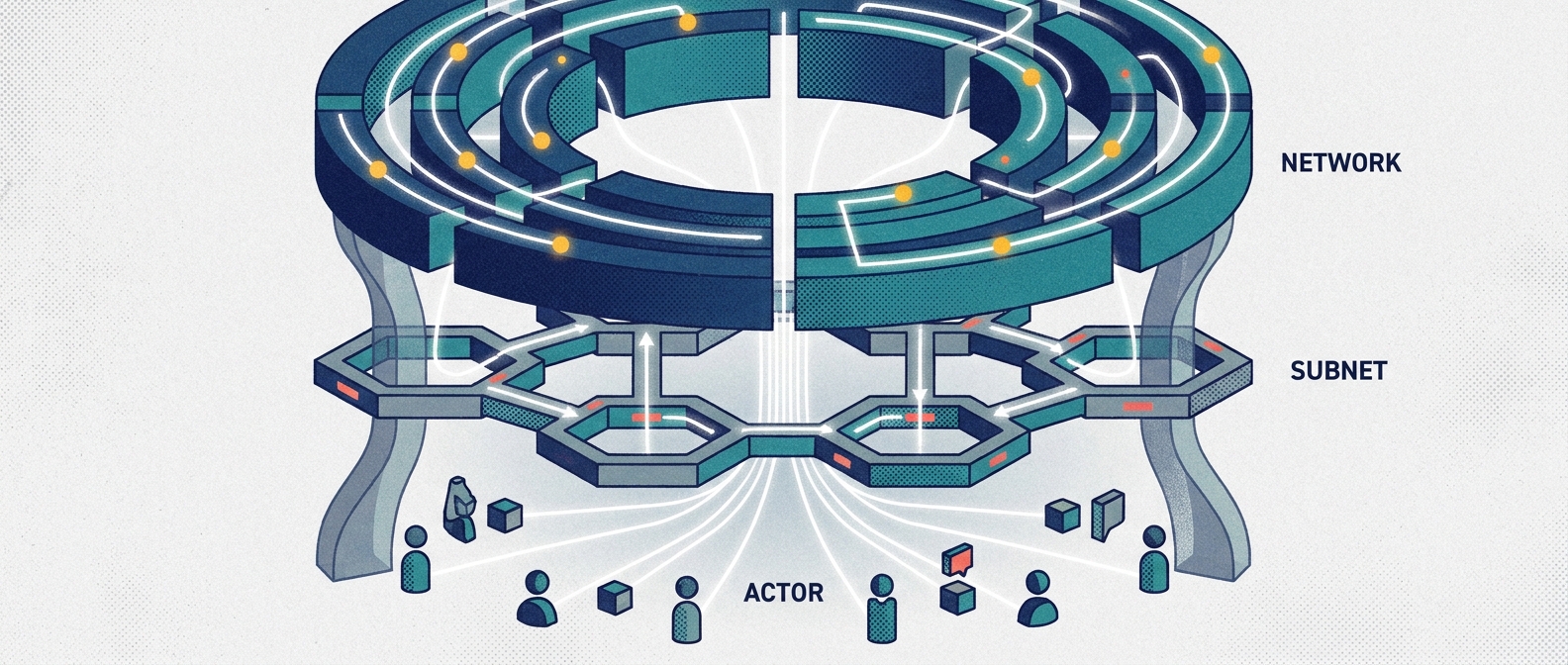
Illustration for: How can organizations define and select performance indicators for collaborative business networks?

Key question

How can organizations define and select performance indicators for collaborative business networks?

Managing Performance in Collaborative Networks: A Method for Defining Key Performance Indicators for Collaborative Business Models
van de Ven, Machado, Aysolmaz, et al. · Business & Information Systems Engineering · 2026

Operations & Supply Chain

What it means for you
  • CIO / IT Executive On Monday morning, initiate a pilot project to apply the three-step KPI definition method to one specific collaborative network your organization participates in, focusing on identifying and documenting initial network-level KPIs using your existing data infrastructure.
  • IT Manager On Monday morning, schedule a working session with a key business stakeholder from a collaborative project to begin the 'KPI specification' step of the research method, focusing on articulating the desired outcomes for that specific collaboration.
  • Business Strategist On Monday morning, review the research's findings on differentiating KPI scopes and draft a preliminary list of potential network, subnet, and actor-level KPIs for a newly forming collaborative initiative.
  • Researcher On Monday morning, begin designing a case study to apply and further refine the proposed KPI definition method within a new collaborative business scenario, focusing on the 'multi-criteria KPI selection' and 'attribute operationalization' steps.
  • Policymaker On Monday morning, identify a specific public-private collaborative initiative and begin exploring how the research's approach to KPI definition could be adapted to measure its network-wide alignment and individual actor contributions effectively.
Illustration for: How can organizations successfully implement digital identity wallets and overcome common adoption challenges?

Key question

How can organizations successfully implement digital identity wallets and overcome common adoption challenges?

Digital Identity Wallets: A Guide to the EU’s New Identity Model
Kudra, Rieger, Sedlmeir, et al. · Information Systems Journal · 2026

Cybersecurity & Privacy

What it means for you
  • CIO / IT Executive Schedule a 30-minute internal briefing for your core IT leadership team to present the attached research summary and assign a point person to investigate the 'technical maturity' obstacles identified in the key findings within the context of our existing identity and access management infrastructure.
  • IT Manager On Monday morning, compile a list of all current third-party single sign-on providers used by the organization and identify which of these might be candidates for integration or replacement with a digital identity wallet solution in the future, flagging any immediate integration challenges or risks.
  • Business Strategist Dedicate one hour on Monday morning to reviewing the 'ecosystem value co-creation' challenges mentioned in the research and brainstorm at least three potential business use cases within our organization where a digital identity wallet could unlock new revenue streams or significantly improve customer experience.
  • Researcher Begin analyzing the 12 practical experience case studies mentioned in the research by focusing on the 'organizational integration' obstacles. Identify and document recurring themes and successful mitigation strategies from at least three diverse industry examples to inform our own adoption framework.
  • Policymaker Initiate a dialogue with legal and compliance teams on Monday morning to assess the implications of the 2026 EU mandate for digital wallet support, specifically identifying any current regulatory gaps or areas where policy clarification will be needed to facilitate the adoption of wallet-based identity models.
Illustration for: Why do similar small businesses adopting the same digital platform experience vastly different business model outcomes?

Key question

Why do similar small businesses adopting the same digital platform experience vastly different business model outcomes?

The impact of digital platform introduction on business models in SMEs—The interplay of efficiency and innovation orientation
Hönigsberg, Li, Korneeva, et al. · Journal of Strategic Information Systems · 2026

Digital Transformation & Strategy

What it means for you
  • CIO / IT Executive On Monday morning, review the platform's user adoption metrics from the past month, specifically looking at the depth of operational embedding (e.g., number of workflows integrated, data points shared) across different teams, and identify any teams demonstrating shallow engagement.
  • IT Manager On Monday morning, schedule a brief check-in with the team responsible for platform integration, asking them to identify one specific, recurring operational task that could be further streamlined through deeper platform usage, and outline the steps to achieve this.
  • Business Strategist On Monday morning, analyze the platform's current capabilities and identify one potential co-branding opportunity with another SME on the platform that leverages existing operational efficiencies but could lead to a novel offering.
  • Researcher On Monday morning, begin compiling a list of the specific operational metrics used by the four case study firms to measure 'efficiency-focused platform orientation' and note down any qualitative data collected on 'deep operational embedding'.
  • Policymaker On Monday morning, initiate a review of existing SME digital platform adoption support programs, focusing on how they encourage 'deep operational embedding' beyond initial efficiency gains and measure long-term transformative outcomes.
Illustration for: How can AI governance be adapted to fit local cultural and ethical values around the world?

Key question

How can AI governance be adapted to fit local cultural and ethical values around the world?

Toward Cultural–Ethical Fit in AI Governance: A Global Typology of Governance Profiles
Symeonidis, Schneider, Nikiforova · ECIS · 2026

Cybersecurity & Privacy

What it means for you
  • CIO / IT Executive On Monday morning, schedule a 30-minute deep dive with your legal and ethics teams to identify which of the eight AI governance profiles identified in the research most closely aligns with your organization's current AI development and deployment practices, and flag any immediate misalignments.
  • IT Manager On Monday morning, initiate a review of your team's current AI project documentation and development methodologies, specifically looking for instances where decisions about fairness, transparency, or accountability might have been implicitly influenced by a single cultural perspective (e.g., U.S.-centric) and note them for further discussion.
  • Business Strategist On Monday morning, begin analyzing your organization's key international markets and identify the primary cultural value orientations that characterize them, then cross-reference this with the meta-tensions (social justice vs. economic competitiveness, autonomy vs. security) to anticipate potential governance friction for upcoming AI initiatives.
  • Researcher On Monday morning, begin drafting a short literature review outline focusing on how cultural value orientations (e.g., individualism vs. collectivism) have historically shaped the adoption and regulation of other transformative technologies (e.g., the internet, biotechnology) to draw parallels with AI governance.
  • Policymaker On Monday morning, review the 'diagnostic decision framework' mentioned in the research, and identify one specific AI guideline (e.g., data privacy regulations) that your jurisdiction currently applies universally, then brainstorm how to adapt its interpretation to better fit the dominant cultural value orientations of your primary constituent groups.
Illustration for: What roles can generative AI play in data quality management, and how should leaders govern them?

Key question

What roles can generative AI play in data quality management, and how should leaders govern them?

A Typology For Responsible Delegation Of Data Quality Management To Generative AI
Roht, Nikiforova, Lefebvre · ECIS · 2026

Data Analytics & Big Data

What it means for you
  • CIO / IT Executive On Monday morning, initiate a review of your organization's current DQM tool landscape to identify which, if any, are actively experimenting with or have integrated GenAI capabilities, and schedule a follow-up meeting with the IT Manager to discuss initial findings and potential pilot opportunities based on the 'Translator' role.
  • IT Manager On Monday morning, dedicate an hour to review the existing data quality rulebooks and documentation within your team's purview, noting down specific areas where natural language descriptions of data quality issues or desired rules are prevalent, to prepare for a discussion with the CIO/IT Executive about the potential application of the 'Translator' GenAI role.
  • Business Strategist On Monday morning, identify one critical business process that is currently hampered by data quality issues and then, using the 'Explainer' GenAI role as a conceptual framework, draft three potential narrative-style questions you would ask an AI about the root causes and impact of these data quality problems to present to stakeholders.
  • Researcher On Monday morning, begin by outlining a research proposal to investigate the effectiveness and potential biases of GenAI 'Resolver' roles in correcting common data anomalies within a specific industry domain, drawing upon the governance guidelines related to mandatory human validation for high-impact actions.
  • Policymaker On Monday morning, begin drafting a preliminary policy document that outlines the principle of 'retained human accountability' for any data quality decisions made or influenced by GenAI within the organization, focusing on the need for clear audit trails and oversight for 'Resolver' and 'Integrator' roles.
Illustration for: How do virtual worlds help people with lifelong disabilities move from social isolation to social inclusion?

Key question

How do virtual worlds help people with lifelong disabilities move from social isolation to social inclusion?

Affordance-Based Pathway Model of Social Inclusion: A Case Study of Virtual Worlds and People With Lifelong Disability
Stendal, Sein, Thapa · Journal of the AIS · 2026

Cloud & Infrastructure

What it means for you
  • CIO / IT Executive On Monday morning, task your accessibility team to conduct an initial assessment of our current platform's 'communicability' features (e.g., real-time chat, group messaging, avatar-based interaction quality) against the research's identified functional affordances to understand potential barriers and opportunities for individuals with disabilities.
  • IT Manager On Monday morning, schedule a 30-minute working session with your frontline support staff to review existing user feedback logs for mentions of difficulty with navigation, communication, or customization within our virtual environment, specifically looking for patterns that might align with limitations in perceived 'mobility' or 'personalizability' affordances.
  • Business Strategist On Monday morning, initiate a competitive analysis focusing on how emerging virtual platforms or digital communities are leveraging 'engageability' and 'self-actualizability' affordances to foster user connection and content creation, particularly noting any strategies that might appeal to or benefit users with disabilities.
  • Researcher On Monday morning, begin drafting a protocol for a pilot study within our organization's virtual world that focuses on measuring the impact of enhanced 'communicability' features on user-reported feelings of 'engageability' and 'self-actualizability' among a diverse user group, potentially including participants with disabilities.
  • Policymaker On Monday morning, convene a brief meeting with your advisory committee to discuss how current digital inclusion policies might be strengthened by explicitly incorporating the research's identified 'functional affordances' (communicability, mobility, personalizability) and 'social affordances' (engageability, self-actualizability) as measurable criteria for assessing technological accessibility and support for social participation.
Illustration for: How do stakeholders' past negative experiences affect their trust and adoption of new technology?

Key question

How do stakeholders' past negative experiences affect their trust and adoption of new technology?

Yoga Sutra-Based Memory Analysis of Information Systems Implementation
Vaidya · Communications of the AIS · 2026

Data Analytics & Big Data

What it means for you
  • CIO / IT Executive On Monday morning, schedule a 30-minute discovery call with your Head of User Experience and your Chief Ethics Officer to brainstorm how to proactively identify and mitigate potential 'Samskara' (subliminal impressions) in upcoming system implementations by focusing on past negative stakeholder experiences.
  • IT Manager On Monday morning, review the last three system user feedback reports for any recurring themes related to distrust or negative past experiences, and flag the top two recurring issues to investigate further for potential 'Alambana' (external triggers) in your current system.
  • Business Strategist On Monday morning, draft a brief (one-page) internal memo to your team outlining the concept of 'Samskara' and its potential impact on technology adoption, and request them to identify one instance in recent projects where past negative impressions might have influenced user behavior.
  • Researcher On Monday morning, begin drafting the introduction to your next research paper by clearly articulating the gap in current information systems research regarding the lack of focus on individual cognitive variations and Eastern philosophical perspectives on memory, using the Yoga Sutra framework as your proposed solution.
  • Policymaker On Monday morning, initiate a discussion with your advisory board regarding the importance of embedding ethical and behavioral values into the design and implementation guidelines for all new government information systems, referencing the finding that failures often stem from a lack of adherence to these values, not culture.
Illustration for: How does making conversational agents appear more human affect customer reactions when errors occur?

Key question

How does making conversational agents appear more human affect customer reactions when errors occur?

Artificial Normality: How Conversational Agents’ Perceived Humanness Inhibits Error Attribution and Preserves Satisfaction
Brendel, Lichtenberg, Hildebrandt, et al. · Journal of Management Information Systems · 2026

Cybersecurity & Privacy

What it means for you
  • CIO / IT Executive On Monday morning, allocate budget to pilot the integration of more human-centric design principles (e.g., nuanced language, empathetic phrasing) into our core customer-facing conversational agent, focusing on areas where process errors are most common, to preemptively reduce user error attribution and maintain satisfaction.
  • IT Manager On Monday morning, task your development team to review our current conversational agent's dialogue logs for instances of process errors and identify the top 3 most frequent error types to begin redesigning their responses with more humanlike cues (e.g., slight pauses, conversational fillers) to normalize the situation for users.
  • Business Strategist On Monday morning, initiate a cross-functional workshop with marketing and product development to explore how to strategically position our conversational agents' perceived humanness in customer communications, emphasizing its role in creating a seamless experience even when minor technical glitches occur.
  • Researcher On Monday morning, begin designing a follow-up study that experimentally manipulates specific humanlike conversational features (e.g., varying levels of politeness, acknowledgment of difficulty) within a simulated error scenario to quantify their direct impact on error attribution and situational normality, building upon the findings of Artificial Normality.
  • Policymaker On Monday morning, convene a small working group to draft guidelines for the ethical development of conversational agents, recommending that AI design standards encourage the incorporation of humanlike qualities to enhance user experience and mitigate negative reactions to inevitable system errors, rather than solely focusing on pure efficiency.
Illustration for: How do individual user behaviors and attitudes impact the business value generated from process mining?

Key question

How do individual user behaviors and attitudes impact the business value generated from process mining?

Unpacking the Role of Individuals in Process Mining: A Literature Review and Research Framework
Dyong, Franzoi, vom Brocke · ECIS · 2026

Operations & Supply Chain

What it means for you
  • CIO / IT Executive Initiate a data audit of the source pipelines feeding your enterprise process mining tools to eliminate data discrepancies, directly addressing the research finding that data inaccuracies severely undermine user trust and derail tool adoption.
  • IT Manager Add a mandatory 'Hypothesis-First' template to your team's process mining workflow on Monday morning, requiring analysts to document their specific diagnostic hypothesis before running queries to enforce structured behavior and reduce analysis duration.
  • Business Strategist Redesign the process mining ROI dashboard to measure actual business value outcomes (e.g., cost savings from process changes) rather than user log-in frequency, linking individual analytical insights directly to operational KPIs.
  • Researcher Draft a research design for a longitudinal study tracking 20 process mining analysts over six months to capture the sequential and temporal dynamics of user affect and trust, directly addressing the static limitations of current literature.
  • Policymaker Establish an internal organizational standard mandating that no department may deploy process mining software without integrating a formal training and methodological guidance program, ensuring compliant and high-quality data execution.
Illustration for: How does digital transformation affect a nonprofit's identity, and how are resulting internal conflicts resolved?

Key question

How does digital transformation affect a nonprofit's identity, and how are resulting internal conflicts resolved?

Nonprofits' Digital Transformation: Understanding Organisational Identity Dynamics
Torres, Pchel, Zimmer, et al. · ECIS · 2026

Digital Transformation & Strategy

What it means for you
  • CIO / IT Executive Meet with your internal communications lead on Monday morning to rewrite the launch narrative of your current digital initiative; frame the IT upgrades not as a 'system migration for efficiency,' but as a vital strategic weapon designed to help your activists defeat the organization's primary external adversary.
  • IT Manager Identify the regional office or department most resistant to the new software rollout and schedule a 30-minute call with their team leader on Monday morning to ask how the system can be configured to protect their local autonomy, rather than forcing a standardized corporate workflow.
  • Business Strategist Review your draft digital strategy document first thing Monday morning and audit its vocabulary; strip out commercial, for-profit terminology like 'customer acquisition,' 'user monetization,' and 'ROI,' replacing them with values-driven terms like 'supporter mobilization' and 'mission impact.'
  • Researcher On Monday morning, draft a outreach email to directors of three small, community-based local charities to pitch a comparative study, testing if the five-period recursive digital transformation model identified at Greenpeace holds true in non-federated, resource-constrained nonprofit settings.
  • Policymaker On Monday morning, update your organization's digital funding policy and grant application templates to remove mandatory 'commercial viability' metrics, instead requiring applicants to demonstrate how the requested digital grant will reinforce and scale their core mission-based values.
Illustration for: How does continuous digital reporting affect emotional pressure, trust, and staff autonomy in childcare centers?

Key question

How does continuous digital reporting affect emotional pressure, trust, and staff autonomy in childcare centers?

When We Cannot Stop the Data Flow: The Emotional Life of Data in a Children’s Daycare Center
Püchel, Brandt · ECIS · 2026

Data Analytics & Big Data

What it means for you
  • CIO / IT Executive On Monday morning, reconfigure your enterprise communication and tracking platforms to aggregate non-critical status updates into a single daily digest at 4:00 PM, rather than allowing real-time push notifications, to actively break the expectation of continuous monitoring.
  • IT Manager On Monday morning, audit the daycare platform's dashboard interface and replace all default automatic 'No Data' warning flags or empty progress bars with a neutral status indicator to eliminate the false perception of operational risk during quiet hours.
  • Business Strategist On Monday morning, draft and distribute a 'Communication Cadence Agreement' to clients that explicitly sets the expectation of only two digital updates per day, actively framing this slower rhythm as a premium service feature that ensures staff are focused on active care rather than screens.
  • Researcher On Monday morning, draft a research proposal to conduct a comparative diary study of frontline workers in relationship-heavy sectors like eldercare, specifically measuring the psychological friction and time spent on 'situated compliance' tasks versus actual patient care.
  • Policymaker On Monday morning, draft a policy amendment for child and eldercare labor standards that prohibits the use of real-time telemetry and continuous digital logging frequency as metrics for assessing staff performance and regulatory compliance.
Illustration for: How should teams structure initial challenges to successfully launch AI projects?

Key question

How should teams structure initial challenges to successfully launch AI projects?

The Anatomy of a Design Challenge for Initiating AI Innovation
Röckel, van Giffen, Janson, et al. · ECIS · 2026

Cloud & Infrastructure

What it means for you
  • CIO / IT Executive Mandate that all upcoming AI project proposals use a standardized 'Design Challenge' charter template structured around the 4 robust elements (verb, object of innovation, target group, context) and 3 plastic elements (internal data, technology, potential), explicitly forbidding teams from locking in a rigid technical architecture in their initial pitch.
  • IT Manager Gather your interdisciplinary project team for a 60-minute workshop on Monday morning to co-create a 'Design Challenge' statement, explicitly defining the stable 'robust' elements to align the business and tech members, while leaving the 'plastic' elements (like specific data sources and AI models) open as flexible targets to be negotiated as the project progresses.
  • Business Strategist Review your company's AI project portfolio on Monday morning and intentionally rewrite the 'object of innovation' for each project: frame them as 'modular' if you need predictable, incremental improvements, or rewrite them as 'space-based' (e.g., focused on broad capabilities) if you want to push the team toward radical, disruptive business model innovation.
  • Researcher Update your qualitative coding scheme for ongoing field studies of AI adoption to track how frequently and at what project stages teams modify the 'plastic' elements (internal data, technology, potential) versus the 'robust' elements of their project charters to measure the empirical threshold where technological uncertainty triggers project misalignment.
  • Policymaker Revise the application guidelines for the upcoming public AI innovation grant cycle to replace rigid 'technical specifications' requirements with a mandatory 'Design Challenge' framework, scoring applicants on the clarity of their robust elements (target group, context) and the adaptive flexibility of their plastic elements (data and technology integration plans).
Illustration for: How does using ChatGPT affect worker performance, workload, and their sense of ownership over problem-solving tasks?

Key question

How does using ChatGPT affect worker performance, workload, and their sense of ownership over problem-solving tasks?

Support or Substitution: How ChatGPT Affects Cognitive Load, Ownership, and Performance in Problem-Solving
Freise, Moritz · ECIS · 2026

Human-Computer Interaction

What it means for you
  • CIO / IT Executive Sign off on the procurement and scheduling of a mandatory 'AI Literacy and Collaborative Prompting' training program for all departments currently using generative AI, rather than just distributing licenses, to actively counter the erosion of psychological ownership and help staff manage cognitive load.
  • IT Manager Schedule a 30-minute team meeting to establish a 'Human-in-the-Loop' workflow review protocol, requiring team members to explicitly document, edit, and present their personal contributions to any ChatGPT-generated deliverables to re-establish psychological ownership over their outcomes.
  • Business Strategist Draft a proposal to revise departmental key performance indicators (KPIs), shifting the metrics of success from speed and volume (temporal savings) to qualitative, human-curated excellence to prevent employees from disengaging and treating their roles as outsourced, low-ownership tasks.
  • Researcher Write a research proposal for a multi-week longitudinal field study with a cohort of at least 250 participants to track whether the observed short-term reduction in psychological ownership from AI usage leads to long-term employee disengagement or performance declines over time.
  • Policymaker Publish a revised corporate governance policy that defines a 'Responsible Authorship' standard, mandating that the human employee remains 100% accountable for the accuracy and quality of AI-assisted outputs to prevent the dilution of organizational responsibility.
Illustration for: How can educators effectively teach modern industrial software skills without expensive physical equipment?

Key question

How can educators effectively teach modern industrial software skills without expensive physical equipment?

Towards Design Principles for Teaching Industry 4.0 Competencies to CS/IS Students
Salcher · ECIS · 2026

Operations & Supply Chain

What it means for you
  • CIO / IT Executive Direct your enterprise architecture team to draft a transition plan to replace physical IT hardware training labs with virtualized, containerized sandbox environments (e.g., Docker/Kubernetes) to reduce infrastructure costs and align onboarding with modern Industry 4.0 software architectures.
  • IT Manager Review the programming prerequisites of your junior developers and assign them a structured, hands-on troubleshooting task using a containerized microservice mock-up on Monday morning to assess their readiness for complex Industry 4.0 integration projects.
  • Business Strategist Reallocate a portion of next quarter's talent development budget away from high-cost physical equipment training and toward scalable, software-based virtual simulators to cost-effectively build digital twin and data architecture competencies.
  • Researcher Draft a research proposal to conduct a multi-institution comparative study on these eight design principles, incorporating objective pre- and post-intervention technical testing rather than relying on subjective student feedback to measure competency gains.
  • Policymaker Create a state-level educational grant initiative that incentivizes higher education institutions to update computer science curricula with virtualization-based Industry 4.0 frameworks, shifting funding priority away from physical learning factories.
Illustration for: Can real-time advice keep citizens engaged in collecting local heat data using wearable sensors?

Key question

Can real-time advice keep citizens engaged in collecting local heat data using wearable sensors?

A Context-Aware Urban Heat Companion for Prosumer Participatory Sensing and Just-in-Time Adaptive Intervention
von Heyden, Kuhlmeier, Parsons, et al. · ECIS · 2026

Sustainability & Green IS

What it means for you
  • CIO / IT Executive Authorize a pilot project to integrate on-device, context-aware processing capabilities into the company's mobile application roadmap, shifting away from centralized cloud polling to enable low-latency, real-time push notifications driven by on-device sensor data.
  • IT Manager Update the push-notification system's scheduling logic to restrict alerts to high-relevance afternoon windows (12:00 PM to 4:00 PM) and truncate copy to short, single-action prompts like 'Hydration & Cooling' to maximize user compliance rates.
  • Business Strategist Redesign the incentive structure of our data-collection app to offer immediate, personalized 'micro-utility' benefits—such as real-time local comfort scores—directly to the user upon data submission, mitigating long-term participation fatigue.
  • Researcher Draft a research proposal and power analysis for a randomized controlled trial (RCT) with a target sample size of at least 150 participants to statistically validate the behavioral impacts and compliance rates of the Heat Companion's adaptive interventions.
  • Policymaker Draft a municipal initiative to equip outdoor public-sector employees (such as postal or sanitation workers) with wearable micro-climate sensors to map urban heat islands where official weather stations lack coverage.
Illustration for: What competing tensions and trade-offs do leaders face when guiding national quantum computing ecosystems?

Key question

What competing tensions and trade-offs do leaders face when guiding national quantum computing ecosystems?

Orchestration Paradoxes in National Quantum Computing Innovation Ecosystems
Taipale, Tyrväinen, Tuunanen, et al. · ECIS · 2026

Operations & Supply Chain

What it means for you
  • CIO / IT Executive Schedule a 9:00 AM meeting with your lead enterprise architect to audit your current quantum-readiness roadmap, establishing a formal policy that divides software development and hardware access investments 50/50 to hedge against the performance tension of committing prematurely to a single unproven hardware stack.
  • IT Manager Create a bi-weekly 1-hour 'Quantum Cross-Training' slot in your team's calendar starting this Friday, pairing your specialized quantum physics PhDs with your generalist cloud engineers to address the learning tension between narrow technical specialization and broad-based systems integration.
  • Business Strategist Perform a revenue dependency audit to calculate the percentage of your quantum business unit's funding derived from state grants versus commercial clients, and draft a pitch deck for two private-sector pilots to actively transition away from 'godfather' state-funding reliance.
  • Researcher Draft a pre-competitive collaboration agreement template to send to a peer researcher at a competing institution, outlining a shared framework for baseline algorithm testing while clearly defining IP boundaries to manage the tension of collaboration versus resource competition.
  • Policymaker Draft a revision for the upcoming national quantum funding round guidelines that introduces a 'co-investment requirement,' mandating that state-funded consortia secure at least 25% of their budget from private corporate buyers to counter the 'godfather' dependency paradox.
Illustration for: How do people's personality traits shape the way they design their avatars in virtual worlds?

Key question

How do people's personality traits shape the way they design their avatars in virtual worlds?

Avatar Design and User Personality Traits: Systematic Literature Review on Identity Construction Through Avatar in the Metaverse
Kim, Zamani, Spanaki · ECIS · 2026

E-Commerce & Digital Platforms

What it means for you
  • CIO / IT Executive On Monday morning, sign off on a procurement budget to upgrade the remote team's hardware from standard webcams to high-fidelity VR headsets with motion-tracking capabilities, directly leveraging the finding that immersive hardware systematically increases presence, embodiment, and professional user-avatar behavioral alignment in virtual workspaces.
  • IT Manager On Monday morning, reconfigure the onboarding settings of your company's virtual collaboration platform (e.g., Microsoft Mesh) to offer two distinct avatar creation paths: a fast-track 'realistic photo-to-avatar' tool to satisfy conscientious employees who value physical resemblance, and an 'advanced creative' toolkit with diverse assets for employees high in openness.
  • Business Strategist On Monday morning, restructure the digital product roadmap for your virtual storefront to prioritize two distinct, personality-targeted microtransaction lines: a premium line of highly visible, socially expressive, and outgoing avatar accessories for extraverted users, and a baseline line of realistic, professional attire for highly conscientious users.
  • Researcher On Monday morning, draft a research proposal and IRB application for a comparative study tracking avatar customization behaviors of non-English-speaking users in modern, high-fidelity platforms (like VRChat or Horizon Worlds), explicitly addressing the current literature limitations regarding English-only studies and outdated Second Life data.
  • Policymaker On Monday morning, draft an organizational 'Metaverse Identity Privacy Policy' that explicitly bans the algorithmic profiling of users based on their self-avatar discrepancy, ensuring that users (particularly women experiencing identity discrepancy related to neuroticism) are protected from targeted behavioral manipulation or bias based on their digital representations.
Illustration for: How can organizations design and use artificial intelligence to support circular economy practices?

Key question

How can organizations design and use artificial intelligence to support circular economy practices?

The AI-Enabled Circular Economy: Extracting and Synthesizing Design Knowledge
Eckert, Hoppe-Ludwig, Strohmann, et al. · ECIS · 2026

Information Systems & Management

What it means for you
  • CIO / IT Executive Schedule a 9:00 AM workshop with your Enterprise Architecture and Sustainability teams to map your organization's existing data infrastructure against the study's two-layered framework, explicitly linking your micro-level AI model choices with macro-level organizational capabilities to support circular workflows.
  • IT Manager Initiate a pilot project on your team's backlog to deploy a predictive maintenance model on a single class of high-wear manufacturing assets, using telemetry data to forecast asset degradation and automatically trigger life-extending maintenance tickets.
  • Business Strategist Conduct a value-chain audit to identify where materials are lost, and draft a business case for integrating computer vision and robotic sorting systems at your primary waste-handling facility to automate material classification and close resource loops.
  • Researcher Draft a research proposal for a 12-month longitudinal field study in partnership with a local electronics manufacturer to empirically validate the paper's four synthesized meta-principles in a real-world operational environment, addressing the literature's lack of longitudinal testing.
  • Policymaker Draft a policy memo proposing a targeted grant program that provides R&D tax credits to industrial recycling facilities that implement integrated computer vision and automated sorting systems to improve regional material recycling rates.
Illustration for: How can businesses use artificial intelligence to transition their business models toward sustainability?

Key question

How can businesses use artificial intelligence to transition their business models toward sustainability?

From Brown to Green: How AI-Driven Transformation Enables Business Model Reconfiguration in the Twin Transition
Mosconi, Boudreau · ECIS · 2026

Information Systems & Management

What it means for you
  • CIO / IT Executive Initiate an audit of legacy data pipelines to identify bottlenecks for AI integration, and establish a 'green sandbox' environment with relaxed governance rules to allow developers to experiment with asset-durability algorithms while tracking model energy consumption.
  • IT Manager Hold a 30-minute team sync to map out existing data engineering skill gaps and assign one developer to clean and structure a single historical dataset of asset lifecycle performance to prepare it for future AI model training.
  • Business Strategist Draft a pilot proposal to transition one high-trust client from hourly billing to a recurring, outcome-based pricing model focused on extending their asset lifecycle, and schedule a meeting with operational managers to align on realistic, incremental milestones.
  • Researcher Design a survey instrument targeting business and IT leaders across multiple industries to quantitatively test whether the perceptual gap between executive (radical) and operational (incremental) views on AI-driven green transitions exists outside of the engineering sector.
  • Policymaker Draft a policy brief proposing a targeted grant program that subsidizes data-engineering upskilling and offsets energy-efficiency auditing costs for mid-sized firms adopting AI-enabled, sustainable business models.
Illustration for: What tensions arise when pursuing digital and sustainability goals together, and how do organizations manage them?

Key question

What tensions arise when pursuing digital and sustainability goals together, and how do organizations manage them?

Navigating the Twin Transition: A Paradox Perspective on Concurrent Digital and Sustainability Change
Stumkat, Stockhinger · ECIS · 2026

Digital Transformation & Strategy

What it means for you
  • CIO / IT Executive On Monday morning, update your organization's 'Definition of Done' (DoD) for all software release pipelines to mandate that any major code deployment must include a documented estimate of its cloud carbon footprint (using tools like Cloud Carbon Footprint) alongside traditional speed and cost metrics.
  • IT Manager On Monday morning, during your weekly sprint planning, introduce one concrete green-coding or UI accessibility standard (such as optimizing image compression to reduce data transfer energy) to the active backlog, demonstrating to your team how to integrate sustainability into fast-paced IT iterations.
  • Business Strategist On Monday morning, review your active digital transformation roadmaps and replace any assumptions of automatic 'twin transition' synergies with a formal risk register that explicitly maps out where digital speed and carbon-reduction goals conflict, scheduling a sequenced timeline for which priority takes precedence at each milestone.
  • Researcher On Monday morning, draft a research proposal for a longitudinal, multi-sector quantitative survey targeting CIOs across Europe to statistically test the generalizability of the four identified twin-transition tensions beyond the single-case IT service provider context.
  • Policymaker On Monday morning, initiate the draft of a voluntary 'Green IT Integration' compliance guide that provides businesses with standardized templates to formalize digital-sustainability KPIs, helping them move from fragmented employee-led initiatives to structured, audit-ready corporate reporting.
Illustration for: Which approach best helps AI assistants translate imperfect user prompts into accurate database queries?

Key question

Which approach best helps AI assistants translate imperfect user prompts into accurate database queries?

Designing for Imperfect Prompts: A Simulation-Based Evaluation of an LLM-Based Enterprise Data Assistant Using Knowledge Graphs
Wagner, Mdche · ECIS · 2026

Cloud & Infrastructure

What it means for you
  • CIO / IT Executive Issue a directive to transition the enterprise's LLM-based data assistant architecture away from simple schema-based semantic similarity matching and onto a Knowledge Graph-based mediation layer constructed from database schemas to capture the demonstrated 12% to 21% precision improvements.
  • IT Manager Instruct your database and engineering teams to begin constructing a Knowledge Graph from your current database schemas to serve as a semantic mediation layer for your LLM assistant, replacing manual prompt engineering.
  • Business Strategist Launch a pilot program within the CFO business unit to deploy the Knowledge Graph-based data assistant, leveraging its verified ability to resolve incomplete, domain-specific prompts into accurate database queries for business users.
  • Researcher Draft a research proposal to test the Knowledge Graph-based mediation layer in a live, real-world field deployment to gather empirical performance data beyond the current study's simulation of 158 interactions across 29 users.
  • Policymaker Draft an internal data governance policy requiring that all natural-language LLM interfaces querying corporate databases must use a schema-derived Knowledge Graph mediation layer to ensure structural query alignment and prevent inaccurate data retrieval.
Illustration for: How effectively can artificial intelligence tools screen and extract information from complex procurement documents?

Key question

How effectively can artificial intelligence tools screen and extract information from complex procurement documents?

Rethinking Knowledge Work: Designing LLM-Based Systems for Complexity Management
Diener, Kaps, Spitzer, et al. · ECIS · 2026

Artificial Intelligence & Automation

What it means for you
  • CIO / IT Executive On Monday morning, issue an IT directive mandating that any generative AI tools deployed for document screening must include a 'human-in-the-loop' verification interface, explicitly prohibiting automated final submissions due to the system's average 11.18% error rate in text extraction.
  • IT Manager On Monday morning, configure your document-processing pipeline's UI to visually highlight and force manual validation of 'type of service' and 'required references' fields, as the research shows these have lower extraction accuracies (79.4% and 76.5%) compared to highly reliable fields like 'procuring entity' (94.1%).
  • Business Strategist On Monday morning, calculate the potential ROI of deploying an LLM-based screening tool for your proposal-writing team, using the study's proven 59% reduction in initial document screening time (down to 1 minute 30 seconds per document) to project resource hours saved.
  • Researcher On Monday morning, write a research proposal to extend this design science framework by testing it on a dataset larger than 34 documents across multi-industry and non-German settings, focusing specifically on optimizing prompts to improve the low 76.5% accuracy baseline for identifying required references.
  • Policymaker On Monday morning, initiate a draft proposal for public procurement formatting standards that mandates standardized, machine-readable sections for 'required certifications' and 'references' to minimize AI extraction errors (currently at 8.8% and 23.5% respectively) and ensure fair bidding processes for SMEs.
Illustration for: How does using generative AI in everyday work change how management consulting firms operate and deliver value?

Key question

How does using generative AI in everyday work change how management consulting firms operate and deliver value?

How Generative AI Drives Field-Level Change in Management Consulting
Killewald, Haskamp · ECIS · 2026

Artificial Intelligence & Automation

What it means for you
  • CIO / IT Executive Integrate an automated 'Validation Gateway' into the firm’s proprietary GenAI workspace that blocks users from exporting drafts into client-ready formats (like PPTX or PDF) until they complete a digital checklist verifying the accuracy and sources of the underlying data.
  • IT Manager Set up a weekly automated audit report in your GenAI usage analytics platform to identify teams with high-volume AI prompt generations but low average document-editing times, and flag these teams for manual quality-assurance reviews.
  • Business Strategist Redesign the firm's standard client engagement proposal template to phase out hourly billing for commoditized deliverables (like market research summaries) and replace it with value-based pricing focused on human-led strategic judgment workshops.
  • Researcher Draft a quantitative survey instrument targeting 500 management consultants across North America and Asia to test if the qualitative mechanisms of 'skill polarity' and 'provisionality of reliance' negatively correlate with long-term client retention metrics.
  • Policymaker Introduce an industry-standard certification framework for professional service firms that mandates documented 'human-in-the-loop' validation protocols and minimum structured mentoring hours to protect junior workforce development against generative AI skill erosion.
Illustration for: How does artificial intelligence compare to experienced human planners when forecasting cafeteria meal demand?

Key question

How does artificial intelligence compare to experienced human planners when forecasting cafeteria meal demand?

Schnitzel-Prediction: Designing Human–AI Collaboration for Cafeteria Demand Forecasting
Cappel, Strohmann, Burger, et al. · ECIS · 2026

Human-Computer Interaction

What it means for you
  • CIO / IT Executive Issue a directive to your enterprise architecture team to halt all pure-automation forecasting initiatives and mandate that any future demand-planning software deployments integrate a 'human-in-the-loop' interface, specifically reserving override capabilities for experienced frontline staff in high-uncertainty scenarios.
  • IT Manager Create a task in your team's active development sprint to build an LLM-powered semantic tagging feature for your menu database, and pair it with a simple UI override slider on the kitchen manager's dashboard to let them manually adjust AI-generated forecasts for newly introduced dishes.
  • Business Strategist Review your cafeteria's historical food waste logs and restructure the kitchen managers' weekly KPIs to incentivize them to manually audit and adjust automated algorithmic forecasts, focusing their human intervention specifically on novel menu items where historical data is sparse.
  • Researcher Draft a grant proposal for a multi-site, longitudinal study that replicates the 'SCHNITZEL-PREDICTION' methodology across five different corporate catering firms over a six-month period to overcome the single-case and 24-day evaluation limitations of this study.
  • Policymaker Draft an update to the public sector sustainable procurement guidelines requiring that any government-funded cafeteria software tenders mandate human-AI collaborative interfaces rather than fully automated solutions to actively prevent food waste caused by algorithmic 'cold-start' forecasting failures.
Illustration for: How can teams evaluate whether an artificial intelligence project is ready to launch?

Key question

How can teams evaluate whether an artificial intelligence project is ready to launch?

Structuring Readiness for AI Innovation: The Role of the Design Challenge Brief as a Coordination and Gatekeeping Artefact
Hehn, Röckel, van Giffen · ECIS · 2026

Cloud & Infrastructure

What it means for you
  • CIO / IT Executive Draft and mandate a standard 'Design Challenge Brief' template that all AI project champions must complete and get approved before receiving formal project launch funding.
  • IT Manager Gather your AI project team for a 1-hour workshop to map your current pre-project planning stage to the three phases of divergent exploration, negotiation/translation, and convergent alignment, explicitly documenting how you will handle fluid data availability.
  • Business Strategist Audit your pipeline of proposed AI initiatives and flag any project that has not yet completed a collaborative 'Design Challenge Brief' to prevent launching projects with high uncertainty around non-deterministic outcomes.
  • Researcher Draft a research proposal and survey instrument to test the generalizability of the three-phase AI readiness model across a quantitative sample of 100+ corporate AI projects outside of academic lab settings.
  • Policymaker Integrate a 'Design Challenge Brief' gatekeeping requirement into your public sector AI procurement and funding frameworks to ensure public agencies evaluate data readiness and outcome uncertainties before awarding AI contracts.
Illustration for: How do IT and sustainability departments interact to shape corporate digital sustainability initiatives?

Key question

How do IT and sustainability departments interact to shape corporate digital sustainability initiatives?

Actor-Networks in Corporate Digital Sustainability Initiatives
Stanlein, Püchel, Juntunen, et al. · ECIS · 2026

Sustainability & Green IS

What it means for you
  • CIO / IT Executive Schedule a 30-minute meeting with the Head of Sustainability to co-design and integrate a 'sustainability impact score' directly into the IT department's project prioritization framework, ensuring green metrics are evaluated alongside traditional cost and efficiency KPIs.
  • IT Manager Review your team's current project backlog and formally assign a senior systems engineer as the dedicated 'Green IT Liaison' to attend the sustainability working group's bi-weekly meetings, ensuring technical resource constraints are communicated early.
  • Business Strategist Draft a charter for a joint IT-Sustainability Steering Committee that outlines a shared governance model, specifically defining a conflict-resolution protocol for when short-term IT cost-cutting clashes with long-term carbon reduction targets.
  • Researcher Draft a research proposal for a multi-case study targeting non-financial sectors (such as manufacturing or retail) that intentionally oversamples sustainability managers to address the IT-biased, single-case limitation of the existing literature.
  • Policymaker Initiate a draft for a voluntary corporate digital sustainability reporting template that requires firms to disclose how their IT infrastructure procurement policies align with national green transition targets.
Illustration for: How can businesses manage generative AI autonomy after deployment to reduce risks without losing value?

Key question

How can businesses manage generative AI autonomy after deployment to reduce risks without losing value?

Harnessing and Reducing the Generative and Workflow Autonomy of Generative AI Systems: A Multiple-Case Study
Heimburg, Wiesche · ECIS · 2026

Artificial Intelligence & Automation

What it means for you
  • CIO / IT Executive On Monday morning, audit your organization's active GenAI integrations and mandate the immediate implementation of 'resource circuit breakers'—hard programmatic limits on API calls and database writes—to restrict workflow autonomy and prevent runaway system actions.
  • IT Manager On Monday morning, set up a 'real-time auditing' log pipeline for your team's customer-facing GenAI application to flag and review outputs where the system's confidence score drops below 80%, immediately routing those queries to human-in-the-loop agents.
  • Business Strategist On Monday morning, map your company's GenAI product features onto a 2x2 grid of Generative Autonomy vs. Workflow Autonomy to identify features where you can reduce risky workflow autonomy (e.g., auto-sending emails) without degrading the value of the generated content.
  • Researcher On Monday morning, draft a research proposal for a quantitative empirical study that measures the operational latency, safety rates, and economic impacts of 'architectural weaving' vs. 'semantic resource enrichment' across B2B GenAI deployments.
  • Policymaker On Monday morning, draft an update to your agency's AI procurement guidelines requiring vendors to prove they have 'averting effects' controls in place, specifically demonstrating how their systems constrain generative output risks when workflow autonomy is elevated.
Illustration for: How does delisting a privacy coin from a major exchange impact its price over time?

Key question

How does delisting a privacy coin from a major exchange impact its price over time?

Are the Regulators Winning the Fight with Anonymity-Enhancing Coins? Studying Binance’s European Delisting of Monero as a Natural Experiment
Renwick, Gleasure · ECIS · 2026

Operations & Supply Chain

What it means for you
  • CIO / IT Executive Audit our organization's digital asset holdings and treasury to identify any exposure to privacy coins like Monero, and immediately initiate a migration plan to convert these assets to compliant, liquid cryptocurrencies to avoid permanent valuation loss from regulatory delistings.
  • IT Manager Update network monitoring tools and firewall rules to detect and block any Monero nodes, mining scripts, or wallet connections on company-owned infrastructure to prevent compliance violations arising from tightening centralized exchange regulations.
  • Business Strategist Review our payment gateway integrations and product roadmap to remove Monero or other privacy coins as accepted payment methods, and pivot our privacy-focused initiatives toward compliant layer-2 scaling solutions (like Zero-Knowledge rollups) that satisfy regulators.
  • Researcher Draft a new research proposal to apply the synthetic control method to other privacy-centric assets (like Zcash or Dash) across different geographic regions, incorporating decentralized exchange (DEX) trading volumes to test if the value shifted off centralized order books.
  • Policymaker Draft an amendment to the national crypto-asset regulatory framework to mandate that all registered centralized exchanges delist anonymity-enhancing coins, citing this empirical evidence that exchange-level bans are highly effective at permanently reducing these assets' market value and liquidity.
Illustration for: What are the key factors needed to successfully scale automation across an organization?

Key question

What are the key factors needed to successfully scale automation across an organization?

Time to Turn Off the Lights: A Success Factor Framework for Advancing Hyperautomation in Organizations
Straub, Zeiß, Ibrahimli, et al. · ECIS · 2026

Operations & Supply Chain

What it means for you
  • CIO / IT Executive On Monday morning, schedule a 30-minute alignment meeting with business unit heads to establish a joint 'Hyperautomation Governance Board' to audit all active shadow-IT automation tools (like RPA and low-code apps) and map them against your long-term IT integration roadmap to prevent fragmented technical debt.
  • IT Manager On Monday morning, block out two hours to audit your current automation deployment backlog and draft a standardized 'API-First Integration Checklist' that your development team must use to ensure new automations do not bypass APIs and create system incompatibilities.
  • Business Strategist On Monday morning, select one high-volume customer-facing workflow and schedule a scoping call with a key strategic partner to co-design an integrated, automated data-sharing process, directly applying the 'Customer Integration' (SF13) and 'Strategic Partner Collaboration' (SF15) success factors.
  • Researcher On Monday morning, draft a research proposal and outreach email to target three non-German, US-based enterprises to secure pilot sites for a comparative case study that measures objective operational KPIs (such as transaction error rates and processing speed) to validate the subjective findings of the 15-factor framework.
  • Policymaker On Monday morning, draft an amendment to your organization's IT Procurement Policy mandating that any new business unit purchasing low-code or RPA tools must submit a 'Systemic Compatibility and Trust Impact Assessment' addressing how the tool aligns with the enterprise IT architecture and employee trust-building guidelines.
Illustration for: How can public sector organizations effectively adopt and manage artificial intelligence?

Key question

How can public sector organizations effectively adopt and manage artificial intelligence?

Managing Artificial Intelligence in Public Sector Organizations: A Dynamic Capabilities Perspective
Urban, Baer, Plattfaut · ECIS · 2026

Information Systems & Management

What it means for you
  • CIO / IT Executive Send an email calendar invite to the chair of your organization's Employee Representation Body (Staff Council) to establish a joint, bi-weekly 'AI Governance and Alignment Committee' to co-create deployment guidelines and prevent approval bottlenecks.
  • IT Manager Draft a 1-page project charter for a highly constrained, 4-week pilot project using a low-risk internal AI tool (e.g., automated document summarizing) to test technical capability and establish baseline performance metrics.
  • Business Strategist Design and launch a 5-question MS Forms survey to all department heads to map their teams' current AI literacy levels and identify specific anxieties, using the results to structure next month's targeted change management plan.
  • Researcher Draft a research proposal and reach out to two international public sector research partners to replicate this qualitative dynamic capabilities study in a non-German jurisdiction (e.g., the US or UK) to address the geographical limitations of the original study.
  • Policymaker Create and distribute a standardized 'Public Sector AI Regulatory Compliance Checklist' to provide local agency leaders with clear, step-by-step guidance on data privacy and municipal regulations, directly reducing their regulatory uncertainty.
Illustration for: What are the benefits and risks of using generative artificial intelligence for romantic relationship advice?

Key question

What are the benefits and risks of using generative artificial intelligence for romantic relationship advice?

GenAI as a Romantic Relationship Advisor: Exploring Human–AI Collaboration in Emotional Support Contexts
Schätzle, Buxmann · ECIS · 2026

Human-Computer Interaction

What it means for you
  • CIO / IT Executive Configure the enterprise GenAI gateway to detect personal counseling or emotional-support-seeking queries and automatically inject a system-level disclaimer redirecting employees to the company's official Employee Assistance Program (EAP) to prevent reliance on GenAI as an authoritative clinical resource.
  • IT Manager Create and distribute a 'Balanced Prompting' template to the team, instructing them to explicitly prompt GenAI to 'act as a devil's advocate and challenge my assumptions' when using it to prepare for difficult workplace or interpersonal conversations, directly mitigating the tool's confirmation bias.
  • Business Strategist Review the product roadmap for our wellness and conversational AI features to pivot the UX away from direct 'advice-giving' toward 'communication preparation and self-reflection' tools, integrating mandatory disclaimers that clarify the AI has no clinical diagnostic capabilities.
  • Researcher Draft a research proposal for a pre-registered quantitative study ($N > 300$) comparing how different LLM models (e.g., ChatGPT, Claude, Gemini) handle relationship conflict prompts, specifically measuring the rate of user agreement (automation bias) versus the model's level of validation.
  • Policymaker Draft a regulatory policy mandate requiring developers of consumer-facing GenAI tools to implement prominent 'non-clinical tool' labels and active-consent pop-ups warning users of the risks of automation bias and the lack of professional diagnostic authority in emotionally sensitive domains.
Illustration for: How do sending and receiving emails shape employee stress and productivity?

Key question

How do sending and receiving emails shape employee stress and productivity?

Email stress: Towards a new understanding of its causes and impacts
Stich · Systèmes d'Information et Management · 2025

Cloud & Infrastructure

What it means for you
  • CIO / IT Executive On Monday morning, initiate a discussion with your direct reports and heads of departments to explore piloting a specific email management training program for all employees, focusing on techniques that address both sender eustress and receiver distress, as outlined by the TMES model.
  • IT Manager On Monday morning, review the current email client settings and identify opportunities to implement or enhance features that automatically categorize or filter incoming emails based on sender or keywords, thereby reducing receiver distress for your team.
  • Business Strategist On Monday morning, draft a proposal for a new organizational communication norm that encourages concise and action-oriented email content from senders, aiming to maximize sender eustress by clearly delegating tasks and minimizing receiver distress caused by ambiguity.
  • Researcher On Monday morning, begin drafting a research proposal to empirically test the TMES model by designing a study that measures sender eustress and receiver distress across different organizational contexts and email usage patterns.
  • Policymaker On Monday morning, schedule a meeting with key stakeholders to discuss the development of an organizational policy that mandates specific email etiquette training, emphasizing balanced sender and receiver perspectives as informed by the TMES framework.
Illustration for: How do explanations with AI feedback affect people's learning and task performance based on their prior knowledge?

Key question

How do explanations with AI feedback affect people's learning and task performance based on their prior knowledge?

Tell me more, tell me more: the impact of explanations on learning from feedback provided by Artificial Intelligence
Förster, Broder, Fahr, et al. · European Journal of Information Systems · 2025

Artificial Intelligence & Automation

What it means for you
  • CIO / IT Executive On Monday morning, initiate a cross-functional working group involving IT, product development, and user experience teams to prioritize the integration of AI-driven feedback systems that include clear, context-specific explanations, focusing initially on applications with less experienced user bases.
  • IT Manager On Monday morning, review the current AI feedback mechanisms within your team's systems and identify 1-2 pilot opportunities to implement or enhance explanations, specifically targeting areas where user error or confusion is frequently observed, and gather baseline performance data.
  • Business Strategist On Monday morning, task your team with identifying key business processes or customer-facing interactions where AI feedback is being used or considered, and assess the potential impact of explanation-enhanced AI on user adoption, efficiency, and overall customer satisfaction, particularly for novice users.
  • Researcher On Monday morning, design a pilot study protocol to specifically investigate how the *type* and *level of detail* of explanations provided by AI feedback influence perceived informativeness and learning outcomes for users with varying levels of domain expertise in a controlled environment.
  • Policymaker On Monday morning, begin drafting guidelines or a framework for the ethical deployment of AI systems that mandate, where feasible, the inclusion of explanations for AI-generated feedback, prioritizing sectors with high user impact and potential for knowledge gaps, such as education and public services.
Illustration for: How do on-screen interruptions affect task performance on mobile devices compared to desktop computers?

Key question

How do on-screen interruptions affect task performance on mobile devices compared to desktop computers?

Mobile use in an age of interruption: Implications of capacity and structural interference for mobile users
Fink, Baranes, Ilany-Tzur · Information & Management · 2025

E-Commerce & Digital Platforms

What it means for you
  • CIO / IT Executive On Monday morning, initiate a review of the current mobile application development roadmap, prioritizing projects that involve complex workflows to identify opportunities for modularization into smaller, independent subtasks in the next development cycle.
  • IT Manager On Monday morning, schedule a brief meeting with your mobile development team to discuss the research findings on higher resumption costs for mobile users and explore practical strategies for simplifying user interfaces and reducing cognitive load on mobile applications they manage.
  • Business Strategist On Monday morning, analyze customer feedback and usage data for core mobile applications to identify specific complex workflows that are likely causing high resumption costs and explore opportunities to redesign these for improved user efficiency.
  • Researcher On Monday morning, begin drafting a follow-up experiment proposal that specifically quantifies the impact of pre-defined 'modularized subtask' interfaces on mobile resumption costs compared to current complex workflows, using the findings from this study as a baseline.
  • Policymaker On Monday morning, draft a memo to relevant committees and agencies proposing the inclusion of 'mobile interface design standards' that encourage modularization of complex tasks to improve digital accessibility and productivity for mobile users.
Illustration for: How do communities use social media to support mental health recovery during natural disasters?

Key question

How do communities use social media to support mental health recovery during natural disasters?

Digital Mental Health Resilience During Natural Disasters: A Scoping Review and Research Agenda
Islam, Marx, Liu, et al. · ACIS · 2025

Cloud & Infrastructure

What it means for you
  • CIO / IT Executive On Monday morning, schedule a brief exploratory meeting with your innovation team to assess existing social media monitoring tools and identify potential enhancements for detecting and analyzing distress signals and misinformation during simulated disaster scenarios.
  • IT Manager On Monday morning, review the current moderation policies for any public-facing community forums or social media channels managed by your organization, and identify specific criteria related to 'vulnerability-sensitive content' that could be integrated into moderation guidelines.
  • Business Strategist On Monday morning, initiate a conversation with your communications and marketing teams to explore how your organization's social media presence could be adapted to proactively offer mental health resources or foster supportive community interactions, especially in light of potential regional disaster risks.
  • Researcher On Monday morning, begin drafting a concise summary of the 'vulnerability-sensitive channels' and 'cross-sector coordination' findings from this review, identifying specific examples or hypothetical scenarios where these could be applied to digital mental health resilience research.
  • Policymaker On Monday morning, draft a short memo to your relevant department heads, flagging the research finding on 'communities actively curate content and self-regulate online spaces' and suggesting a brief discussion on how public digital platforms could be better designed or supported to facilitate this self-regulation for mental health resilience during crises.