Browse the library

163 insights from AIS journals, conferences and related outlets. Most start with the question they answer.

Got a research question instead? Ask AIS Insights

Showing all 6 insights

Illustration for: How is artificial intelligence reshaping academic work, and what opportunities and risks does it present?

Key question

How is artificial intelligence reshaping academic work, and what opportunities and risks does it present?

A Panel Report on the Implications of Artificial Intelligence for Academic Knowledge Work
Tursunbayeva, Renkema, Charlwood, et al. · Communications of the AIS · 2026

Operations & Supply Chain

What it means for you
  • CIO / IT Executive Initiate a cross-departmental working group meeting to inventory existing AI tool usage across teaching, research, and administrative functions, identifying commonalities and immediate risks based on the 'Key Findings' regarding AI hallucinations and ethical concerns.
  • IT Manager Schedule a technical assessment to evaluate the security protocols and data privacy implications of the most commonly used AI tools (e.g., ChatGPT, Copilot) currently being utilized by academic staff, referencing the 'Key Findings' on ethical risks.
  • Business Strategist Begin drafting a preliminary AI integration roadmap for academic workflows by identifying 2-3 specific routine teaching preparation or scholarly writing tasks (as per 'Key Findings') that could be piloted for AI automation within the next quarter.
  • Researcher Experiment with using an AI tool like ChatGPT or Copilot to draft an initial outline for a grant application section (referencing 'Key Findings' on streamlining grant workflows) or to refine a paragraph for clarity if English is not your primary language, noting both the efficiencies gained and any potential 'hallucinations' or quality degradation.
  • Policymaker Schedule a review of current institutional policies related to academic integrity and technology use, specifically flagging areas that need to be updated to address the 'Key Findings' on AI hallucinations, the degradation of peer-review quality, and the erosion of critical learning skills.

Illustration for: How do stakeholders' past negative experiences affect their trust and adoption of new technology?

Key question

How do stakeholders' past negative experiences affect their trust and adoption of new technology?

Yoga Sutra-Based Memory Analysis of Information Systems Implementation
Vaidya · Communications of the AIS · 2026

Operations & Supply Chain

What it means for you
  • CIO / IT Executive Schedule a 30-minute discovery call with your Head of User Experience and your Chief Ethics Officer to brainstorm how to proactively identify and mitigate potential 'Samskara' (subliminal impressions) in upcoming system implementations by focusing on past negative stakeholder experiences.
  • IT Manager Review the last three system user feedback reports for any recurring themes related to distrust or negative past experiences, and flag the top two recurring issues to investigate further for potential 'Alambana' (external triggers) in your current system.
  • Business Strategist Draft a brief (one-page) internal memo to your team outlining the concept of 'Samskara' and its potential impact on technology adoption, and request them to identify one instance in recent projects where past negative impressions might have influenced user behavior.
  • Researcher Begin drafting the introduction to your next research paper by clearly articulating the gap in current information systems research regarding the lack of focus on individual cognitive variations and Eastern philosophical perspectives on memory, using the Yoga Sutra framework as your proposed solution.
  • Policymaker Initiate a discussion with your advisory board regarding the importance of embedding ethical and behavioral values into the design and implementation guidelines for all new government information systems, referencing the finding that failures often stem from a lack of adherence to these values, not culture.
Illustration for: How does integrating generative AI into coursework affect student learning and practical skills?

Key question

How does integrating generative AI into coursework affect student learning and practical skills?

Generative Artificial Intelligence in Higher Education: Mediating Learning for Literacy Development
Hönigsberg, Watkowski, Drechsler · Communications of the AIS · 2025

Operations & Supply Chain

What it means for you
  • CIO / IT Executive Direct your team to initiate a pilot program with ChatGPT-4 for a select group of faculty in the business school to explore its integration into curriculum design and assess infrastructure readiness for wider deployment.
  • IT Manager Schedule a meeting with the faculty involved in the pilot program to gather initial feedback on their experience using GAI tools and document any technical challenges encountered during their setup or usage.
  • Business Strategist Begin researching and analyzing how competitor business schools are currently leveraging generative AI in their curricula and draft a preliminary report on potential competitive advantages or disadvantages for our institution.
  • Researcher Begin drafting a research proposal to investigate the specific prompt engineering strategies employed by students in the pilot program and how these strategies correlate with improved literacy development outcomes.
  • Policymaker Initiate a review of existing academic integrity policies to identify areas that need to be updated or expanded to address the ethical use of generative AI by students and faculty.
Illustration for: How well does ChatGPT perform on information systems course questions and professional certification exams?

Key question

How well does ChatGPT perform on information systems course questions and professional certification exams?

What Does ChatGPT Know About Information Systems?
O’Leary, Storey, French, et al. · Communications of the AIS · 2025

Operations & Supply Chain

What it means for you
  • CIO / IT Executive Task your IT training lead to pilot a small internal workshop for a select group of IT professionals focusing on the PMP and Microsoft Azure Administrator certifications, using ChatGPT as a supplementary learning tool to identify specific knowledge gaps and assess its effectiveness in preparing for these professional exams.
  • IT Manager Instruct your team members responsible for generating internal documentation or knowledge base articles to compare the accuracy and completeness of ChatGPT's initial drafts on at least two core Information Systems topics (e.g., database management, network security) against your existing, verified internal resources.
  • Business Strategist Task a market analyst to explore potential use cases for ChatGPT in rapidly generating initial drafts of business process documentation or competitive analysis reports within your IS domain, noting its tendency to provide structured information over deep critical thinking.
  • Researcher Design a controlled experiment to compare ChatGPT's performance on retrieving specific, factual information about IS concepts in a closed-book scenario versus an open-book scenario using publicly available academic papers, to validate the finding about its performance in different exam environments.
  • Policymaker Request a briefing from your education and technology policy advisors on the implications of AI tools like ChatGPT achieving 'average student' performance in IS education, and explore potential guidelines for incorporating such tools responsibly in curriculum development and assessment.
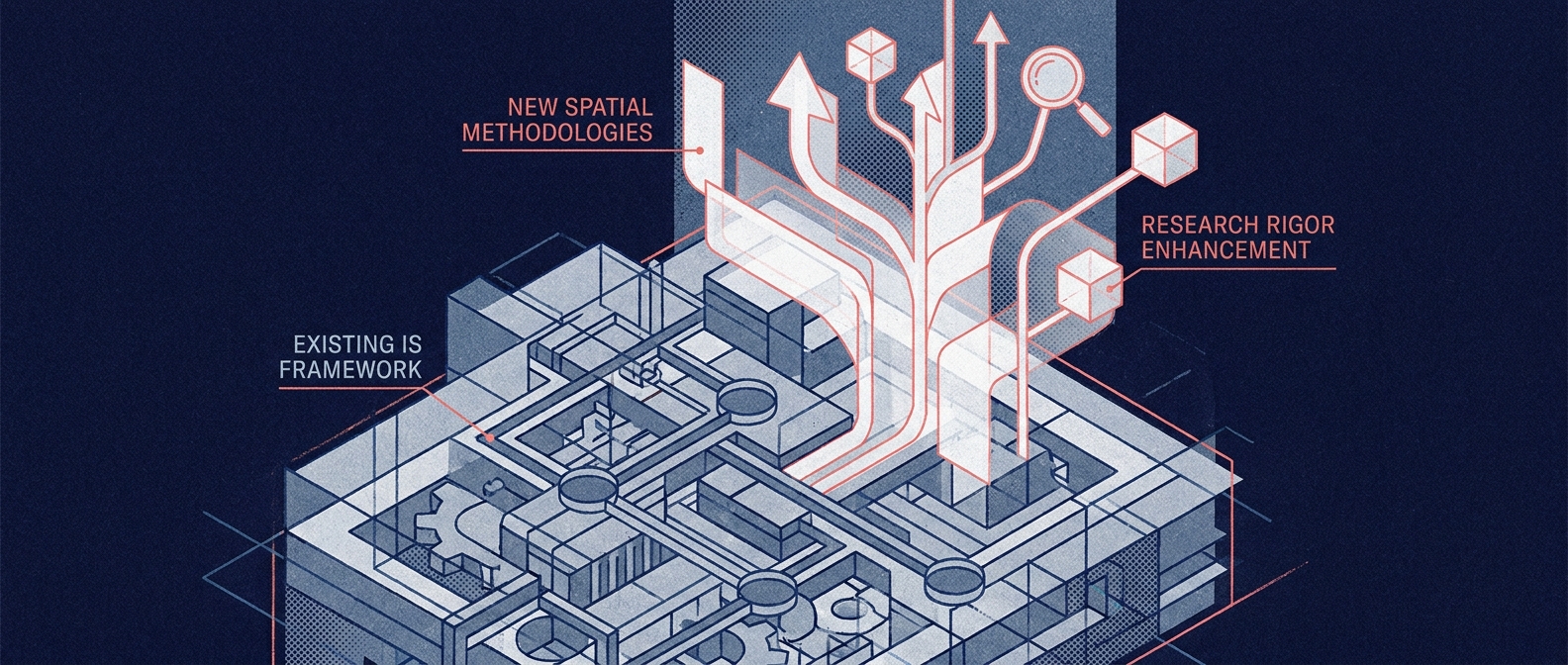
Illustration for: How can location analytics be integrated into academic research and teaching to meet modern business needs?

Key question

How can location analytics be integrated into academic research and teaching to meet modern business needs?

Location Analytics in Information Systems: Opportunities for Research and Teaching
Erskine, Pick, Satpathy, et al. · Communications of the AIS · 2024

Operations & Supply Chain

What it means for you
  • CIO / IT Executive Schedule a 30-minute meeting with your Head of Data Science and Head of Business Intelligence to discuss a pilot project integrating a basic spatial analysis layer (e.g., visualizing customer locations on a map) into one of your existing dashboards for a specific business unit.
  • IT Manager Identify one internal IT project or operational challenge (e.g., network outage analysis, data center resource allocation) that could potentially benefit from a spatial perspective, and research one readily available open-source geospatial tool (like QGIS) for initial exploration.
  • Business Strategist Review your current customer segmentation data and identify 2-3 key business questions that might be better answered by understanding the geographical distribution of your customers (e.g., optimal new store locations, targeted marketing campaigns by region).
  • Researcher Identify one of your current research projects and brainstorm 2-3 ways that incorporating spatial data or analysis (e.g., geographic clustering of events, spatial dependencies) could strengthen your theoretical contributions or add methodological rigor.
  • Policymaker Contact a representative from a local urban planning or environmental agency to inquire about any existing spatial datasets related to community infrastructure, resource distribution, or environmental impact that might be publicly accessible.
Illustration for: How can business schools integrate location analytics into their curriculum and research to meet industry demand?

Key question

How can business schools integrate location analytics into their curriculum and research to meet industry demand?

Location Analytics in Information Systems: Opportunities for Research and Teaching
Erskine, Pick, Satpathy, et al. · Communications of the AIS · 2024

Operations & Supply Chain

What it means for you
  • CIO / IT Executive Task your IT strategy team to identify one current business challenge (e.g., supply chain optimization, customer segmentation) that could be significantly improved by incorporating location data, and schedule a brief exploratory meeting to discuss potential pilot projects using spatial analysis tools.
  • IT Manager Identify one existing data set within your organization that has inherent spatial components (e.g., customer addresses, store locations, sensor readings) and initiate a conversation with a data analyst about how to visualize and query this data using basic geospatial techniques.
  • Business Strategist Review your current strategic plan and identify two key business objectives where understanding 'where' things happen or are located could provide a competitive advantage or unlock new opportunities, then brainstorm potential data sources for that 'where'.
  • Researcher Identify one of your ongoing or future research projects that currently lacks a spatial dimension and draft a brief proposal outline for how integrating location analytics could address a key limitation or open new avenues of inquiry, referencing specific spatial methods mentioned in the literature.
  • Policymaker Reach out to a representative from a local university's Information Systems or Geography department to inquire about potential collaborations or pilot programs for integrating location analytics into business curricula, focusing on areas relevant to local economic development or public services.