
Communications of the Association for Information Systems (2024) AI Processed Human Approved
Location Analytics in Information Systems:Opportunities for Research and Teaching
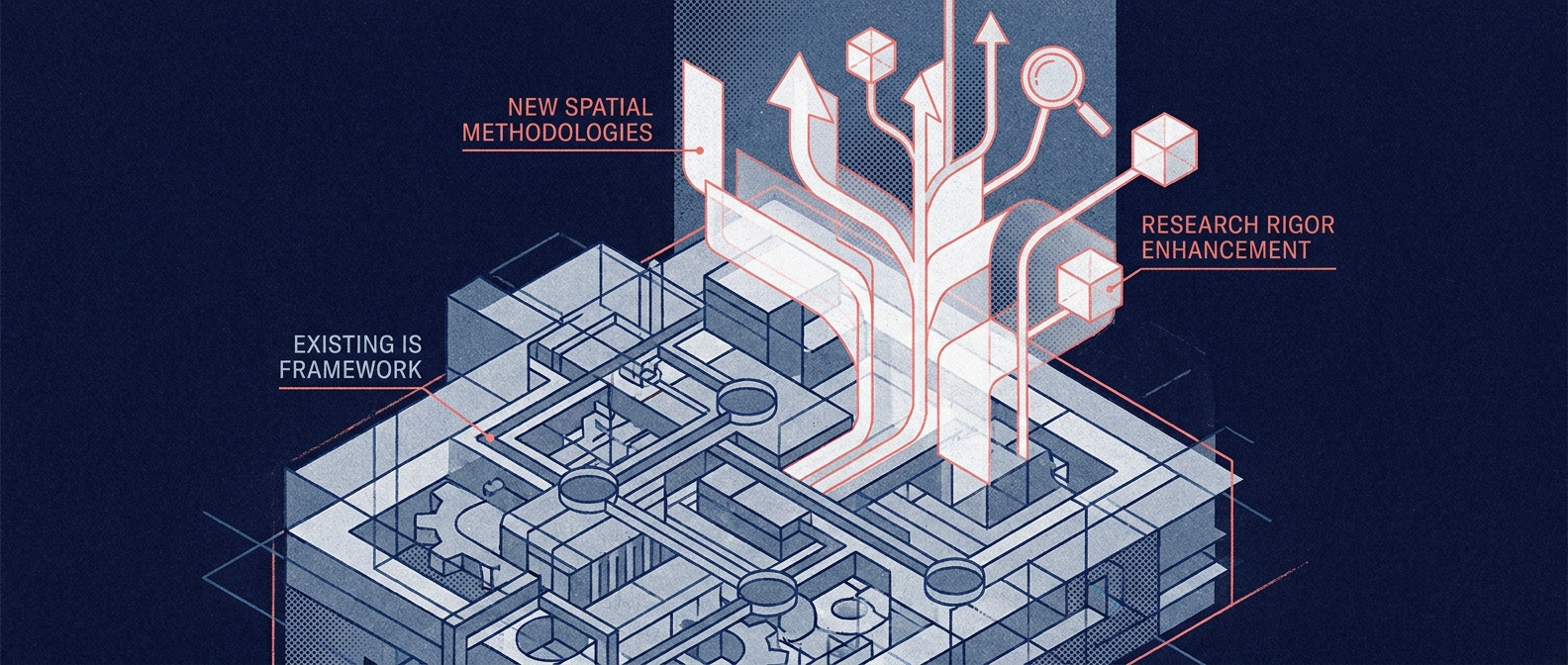
This paper examines the integration of location analytics into Information Systems research and education based on a panel discussion at AMCIS 2022. It outlines how spatial methodologies can enhance research rigor and provides strategies for incorporating location intelligence into academic curricula.
Problem
Despite the growing strategic importance of location analytics in industry, its adoption within academic Information Systems research and teaching remains minimal. As a result, spatial problem-solving is rarely addressed in business curricula, leading to a disconnect between graduate competencies and industry demand.
Outcome
- Highlights key research opportunities where location analytics can address complex, multidisciplinary problems such as climate change, network disruptions, and location privacy.
- Proposes a stepwise framework for business schools to integrate location analytics into IS courses, concentrations, and interdisciplinary programs.
- Recommends action steps to strengthen industry-academic partnerships, train faculty, and promote spatial methodologies in leading IS journals.
- Proposes a stepwise framework for business schools to integrate location analytics into IS courses, concentrations, and interdisciplinary programs.
- Recommends action steps to strengthen industry-academic partnerships, train faculty, and promote spatial methodologies in leading IS journals.
What it means for you
- CIO / IT Executive: On Monday morning, task your IT strategy team to identify one current business challenge (e.g., supply chain optimization, customer segmentation) that could be significantly improved by incorporating location data, and schedule a brief exploratory meeting to discuss potential pilot projects using spatial analysis tools.
- IT Manager: On Monday morning, identify one existing data set within your organization that has inherent spatial components (e.g., customer addresses, store locations, sensor readings) and initiate a conversation with a data analyst about how to visualize and query this data using basic geospatial techniques.
- Business Strategist: On Monday morning, review your current strategic plan and identify two key business objectives where understanding 'where' things happen or are located could provide a competitive advantage or unlock new opportunities, then brainstorm potential data sources for that 'where'.
- Researcher: On Monday morning, identify one of your ongoing or future research projects that currently lacks a spatial dimension and draft a brief proposal outline for how integrating location analytics could address a key limitation or open new avenues of inquiry, referencing specific spatial methods mentioned in the literature.
- Policymaker: On Monday morning, reach out to a representative from a local university's Information Systems or Geography department to inquire about potential collaborations or pilot programs for integrating location analytics into business curricula, focusing on areas relevant to local economic development or public services.
Transcript
Host: Welcome to A.I.S. Insights — powered by Living Knowledge. I'm your host, Anna Ivy Summers. Today, we're diving into a fascinating study titled "Location Analytics in Information Systems: Opportunities for Research and Teaching." Joining me is our expert analyst, Alex Ian Sutherland. Alex, welcome!
Expert: Thanks, Anna. It's great to be here. This study tackles a really crucial topic: how location analytics, or using geographic data to drive decisions, is revolutionizing business, and why higher education urgently needs to catch up.
Host: Location data is everywhere today—from ride-sharing apps like Uber to supply chain tracking at Amazon. But what is the big problem this study highlights?
Expert: The core problem is a major disconnect between industry and academia. While over 80% of businesses actively use location analysis in at least one business function, only about 8% of business schools offer courses covering spatial analysis or Geographic Information Systems. The study shows that academic Information Systems programs have largely treated location data as a peripheral topic, leaving future business leaders unprepared for a data-driven world that relies heavily on spatial context.
Host: Wow, 80% of businesses versus only 8% of business schools—that’s a massive gap! How did the authors of this study analyze this issue and propose solutions?
Expert: The study stems from an extensive panel discussion at the Americas Conference on Information Systems, bringing together leading researchers in location intelligence. The authors synthesized insights from current academic literature, evaluated existing research gaps, and built concrete frameworks for both research and curriculum integration.
Host: So what are some of the key findings from a research perspective? How can location analytics enrich academic research?
Expert: The study highlights that incorporating spatial data adds tremendous rigor to research, particularly when tackling complex, multidisciplinary issues—what scholars call "wicked problems." For example, location analytics helps model network disruptions during power grid failures, assess climate change vulnerabilities for agricultural communities, and evaluate location privacy risks under regulations like GDPR. It also improves how we design complex decision-making tools, like the global Johns Hopkins COVID-19 dashboard, which relied heavily on spatial visualization to inform millions of people.
Host: That dashboard was vital during the pandemic! It really shows how spatial context changes how we understand data. What did the study find regarding business school education?
Expert: On the education front, the study proposes a stepwise framework for business schools. Instead of overhaul overnight, institutions can start small with industry workshops or guest lectures. From there, they can integrate location analytics modules into existing core business classes like marketing and supply chain management. Ultimately, schools can establish dedicated certificates or concentrations in location analytics.
Host: That sounds like a very actionable pathway for universities. Now, why does all of this matter so much for business professionals listening today?
Expert: It matters because the global geospatial market is projected to reach nearly 1.44 trillion dollars by 2030. Businesses are hungry for talent that understands site selection, route optimization, spatial risk modeling, and location-based customer segmentation. Currently, companies have to train new hires on spatial decision-making from scratch. If business schools adopt the study’s recommendations, industry partners can collaborate on real-world capstone projects, gain fresh analytical insights, and build a direct pipeline of job-ready talent.
Host: In short, spatial thinking isn't just a technical skill—it's becoming a core strategic advantage for modern businesses.
Expert: Exactly, Anna. Location analytics gives businesses the "where" behind their "what," and incorporating it into research and education is essential for driving future innovation.
Host: That is a wonderful takeaway. Alex, thank you so much for breaking down this insightful study for us. And to our listeners, thank you for tuning in to A.I.S. Insights — powered by Living Knowledge. Join us next time for more deep dives into the technologies shaping our world.
Expert: Thanks, Anna. It's great to be here. This study tackles a really crucial topic: how location analytics, or using geographic data to drive decisions, is revolutionizing business, and why higher education urgently needs to catch up.
Host: Location data is everywhere today—from ride-sharing apps like Uber to supply chain tracking at Amazon. But what is the big problem this study highlights?
Expert: The core problem is a major disconnect between industry and academia. While over 80% of businesses actively use location analysis in at least one business function, only about 8% of business schools offer courses covering spatial analysis or Geographic Information Systems. The study shows that academic Information Systems programs have largely treated location data as a peripheral topic, leaving future business leaders unprepared for a data-driven world that relies heavily on spatial context.
Host: Wow, 80% of businesses versus only 8% of business schools—that’s a massive gap! How did the authors of this study analyze this issue and propose solutions?
Expert: The study stems from an extensive panel discussion at the Americas Conference on Information Systems, bringing together leading researchers in location intelligence. The authors synthesized insights from current academic literature, evaluated existing research gaps, and built concrete frameworks for both research and curriculum integration.
Host: So what are some of the key findings from a research perspective? How can location analytics enrich academic research?
Expert: The study highlights that incorporating spatial data adds tremendous rigor to research, particularly when tackling complex, multidisciplinary issues—what scholars call "wicked problems." For example, location analytics helps model network disruptions during power grid failures, assess climate change vulnerabilities for agricultural communities, and evaluate location privacy risks under regulations like GDPR. It also improves how we design complex decision-making tools, like the global Johns Hopkins COVID-19 dashboard, which relied heavily on spatial visualization to inform millions of people.
Host: That dashboard was vital during the pandemic! It really shows how spatial context changes how we understand data. What did the study find regarding business school education?
Expert: On the education front, the study proposes a stepwise framework for business schools. Instead of overhaul overnight, institutions can start small with industry workshops or guest lectures. From there, they can integrate location analytics modules into existing core business classes like marketing and supply chain management. Ultimately, schools can establish dedicated certificates or concentrations in location analytics.
Host: That sounds like a very actionable pathway for universities. Now, why does all of this matter so much for business professionals listening today?
Expert: It matters because the global geospatial market is projected to reach nearly 1.44 trillion dollars by 2030. Businesses are hungry for talent that understands site selection, route optimization, spatial risk modeling, and location-based customer segmentation. Currently, companies have to train new hires on spatial decision-making from scratch. If business schools adopt the study’s recommendations, industry partners can collaborate on real-world capstone projects, gain fresh analytical insights, and build a direct pipeline of job-ready talent.
Host: In short, spatial thinking isn't just a technical skill—it's becoming a core strategic advantage for modern businesses.
Expert: Exactly, Anna. Location analytics gives businesses the "where" behind their "what," and incorporating it into research and education is essential for driving future innovation.
Host: That is a wonderful takeaway. Alex, thank you so much for breaking down this insightful study for us. And to our listeners, thank you for tuning in to A.I.S. Insights — powered by Living Knowledge. Join us next time for more deep dives into the technologies shaping our world.