

ライブラリを見る

AISの学術誌、カンファレンス等からの163件のインサイト。多くはそれが答える問いから始まります。

具体的な質問をお持ちですか? Ask AIS Insights

全2件のインサイトを表示中

イラスト: 会話型エージェントをより人間らしく見せることは、エラー発生時の顧客の反応にどのように影響しますか?

中心となる問い

会話型エージェントをより人間らしく見せることは、エラー発生時の顧客の反応にどのように影響しますか?

Artificial Normality: How Conversational Agents’ Perceived Humanness Inhibits Error Attribution and Preserves Satisfaction
Brendel, Lichtenberg, Hildebrandt, 他 · Journal of Management Information Systems · 2026

Operations & Supply Chain

実践への示唆
  • CIO / IT役員 Allocate budget to pilot the integration of more human-centric design principles (e.g., nuanced language, empathetic phrasing) into our core customer-facing conversational agent, focusing on areas where process errors are most common, to preemptively reduce user error attribution and maintain satisfaction.
  • ITマネージャー Task your development team to review our current conversational agent's dialogue logs for instances of process errors and identify the top 3 most frequent error types to begin redesigning their responses with more humanlike cues (e.g., slight pauses, conversational fillers) to normalize the situation for users.
  • 経営戦略担当者 Initiate a cross-functional workshop with marketing and product development to explore how to strategically position our conversational agents' perceived humanness in customer communications, emphasizing its role in creating a seamless experience even when minor technical glitches occur.
  • 研究者 Begin designing a follow-up study that experimentally manipulates specific humanlike conversational features (e.g., varying levels of politeness, acknowledgment of difficulty) within a simulated error scenario to quantify their direct impact on error attribution and situational normality, building upon the findings of Artificial Normality.
  • 政策立案者 Convene a small working group to draft guidelines for the ethical development of conversational agents, recommending that AI design standards encourage the incorporation of humanlike qualities to enhance user experience and mitigate negative reactions to inevitable system errors, rather than solely focusing on pure efficiency.
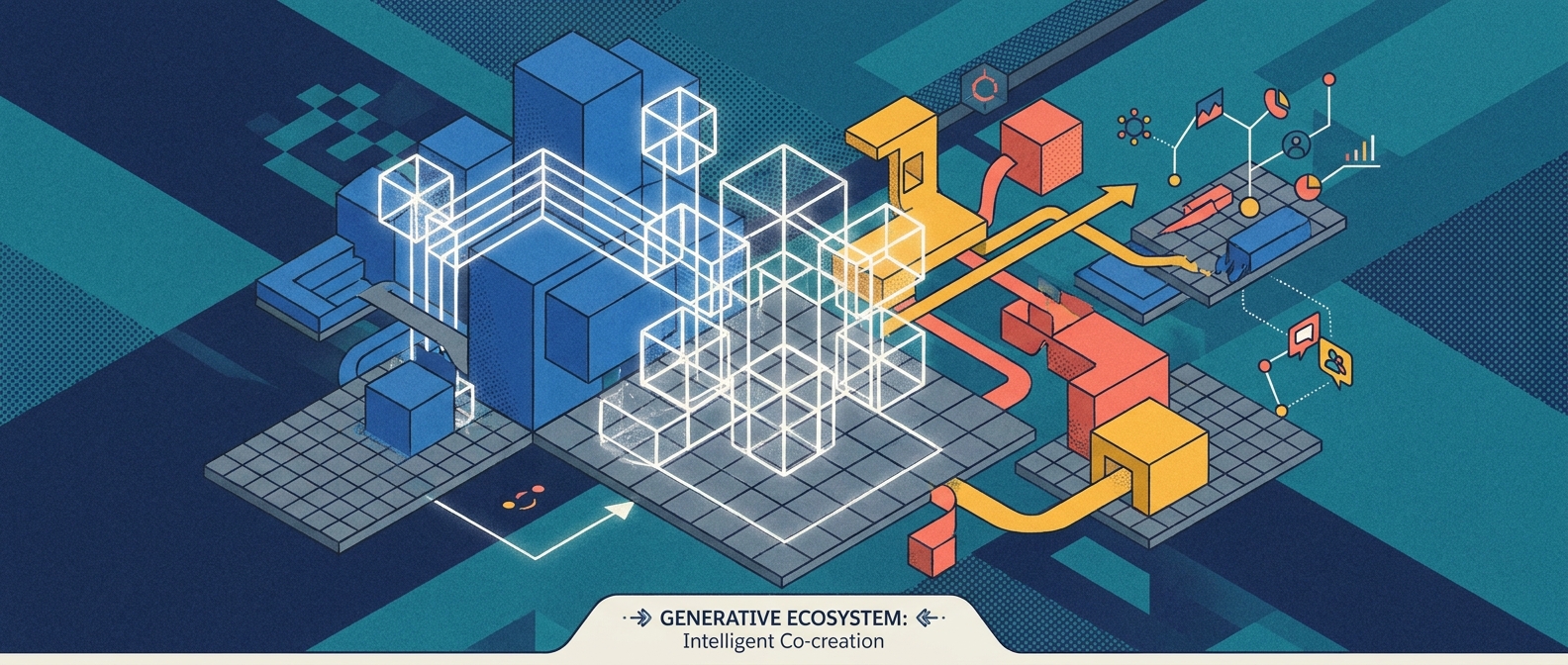
イラスト: 生成AIは、デジタルプラットフォームが価値を創造し、運営し、ユーザーを管理する方法をどのように変えるのでしょうか?

中心となる問い

生成AIは、デジタルプラットフォームが価値を創造し、運営し、ユーザーを管理する方法をどのように変えるのでしょうか?

Generative AI and its Transformative Value for Digital Platforms
Wessel, Adam, Benlian, 他 · Journal of Management Information Systems · 2025

Operations & Supply Chain

実践への示唆
  • CIO / IT役員 Schedule a 30-minute exploratory meeting with your core architecture and data science teams to identify 1-2 pilot use cases for intelligent automation within our existing platform, focusing on areas where GenAI can autonomously process and interpret existing boundary resources like APIs or SDKs to generate context-aware outputs.
  • ITマネージャー Initiate a review of the platform's current developer documentation and onboarding process. Identify specific sections or tasks that could be simplified or made more accessible to non-experts by integrating GenAI-powered tools for code generation, API explanation, or prompt engineering guidance.
  • 経営戦略担当者 Begin drafting a one-page concept document outlining how GenAI could be leveraged for hyper-personalization on our platform. Focus on identifying 2-3 specific user segments and detailing how GenAI could generate unique, context-aware content or recommendations for each, differentiating from current rule-based personalization.
  • 研究者 Select one of the four key GenAI mechanisms (intelligent automation, democratization, hyper-personalization, or collaborative innovation) and spend two hours outlining a specific research question and potential methodology to investigate its impact on a particular aspect of platform stakeholder dynamics, such as complementor participation or user engagement.
  • 政策立案者 Convene a brief working session with legal and compliance advisors to discuss potential novel governance mechanisms needed to ensure the quality and authenticity of GenAI-generated outputs on digital platforms, specifically addressing the challenges highlighted by amplified network effects from lowered entry barriers.