
Key question New
AI-processed · Author-approved
How does penalizing late check-ins affect overall clinic wait times and congestion?
Loads Spotify's player; Spotify may set cookies. This device remembers your choice.
Key findings
- The queue demotion policy improved individual compliance, significantly reducing late check-ins and increasing on-time arrivals.
- Average outpatient waiting time across the entire system significantly increased by approximately 1.14 minutes per patient visit.
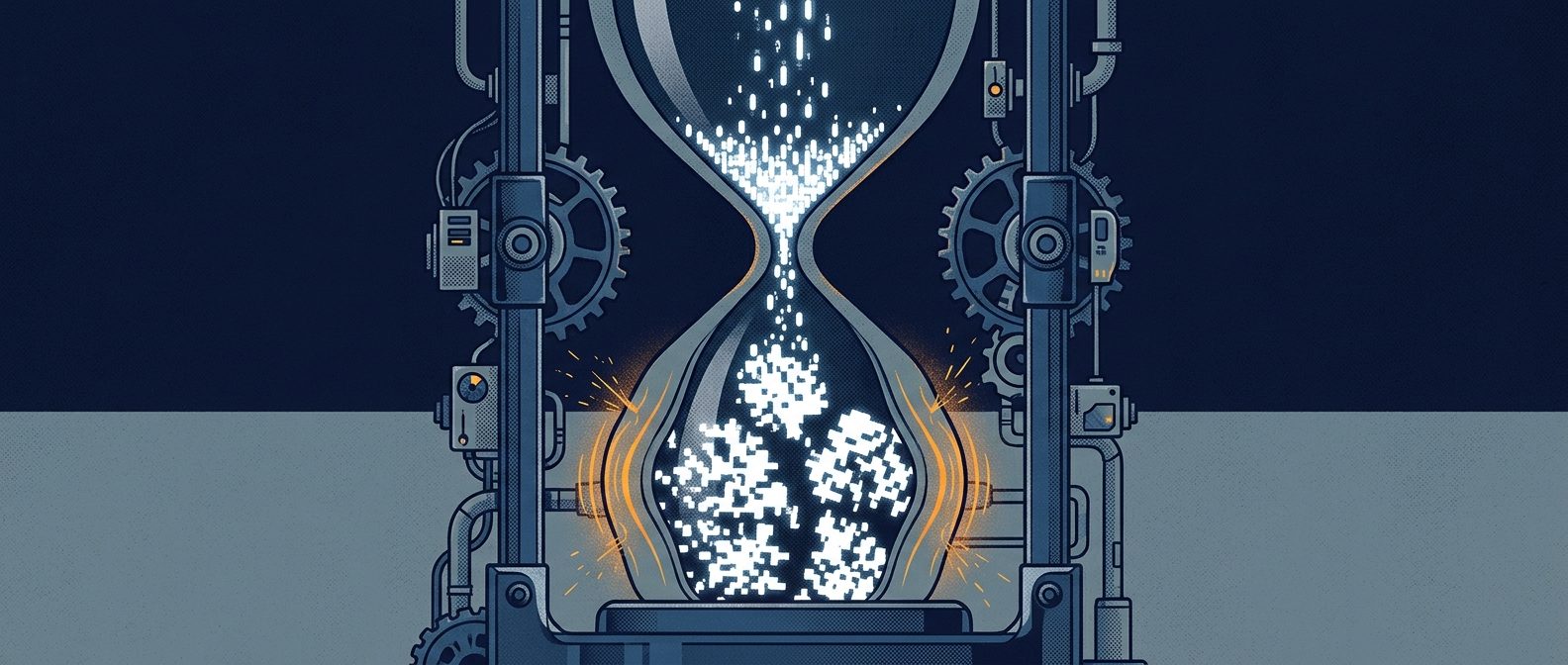
- The rule induced check-in bunching and significantly higher temporal clumpiness, creating bursts of instantaneous congestion that exceeded immediate physician service capacity.
- Longer delays spilled over to non-penalized patients, causing statistically significant increases in wait times for both on-time and early check-ins.
- The wait-time increase was significantly larger during high-volume physician sessions, while physician consultation speed and overall patient volume remained unchanged.
What it means for you
CIO / IT Executive
Modify the patient check-in portal software to replace rigid queue demotion with a dynamic arrival-window algorithm that staggers check-in times and smooths demand peaks.
IT Manager
Configure the patient check-in app to assign randomized, staggered 10-minute arrival slots instead of exact-hour deadlines to prevent morning check-in bunching.
Business Strategist
Redesign clinic scheduling templates to dynamically throttle patient intake rates during historically high-volume physician sessions to prevent localized bottlenecking.
Researcher
Conduct a queue-theoretic simulation study to model the exact tradeoff between individual late-penalty compliance and systemic waiting-time externalities across varying hospital capacities.
Policymaker
Issue operational guidelines requiring healthcare facilities to evaluate hospital-wide patient wait-time externalities before deploying automated punitive queue-management policies.
Summary
This study examines the operational consequences of a digital appointment punctuality policy that lowers queue priority for patients who arrive late. Using a difference-in-differences empirical design, the authors evaluate over 4.2 million outpatient visits across two years at a large tertiary hospital in China.
Problem
Hospitals frequently introduce automated penalties to discourage late arrivals under the assumption that individual punctuality will smooth patient flow. However, prior research rarely considers how such rules cause patients to collectively shift check-in times, potentially clustering demand and overloading shared clinical capacity.
Transcript
Expert: Hello Anna. This study evaluates what happens when healthcare providers introduce automated digital penalties to enforce appointment punctuality. Specifically, the authors examined an outpatient policy that automatically demoted patients who checked in late by up to six queue positions. The intent was straightforward: reduce late check-ins to make patient flow more orderly and reduce overall wait times.
Host: Punctuality seems like an obvious operational target. What real-world problem emerged in practice?
Expert: In shared-capacity service settings like outpatient clinics, patients share fixed resources such as doctors and consultation rooms. When a digital system penalizes late check-ins, it alters patient behavior. To avoid demotion, patients build safety buffers into their travel plans. Rather than arriving evenly across an appointment session, many patients arrive around the same safer intervals. This synchronizes arrivals, leading to temporal clustering that can overwhelm immediate clinical capacity.
Host: How did the authors examine this empirically?
Expert: The research team evaluated a quasi-natural experiment at a large tertiary hospital in China, analyzing over 4.2 million outpatient visits across 78 clinical departments and more than 1,000 physicians over a two-year window. Using a difference-in-differences design, they compared outcomes before and after the hospital introduced the digital queue-demotion rule in October 2024, using the corresponding months of the previous year to control for seasonality.
Host: What were the key findings? Did the policy improve punctuality?
Expert: At the individual level, compliance improved. The number of late patients decreased significantly, and on-time check-ins increased. However, at the system level, average patient waiting time across the hospital increased by approximately 1.14 minutes per visit.
Host: Why would overall waiting times rise if more patients arrived on time?
Expert: The authors demonstrated that the policy increased check-in clumpiness—meaning patient arrivals became more bunched together in time. At the same time, physician service rates and consultation durations remained constant. Because capacity is relatively fixed in the short run, concentrated arrivals created instantaneous congestion that exceeded immediate processing capacity.
Host: Did this added waiting burden fall only on the late patients who were penalized?
Expert: No, and that is the central congestion externality. Late patients saw their wait times increase by 5.2 minutes due to priority loss. But compliant on-time patients also experienced a statistically significant wait-time increase of roughly 0.26 minutes, and early-arriving patients saw an increase of 0.69 minutes. Furthermore, this congestion effect was significantly larger in high-volume physician sessions.
Host: That is an important operational insight. How should healthcare managers and system designers apply these findings?
Expert: First, administrators should avoid evaluating punctuality policies purely by compliance rates. A drop in tardiness can mask an increase in system-level delays. Queue performance, peak-period congestion, and arrival distributions across all patient groups must be monitored. Second, system designers should explore complementary mechanisms that prevent arrival clustering, such as staggered arrival guidance, real-time crowding notifications, or flexible grace periods, rather than relying solely on punitive demotion rules.
Host: A clear reminder that individual behavioral incentives can have collective operational trade-offs. Alex, thank you for sharing these insights.
Expert: My pleasure, Anna.
Host: And thank you to our listeners for joining us on A.I.S. Insights — powered by Living Knowledge. Until next time.
Appointment Punctuality Policy, Congestion Externality, Outpatient Waiting Time, Queue Management, Healthcare Information Systems, Behavioral Operations